
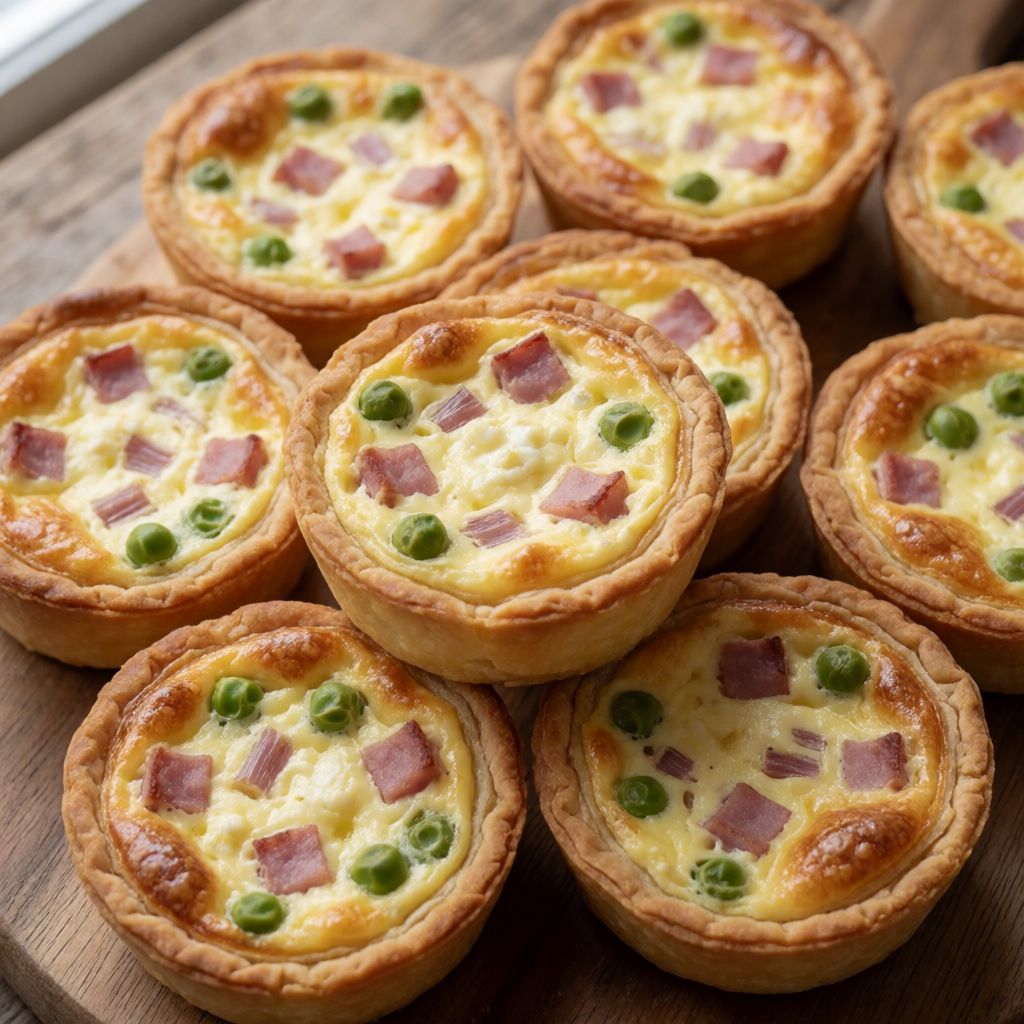
 AI photo
Mini Ham and Pea Quiches
Mini quiches filled with ham, peas, ricotta and Parmesan, baked in individual shortcrust pastry cases.
Labels are worked out automatically from the ingredients and can be wrong. Check the packaging if it matters to you.
Ingredients
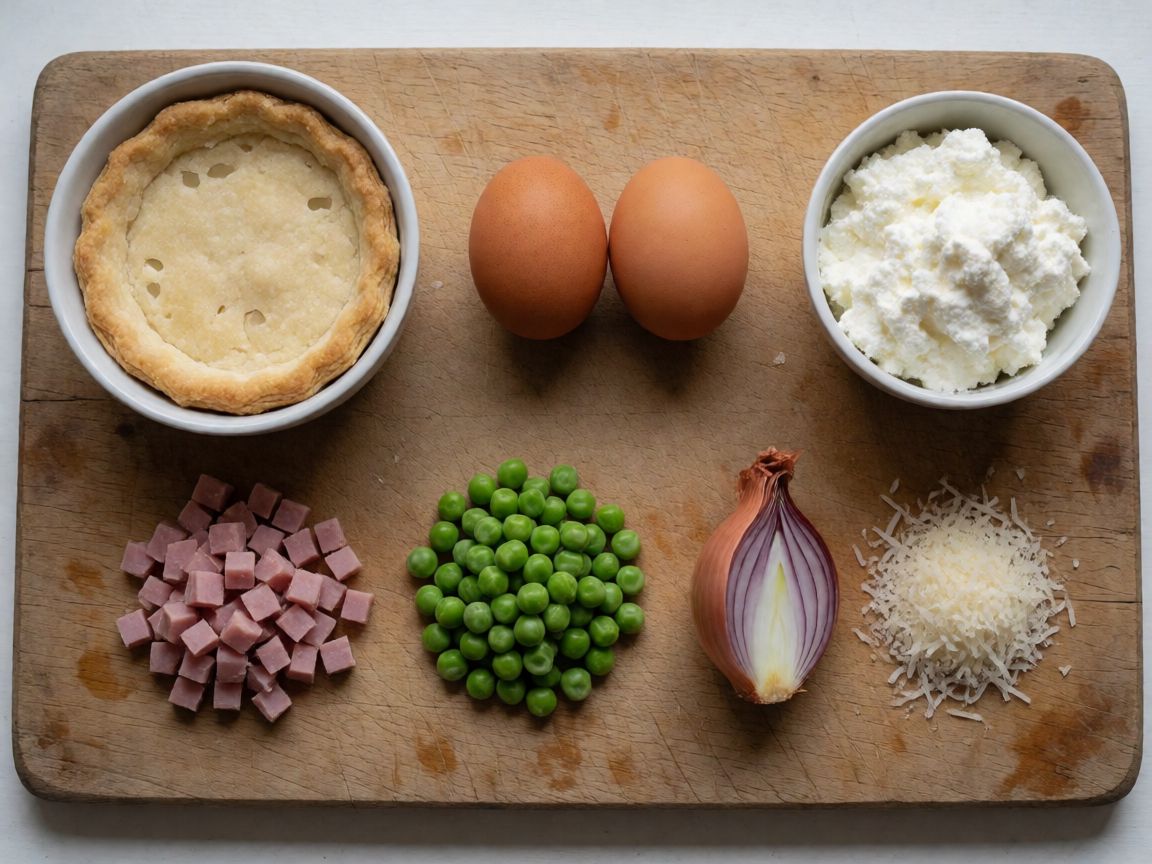
- 250 g Shortcrust pastry
- 2 pcs Eggs
- 150 g Ham
- 150 g Peas
- 150 g Ricotta
- 1/2 pcs Shallot
- Olive oil to taste
- 50 g Parmesan
- Salt to taste
- Black pepper to taste










Steps
Finely chop the shallot and fry in a pan with a little olive oil over low heat until soft.
Add the peas and a glass of water, cook for about 15 minutes.
15 minIn a bowl, beat the eggs, then add the Parmesan and the diced ham.
Once the peas have cooled, add them and the ricotta to the egg mixture. Season with salt and pepper.
Line 6 mini quiche tins with the shortcrust pastry and prick the base with a fork.
Fill the tins with the pea, ricotta, egg and ham mixture.
Cover the filling with the remaining pastry like a lid.
Bake at 180°C for 15 minutes.
15 minServe, sprinkled with extra Parmesan if you like.
A mini quiche is really a custard problem wearing pastry as a disguise. Eggs set between 70°C and 80°C — below that they're sauce, above it they're rubber with water weeping out the sides. Everything in this recipe exists to get your filling to that window gently, and the pastry to a dry, structural crisp at the same time, in one oven, in fifteen minutes. That's the whole engineering challenge of a "mini" version: full-size quiche gets a slow finish because the centre needs time to catch up to the edge; shrink the thing down and the centre is barely a thumb's width from the crust, so it can set through in a quarter of the heat-time without the top going leathery first.
The shallot goes in low and slow not for flavour alone but to avoid bitterness — onions that catch and brown unevenly in a thin domestic pan turn acrid at the edges before the middle softens, because a cheap pan has hot spots a kazan or a thick cast base doesn't. Low heat here isn't timidity, it's giving every bit of the cut shallot equal exposure. You're looking for translucent and limp, not colour. Colour is the wrong goal entirely at this stage.
On the pastry itself: 250 g shortcrust split across base and lid for six tins doesn't leave much room per quiche, so roll it thin and work fast — shortcrust is butter and flour held together by cold, and the moment it warms past that point in your hands it stops being short and starts being tough. If you're using bought block pastry rather than making your own, that's not a compromise, that's just sensible economics — shortcrust is fiddly and the shop version behaves consistently, which matters more here than any artisanal point.
The eggs are your structure, full stop. Two eggs for this quantity of filling is a lean ratio — just enough protein to bind the peas, ham and ricotta into a cuttable slice without turning the whole thing into an egg custard with bits in it. Beat them before anything else goes in so the proteins are evenly loosened; drop ricotta or ham into unbeaten egg first and you get patches where the egg never properly disperses.
Ricotta does the job cream or crème fraîche would do in a bigger quiche — it loosens the mixture and keeps it from being dense curd of egg and cheese, while bringing almost no extra liquid to fight against during setting. Any soft, mild, slightly grainy fresh cheese works to the same end: cottage cheese blitzed smooth, or a mild curd cheese, would substitute on the same logic — soft texture, low free water, no strong flavour of its own to compete with the ham.
Parmesan is seasoning as much as cheese here — salty, dry, concentrated, it does more work in 50 g than a milder cheese would in twice that. The criterion for substitution is "hard, aged, low moisture, savoury": a mature Cheddar grates and melts similarly and is the obvious UK stand-in if Parmesan isn't to hand, though it brings its own fattier melt, so use slightly less.
Ham just needs to be diced small enough that no single tin, the size of a teacup, ends up with one giant lump and no peas. Any cooked, cured meat that isn't swimming in its own brine will do — leftover Sunday roast ham is exactly the kind of thing this recipe was built to use up, which is worth saying plainly: these mini quiches are Monday-after food as much as anything else, a tidy way to turn odds and ends of a roast into six individual, freezable lunches.
The 180°C for fifteen minutes is a number that assumes a domestic fan oven with reasonably even heat — if yours runs hot at the back or has known cold spots, that's the point at which you turn the tray round halfway rather than extend the time blindly. And patience, even over fifteen minutes, is still patience: let them sit a few minutes out of the tins before you try to lift them, because custard that's just come off 180°C is still firming as it cools, and a rushed quiche is a broken quiche on the plate.