
 AI photo
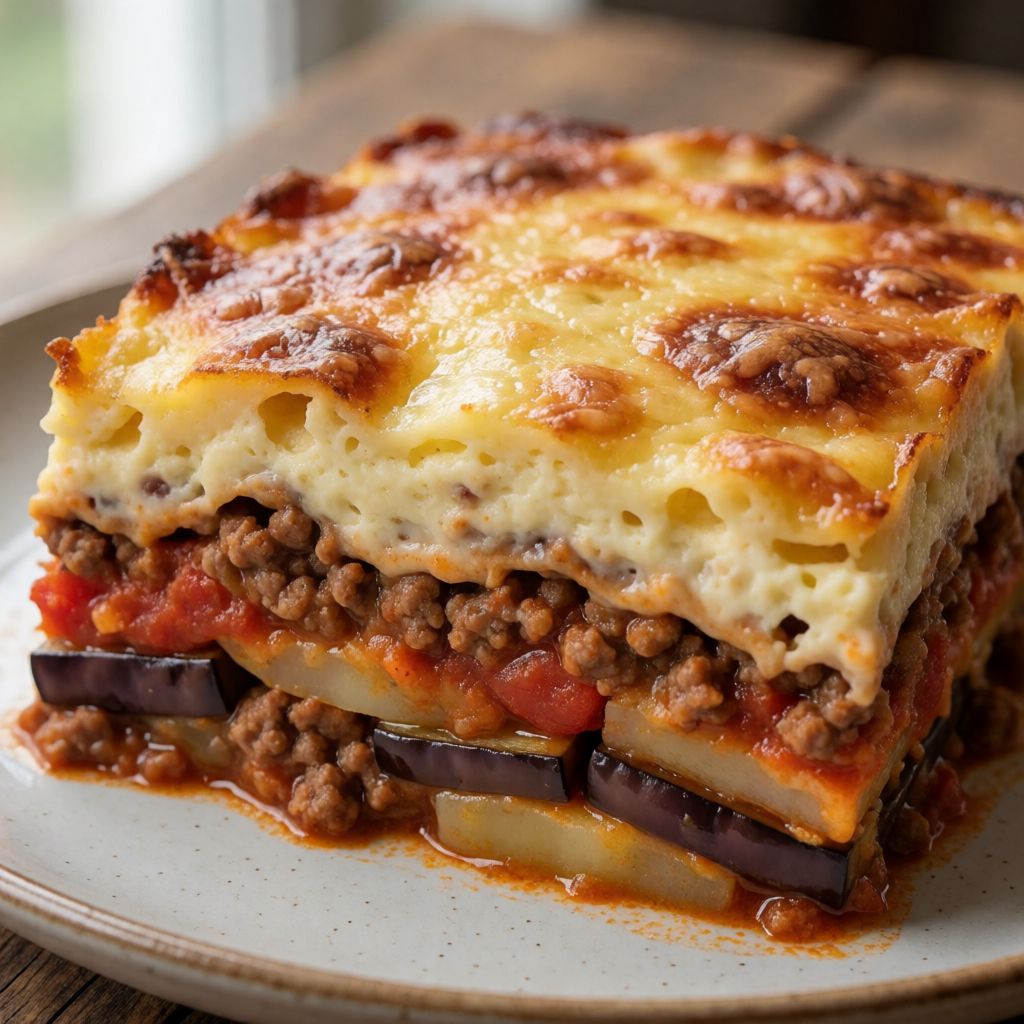
Greek Moussaka
A hearty Greek-style lamb and aubergine bake, layered with potatoes and finished with a rich béchamel topping.
Labels are worked out automatically from the ingredients and can be wrong. Check the packaging if it matters to you.
Ingredients
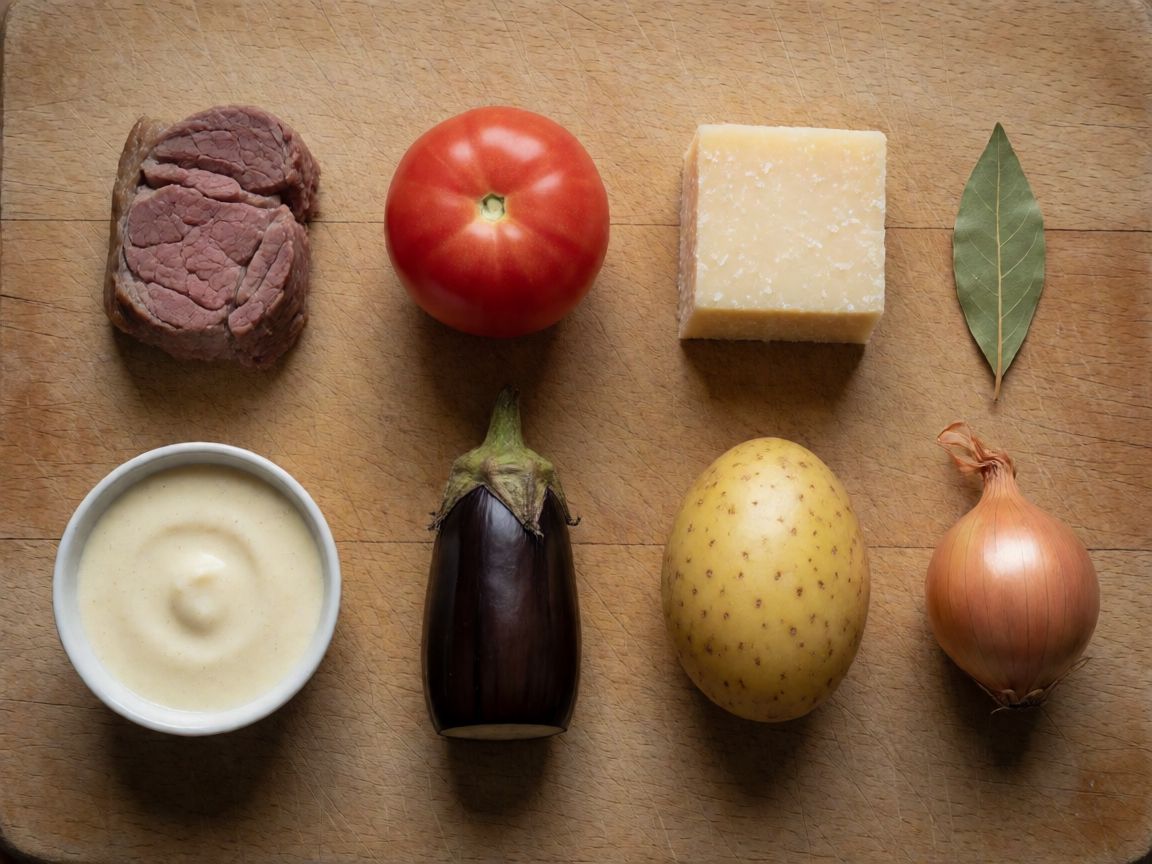
- 500 g Lamb
- 500 g Tomato
- 700-800 g Béchamel sauce
- Parmesan to taste
- 500 g Aubergine
- 300 g Potato
- Onion to taste
- Salt to taste
- Black pepper to taste
- 2-3 pcs Bay leaf
- Olive oil to taste
- 120 ml Red wine
- Plain flour for coating the aubergines











Steps
Pour a little olive oil into a heated pot and fry finely chopped onion with the bay leaf.
Add the minced lamb and fry until browned.
Season the minced meat with salt and pepper.
Pour in the red wine and let it evaporate completely.
Add the chopped tomatoes and simmer for about 1 hour, until the meat reaches 71°C inside.
60 minCut the potatoes into slices.
Fry the potatoes in a pan with a little oil and salt.
Place the cooked potatoes in a buttered baking dish.
Coat the sliced aubergines in flour and fry (or bake in the oven).
Spread the lamb ragù over the potatoes in the dish.
For the third layer, add the fried aubergines, salt and parmesan.
Create a new layer: ragù, aubergines, salt and parmesan.
Generously pour over the béchamel, add parmesan and drizzle with olive oil.
Bake at 200°C until a golden crust forms.
18 minLet the moussaka cool before serving.
Moussaka is a layering problem disguised as a dish. Lamb ragù, fried potato, fried aubergine, béchamel — four things cooked separately, each already finished in its own pan, stacked and baked only to fuse them and brown the top. Nothing in that oven time actually cooks the meat or the vegetables through; it's already done. What decides whether it works is whether each layer held its own structure before it went into the dish — because moussaka is really a defence against wateriness, and every single step is aimed at keeping liquid out of that dish.
Aubergine is the usual suspect people blame when the thing turns into soup, and they're half right. A raw aubergine is basically a sponge of air pockets; fry it straight and it drinks oil and still weeps water into the dish later as it steams. Coating it in flour before frying isn't a texture choice, it's a seal — a thin crust that stops it soaking and stops it leaking once it's wedged between hot ragù and hot béchamel for twenty minutes.
Start with the lamb, because it sets the ceiling for everything else. Minced lamb has enough fat in it that you don't need much oil to get it browning — you want that fat rendering and the meat catching colour, not steaming grey in its own juice, because browning is where the savoury depth comes from, not just "doneness". If lamb mince isn't to hand or budget, beef works, though it loses the particular sweetness lamb fat carries; goat is closer to lamb than beef is, if you can get it.
The onion goes in first with a bay leaf, and the bay leaf matters more than its size suggests — it's doing slow background work the whole hour of simmering, a faint bitter edge that keeps the tomato sweetness from going flat and jammy. Pull it before serving; it's not meant to be eaten, just to have been there.
Tomatoes: fresh, ripe, chopped — but if it's a grey British winter and the tomatoes in the shop are pale and watery-tasting, good tinned plum tomatoes will give you more actual tomato flavour than a sad fresh one. That's not a compromise, that's just reading the produce in front of you honestly.
The wine is there to do acid and aromatic work the tomato alone can't — it cuts the richness of the lamb fat. Any dry red you'd be happy drinking a glass of works; don't buy a special "cooking wine", that's a marketing category, not a culinary one. If you don't keep wine in the house, a splash of red wine vinegar loosened with a bit of stock gets you the acid, though you lose the tannin and some of the depth.
Potatoes are the forgotten layer, but they're structural — a base that holds its shape and stops the whole dish from being two sauces fighting each other. Fry the slices rather than boiling them: boiled potato is already half-sodden with water, and water is the enemy here. Fried, with a little salt, they form a drier, slightly crisp base that can actually bear the weight of ragù and béchamel on top of it without collapsing to mush.
Aubergine: pick ones that are firm and glossy-skinned, heavy for their size — a soft, dull aubergine has already started drying out from the inside, and that's where bitterness collects. Olive oil for frying is traditional and gives its own faint fruitiness, but "any oil with no smell of its own" — sunflower, a neutral vegetable oil — does the actual frying job fine if olive oil feels like an extravagance for a dish this size; save the good olive oil for the drizzle on top, where you'll actually taste it.
Béchamel is the one layer you're not cooking separately in this method so much as pouring on raw-ish and letting the oven finish it — it's flour, butter, milk, thickened on the stove first, obviously, but its job in the dish is binding and crowning: it sets as it bakes and gives you that pale golden crust everyone pictures when they hear the name. Parmesan worked into it and over it isn't traditional Greek practice, strictly — kefalotyri or a hard, salty Greek cheese is closer to the original economics of it, cheese being whatever salty hard grating cheese a household had to hand — but parmesan does the same structural job: salt, fat, and a crust that browns rather than just melts.
Last thing, and it's the one people skip because it feels backwards: let it cool before cutting. Straight from the oven, the layers are still loose with heat, and a slice collapses into a puddle on the plate. Given twenty, thirty minutes to settle, the béchamel firms, the layers set against each other, and you get a slice that holds its shape when you lift it. That's not a serving suggestion, it's the last ingredient — patience, the one you can't buy in grams.