
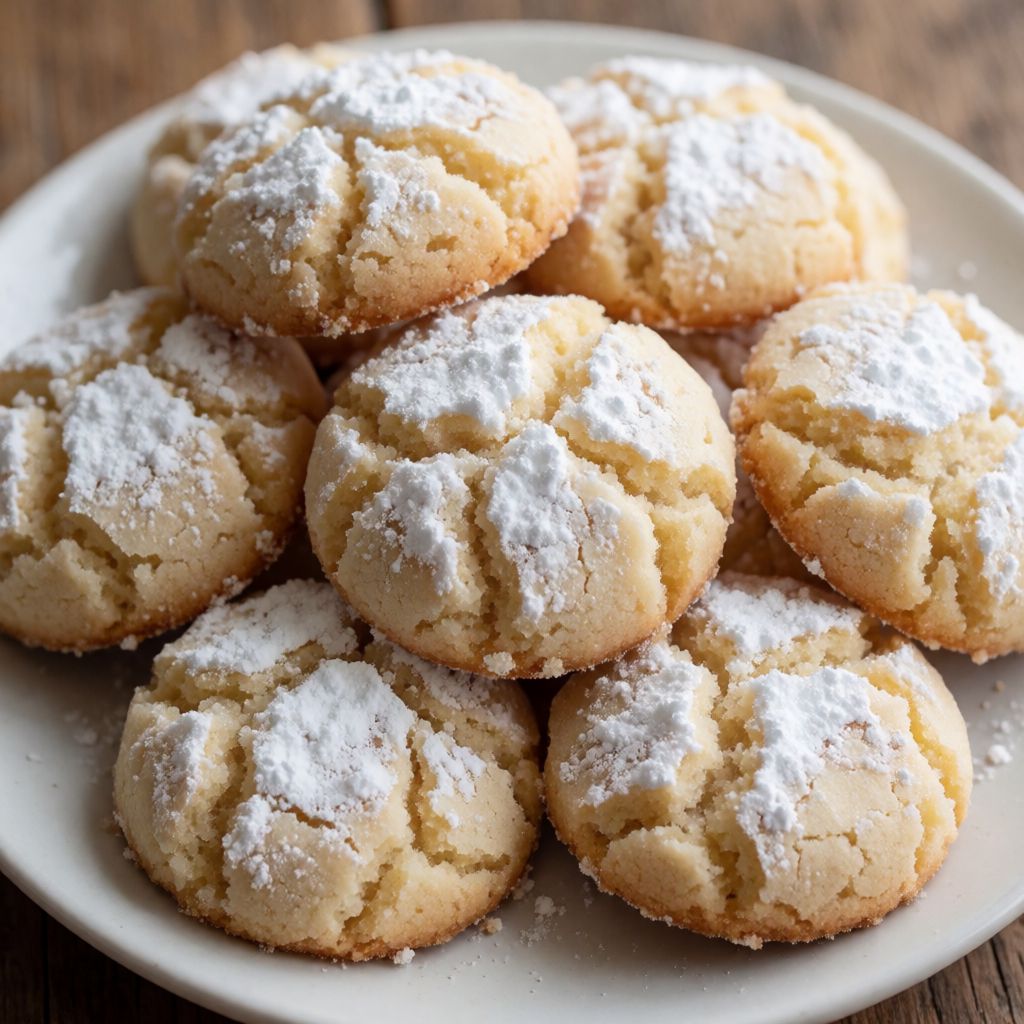
 AI photo
Flourless Almond Biscuits
Soft flourless almond biscuits flavoured with lemon zest and vanilla, rolled in icing sugar.
Labels are worked out automatically from the ingredients and can be wrong. Check the packaging if it matters to you.
Ingredients
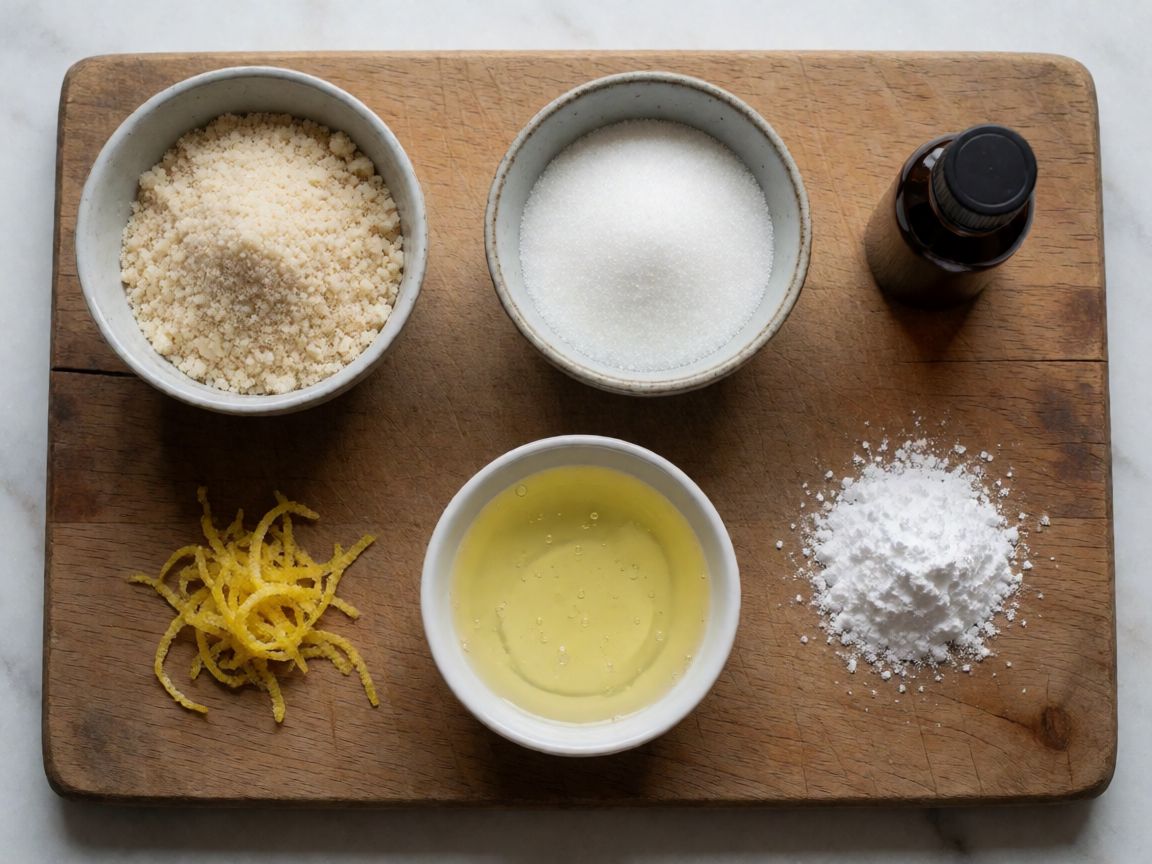
- 250 g Almonds
- 150 g Caster sugar
- 60 g Egg whites about 2 medium eggs
- 1 pcs Lemon zest from a well-washed lemon
- 1 tsp Vanilla extract or almond extract
- Icing sugar to taste






Steps
Blend the almonds with the sugar in a blender until the mixture resembles flour.
Add the egg whites, vanilla extract and lemon zest from a well-washed lemon.
Blend again until everything comes together; the dough should be soft and easy to shape by hand, but not too sticky.
Take a small portion of dough (about 30g) and roll into balls.
Roll the balls in icing sugar and place on a baking tray lined with parchment paper.
Pinch the biscuits with three fingers to give them their characteristic shape, then chill in the fridge for 12 hours.
720 minBake in a preheated fan oven at 180°C for 10 minutes.
10 min
This is a flourless almond biscuit — no wheat, no butter, just almonds, sugar and egg white doing all the structural work between them. What decides whether it holds together or turns into a sad almond pancake is the blend in step one: almonds have oil in them, and if you grind them alone for too long, the blade heats the nut and the oil comes out — you get almond butter, not almond flour. The sugar is there as an abrasive, a buffer between blade and nut, keeping the mixture dry and powdery instead of oily and sticky. Blend almonds with the sugar together, in short pulses, and stop the second it looks like damp sand.
Some say flourless baking is delicate and needs a baker's hand. No — because the fat and protein in the almond, plus the protein in the egg white, together do exactly what gluten does elsewhere: hold a shape through baking. The thing that actually makes these fragile is skipping the rest. Twelve hours in the fridge is not there for flavour, it's there for physics: the almond's fat firms up, the sugar draws a little moisture out of the egg white and starts to dissolve into it, and the whole paste turns from soft dough into something that keeps a pinch-mark instead of slumping back into a ball the moment it hits a hot oven. Rush that and you get flat, spreading discs instead of the characteristic lens shape.
Almonds: use whole blanched almonds, not pre-ground almond flour from a bag if you can avoid it, because shop flour is often cut with the oil already released and partly stale — it won't behave the same in the blender-with-sugar step. 250g whole almonds feeds this batch of about a dozen biscuits comfortably, which is your six servings at two each. If you only have ground almonds, fine, just blend them briefly with the sugar anyway rather than skipping straight to mixing with egg white — it keeps the texture even.
Caster sugar does two jobs: it's the grinding buffer in step one, and it's the thing the egg white needs to dissolve into to form a stable paste rather than a foam. Don't swap in icing sugar here — icing sugar usually has added cornstarch, which will dry the paste out and make it crumbly rather than pliable. Save the icing sugar for the outside coating, where that same starch is actually useful: it stops the sugar dissolving too fast into the dough's surface moisture, so you keep a dry, crackable coat instead of a sticky one.
Egg whites: 60g, roughly two medium eggs' worth, is a protein-and-moisture measure, not a whisking job — you're not after foam here, just enough liquid to bind the almond-sugar sand into dough and enough protein to set firm in the oven. This is raw egg white sitting in a fridge for half a day before it ever sees heat, so if that worries you, a pasteurised egg white from a carton solves it without changing the result. There's no good vegetable substitute that sets the same way; aquafaba will bind but it won't firm up into that slightly dry, meringue-adjacent bite, so don't expect the same biscuit from it.
Lemon zest from a well-washed lemon — washed because you're using the skin, with whatever's sat on it, not the juice. Zest, never juice: juice adds water and acid, which is exactly what you don't want when you're trying to firm a paste up in the fridge, not loosen it. The zest's job is purely aromatic, cutting the flatness of almond-and-sugar with something sharp.
Vanilla or almond extract — the recipe gives you the choice honestly. Vanilla rounds things off; real almond extract (made from bitter almonds) is much stronger and pushes the biscuit toward that marzipan-adjacent flavour, so use less of it than you would vanilla, not the same teaspoon.
Worth saying where this biscuit sits historically: almonds were, for most of European history, an expensive ingredient — imported, slow-growing trees, labour to shell and blanch. A sweet made almost entirely of almonds and sugar, no cheap flour bulking it out, was feast food — weddings, Christmas, religious holidays where grain itself was restricted. The flourlessness wasn't a health choice, it was either a luxury statement or a dietary rule, depending on whose kitchen it came from. Worth knowing that before anyone tells you flourless baking is a modern invention — it's one of the oldest reasons to bake at all.