
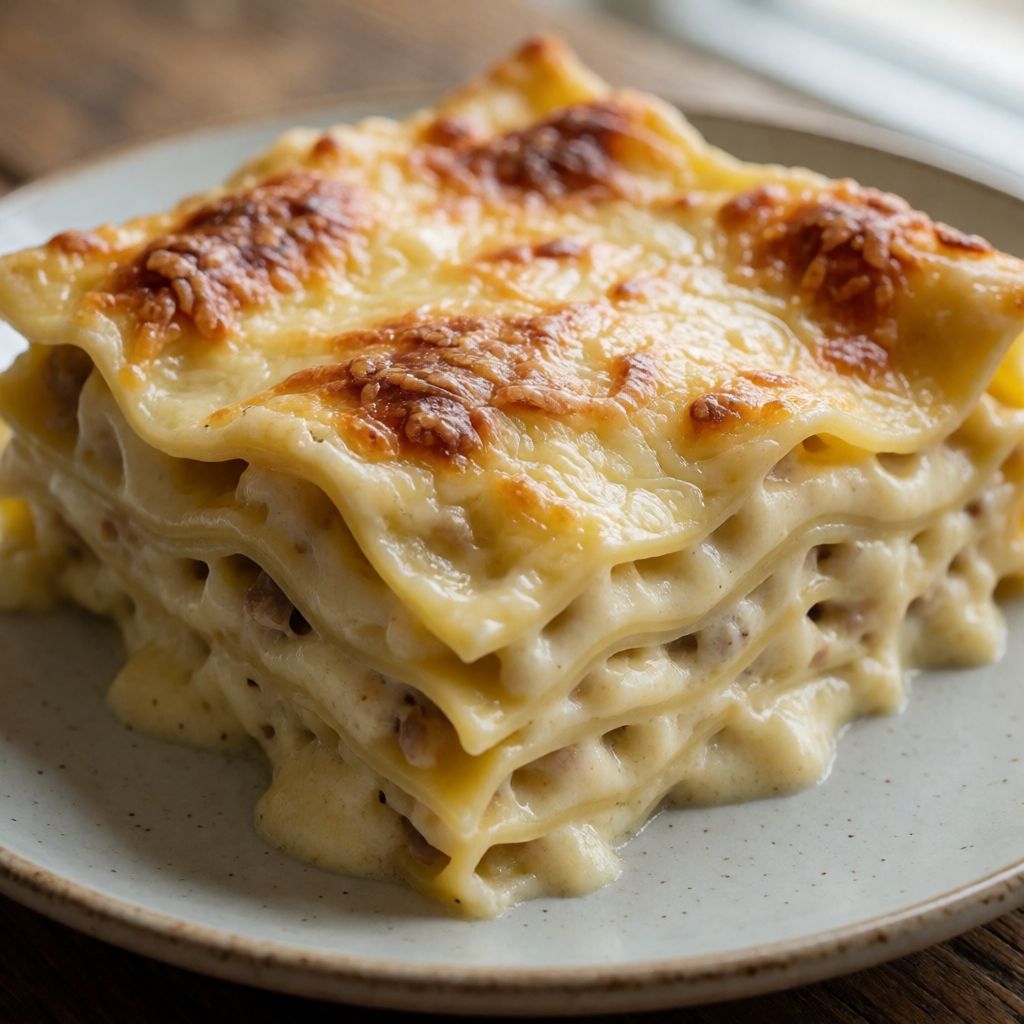
 AI photo
Carbonara Lasagne
A béchamel-based lasagne inspired by carbonara flavours, layered with pancetta, pecorino and provolone.
Labels are worked out automatically from the ingredients and can be wrong. Check the packaging if it matters to you.
Ingredients
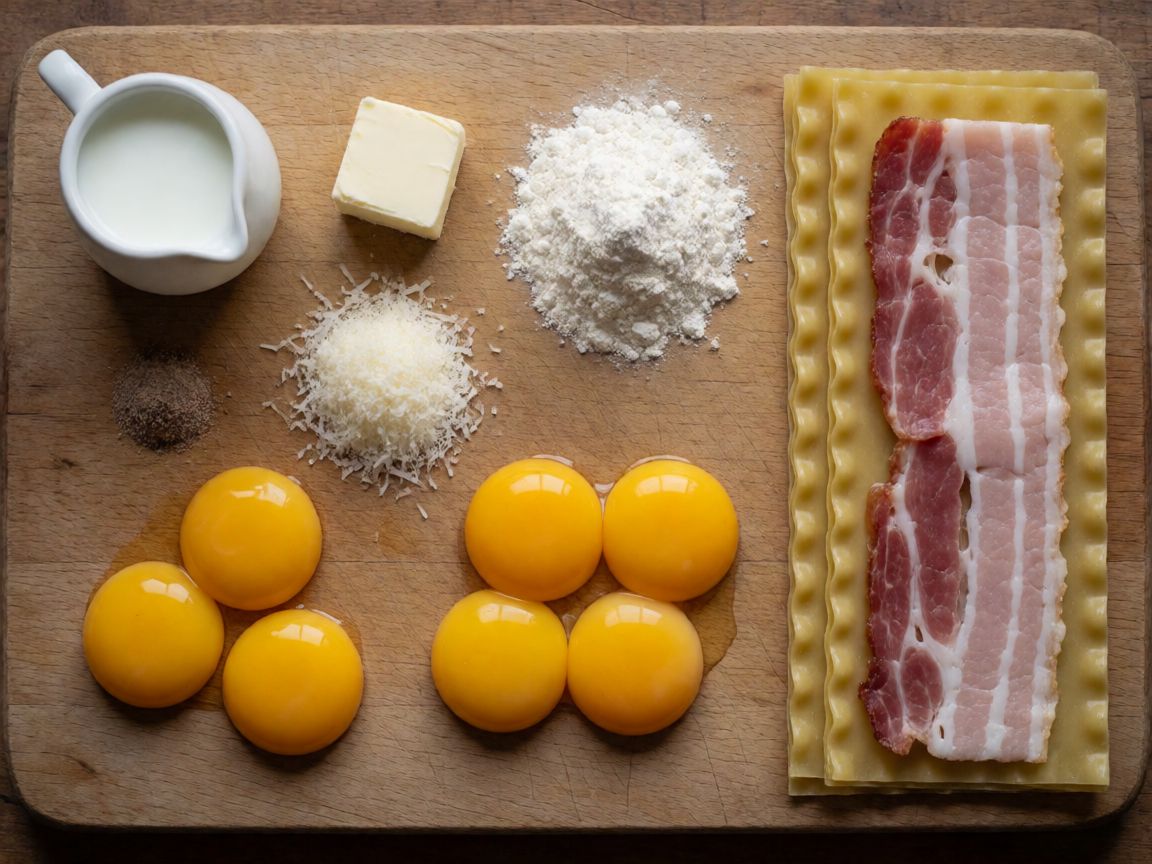
- 800 ml Milk
- 80 g Butter
- 70 g Plain flour
- 6 pcs Egg yolk
- 40 g Pecorino Romano
- Salt to taste
- Black pepper to taste
- Nutmeg to taste
- 250 g Lasagne sheets
- 200 g Pancetta
- 0.5 pcs Onion
- Olive oil to taste
- Pecorino Romano to taste
- 200 g Provolone












Steps
Melt the butter in a saucepan, remove from the heat and add the flour. Stir and return to the heat.
Gradually pour in the milk, stirring constantly. Add salt, black pepper and nutmeg.
Cook the béchamel over medium-low heat, stirring constantly, until it thickens.
Off the heat, stir in the pecorino, then the egg yolks. Mix and set aside.
Heat the oil in a pan, fry the chopped onion, then add the pancetta until cooked through.
In the bottom of a 15x20 cm dish spread a layer of béchamel, add a lasagne sheet, more béchamel, pancetta, pecorino and provolone.
Repeat for 3–4 layers, finishing with a generous layer of béchamel, black pepper and pecorino.
Bake at 180°C in a fan oven.
20 minLet it rest before serving.
30 min
This is carbonara with its logic turned inside out. Real carbonara is a last-minute trick: raw egg yolk meeting hot pasta water and rendered pancetta fat, the heat of the pan doing the cooking in seconds, no custard, no cream, no second chances. Lasagne can't do that trick — it sits in an oven for twenty minutes, far too long for a loose yolk sauce to survive as anything but scrambled egg. So this dish borrows carbonara's cast of characters — pancetta, pecorino, egg yolk, pepper — and gives them a béchamel to hide inside, because béchamel is the one sauce built to survive heat without curdling or weeping.
That's the whole trick of the recipe, and once you see it, you stop asking "where's the cream" (there isn't any, there never should be, in either dish) and start asking "did the béchamel actually thicken before the yolks went in". That's the hinge the whole bake swings on.
What decides whether it works: a béchamel that's properly cooked out before the eggs join it, pancetta that's rendered rather than just warmed, and layers thin enough that the middle of the dish gets the same twenty minutes as the edges. Get those three right and the thing holds its shape when you cut it. Get them wrong and you've baked scrambled egg and wallpaper paste between sheets of pasta — edible, not carbonara.
And the rest — thirty minutes sitting after the oven — isn't optional downtime. It's the difference between a lasagne and a lasagne-shaped puddle on the plate.
Start with the roux, because this is where most people's béchamel goes wrong before they've even added the milk. Butter melted, pulled off the heat, then flour stirred in — off the heat, not on it, because flour added to screaming-hot butter clumps and scorches before it can cook through, and a scorched roux tastes bitter for the rest of the dish's life. Back on the heat, the flour needs a minute or two to lose its raw, pasty smell — that's the starch actually cooking, not just swelling. Skip that and the sauce stays gluey and tastes of nothing, because raw flour's job in a béchamel is thickening, not flavour, and it can't do its job half-cooked.
The milk goes in gradually and gets stirred the whole time because flour-fat paste and cold liquid are natural enemies — dump milk in fast and you get lumps, pockets of roux the liquid never reached. Gradual, with stirring, means every bit of starch gets wetted evenly. "Cook until it thickens" is the only honest doneness marker here — not a clock, a coating. You want the sauce clinging to the spoon, running off slowly, not pooling thin. A béchamel that's still thin when the yolks go in will never catch up in the oven; you'll just be baking a thin, eggy milk sauce, and the lasagne will be soup under the cheese.
The egg yolks go in off the heat, and that instruction is doing real work. Yolks scramble somewhere around 70°C — well below a simmering béchamel. Add them to a sauce that's still actively bubbling and you get the carbonara-maker's oldest enemy: scrambled flecks suspended in sauce instead of a smooth, silky one. Off the heat, the béchamel's own residual warmth is enough to cook the yolks gently into the sauce — that's what gives you richness and body without grain. This is also where whatever curdling risk carbonara normally carries gets defused: the béchamel's starch is a buffer, it keeps the proteins from seizing the way they would in a straight yolk-and-cheese emulsion over direct heat.
Pecorino Romano, not Parmesan, because Pecorino is sheep's milk and salty-sharp in a way that reads as "carbonara" — it's the cheese Roman kitchens reached for because they had sheep, not cows, and tradition here is really just geography with good PR. Parmesan will work; it's milder, so taste and adjust the salt, don't just swap gram for gram and hope. Provolone is there for pull and stretch between the layers — a mozzarella does the same structural job if that's what's in your fridge, you lose a little of provolone's sharper tang but gain nothing is lost in the melt.
Pancetta rendered with onion, not just heated through, matters because pancetta's whole contribution is fat carrying flavour — if it's merely warmed, the fat stays locked in the meat and you've added chewy bits with no payoff. Render it properly — fat turning translucent, meat edges catching a little colour — and that fat seasons the layer it sits in. No pancetta in the house, guanciale is the traditional carbonara answer, though guanciale's harder to find on a British shelf than good streaky bacon, which will do, cut thick and cooked the same way — fat rendered, not just browned.
On the oven: 180°C fan is gentle by lasagne standards precisely because everything inside is already cooked — the béchamel's done, the pancetta's done, even the pasta sheets, if you're using fresh or no-boil, soften mostly from the sauce's moisture rather than from raw heat. Twenty minutes in a domestic oven is about melting cheese into a shared, gooey layer and heating the dish through to the middle, not cooking anything raw. A narrower dish, true to the 15×20cm here, means the heat has less distance to travel to the centre — in a wider dish the edges would dry out long before the middle got hot.
Then the thirty minutes' rest. Béchamel that's just come out of the oven is still loose with heat — cut into it straight away and the layers slide apart, sauce floods the plate, and you lose the shape you spent an hour building. Resting lets the starch set back up as it cools slightly, the layers bond. This is the patience the dish actually needs — not at the stove, where everything moves fast, but at the very end, where the temptation to cut in immediately is strongest and the most damaging.