
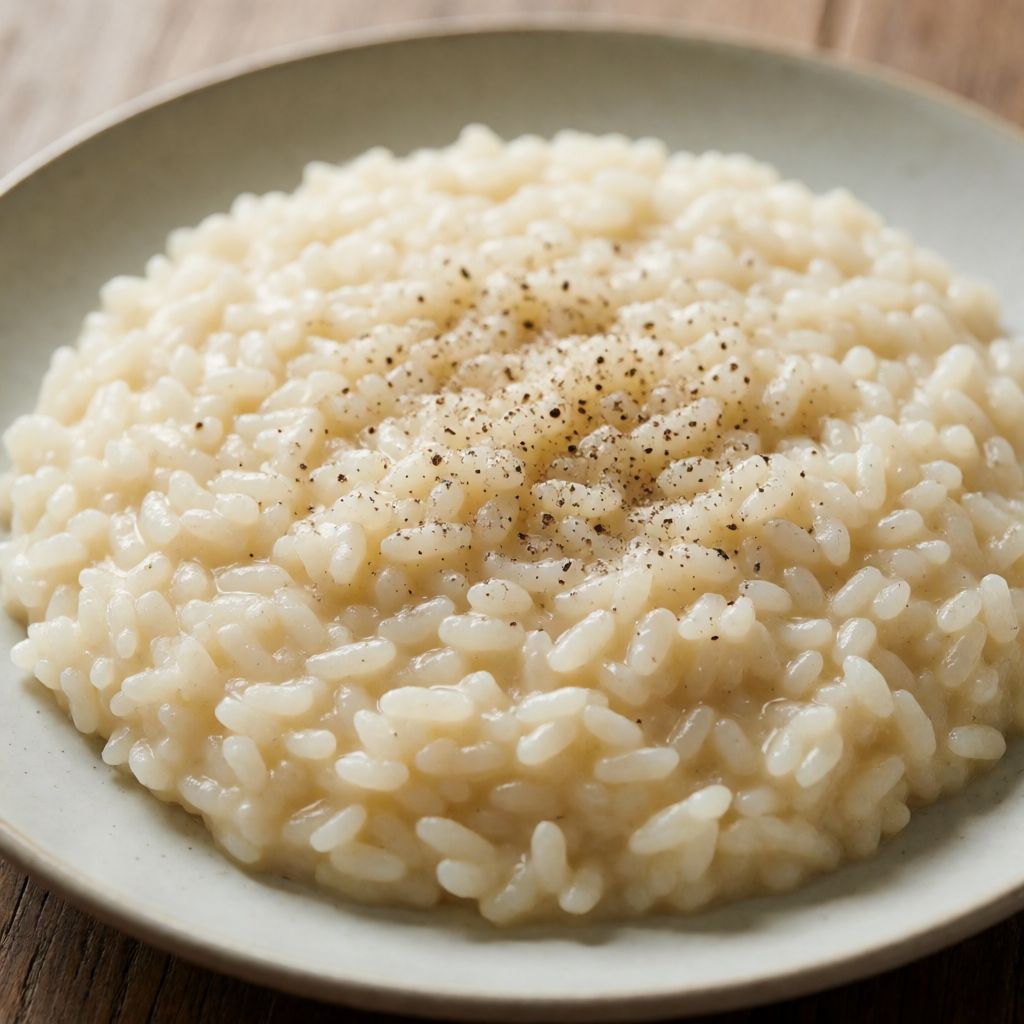
 AI photo
Neapolitan-Style Risotto
A comforting Neapolitan-style risotto with tomato passata, thyme and parsley, finished with grated parmesan.
Labels are worked out automatically from the ingredients and can be wrong. Check the packaging if it matters to you.
Ingredients
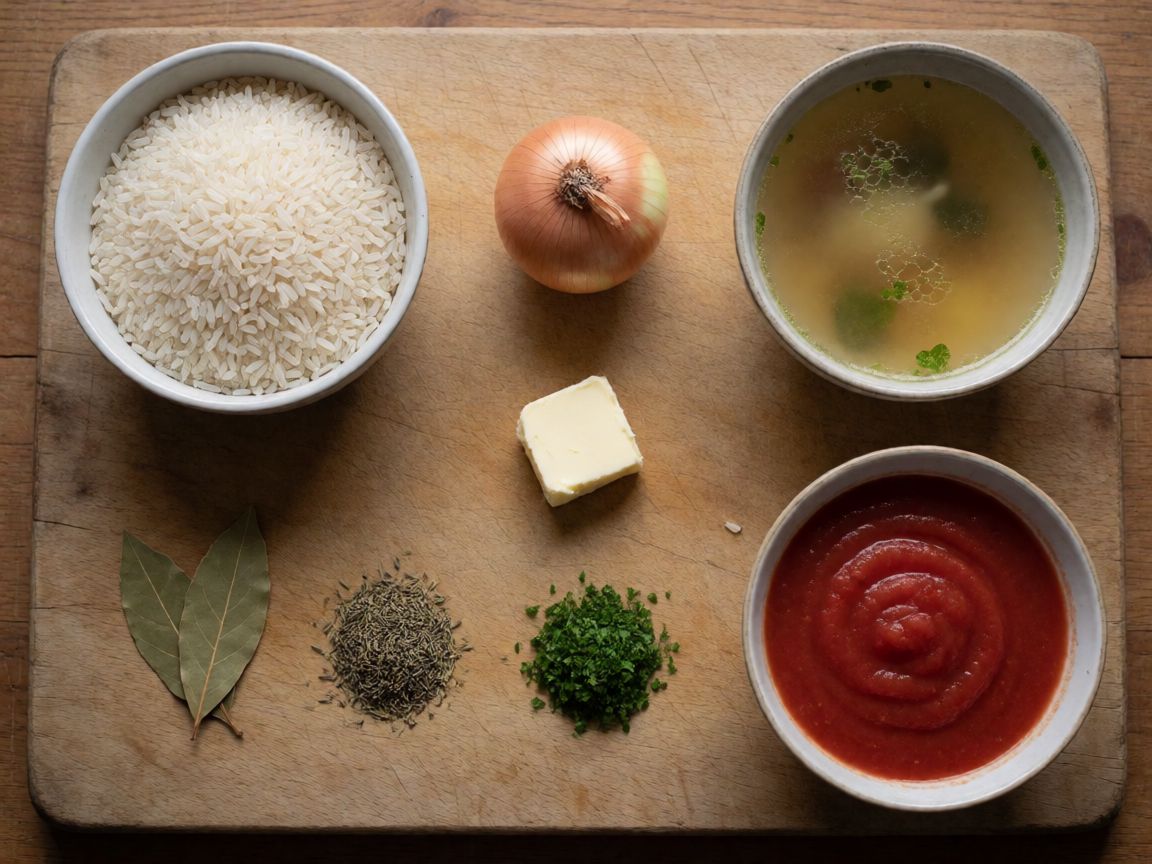
- 300 g Rice
- 1 pcs Onion
- 100 g Butter
- 4 pcs Stock hot
- Salt to taste
- Black Pepper to taste
- 1 pcs Bay Leaf
- 1 pinch Dried Thyme dried
- 3 pcs Parsley a few sprigs, chopped
- 1 pcs Tomato Passata
- Parmesan grated, to taste










Steps
Finely chop the onion and prepare the stock. In a separate bowl, mix the tomato passata with the thyme.
Melt the butter in a pan, add the rice and onion, and sauté, stirring constantly.
5 minPour in the hot stock, add the bay leaf, salt and black pepper. Bring to the boil, cover and cook over medium heat.
20 minStir in the tomato passata with thyme, the chopped parsley, and a little more stock if needed.
Serve the risotto on plates and sprinkle with grated parmesan.
This isn't risotto the way Milan does it — no wine, no ladling stock in one cup at a time while you stand over the pan for twenty minutes straight. It's closer kin to a plov: butter and onion go in first, the rice gets sealed in that fat, then the stock arrives all at once, hot, and a lid takes over the job your wrist would otherwise do. If you've ever cooked a pilaf, your hands already know this rhythm.
What decides whether it works is two things, and both happen before the lid goes on. First, how the rice is treated in the butter — you want the grains to turn opaque and start to glisten, not brown. Browning means you've cooked past sealing into toasting, and a toasted grain takes on bitterness and resists the stock, leaving a chalky core no amount of extra liquid fixes later. Second, once the stock is in and boiling, what happens under that lid has to be a tremble, not a rolling boil — a hard boil drives steam out through every gap faster than the rice can drink it, so the bottom scorches dry while the top is still swimming.
Some say risotto has to be stirred constantly or it won't turn creamy. No — not here, because the creaminess in this dish isn't beaten in with a spoon, it's trapped by a lid. The starch the rice sheds has nowhere to go but back into the grains around it. Naples didn't have kitchens full of people free to stand over one pot all afternoon either, so the method that survived is the one that lets the pan do the waiting while you go and lay the table.
Rice is the one ingredient with no real substitute, but the criterion is simple: you need a short, round grain that sheds starch as it cooks and still holds its shape — Arborio or Carnaroli if you can find them, but any risotto-labelled rice in a UK supermarket does the job. A long-grain or basmati will stay separate and dry under this method; it's bred to resist exactly the starch release you're relying on here, so don't reach for it out of habit because it's what's in the cupboard for a curry night.
Butter at 100g for 300g rice is a generous hand, and that's deliberate — it's doing the work olive oil would do further south in Italy, coating every grain so the sauté stage seals rather than steams the rice. If you're out, use any fat with no flavour of its own strong enough to fight the tomato later — a neutral oil will carry the mechanics, it just won't give you the same gloss on the plate. Don't swap in a strongly flavoured oil or a spread meant for toast; both will leave a taste that has no business in this pan.
The stock has to go in hot, straight from the kettle or the pan it was warmed in, not from the fridge. Cold stock dropped into a hot pan kills the simmer stone dead — the rice stops cooking for a few minutes while everything comes back up to temperature, and in that gap the grains that hit the bottom first overcook while the ones on top lag behind. A home hob, electric or gas, already struggles to heat a wide pan evenly; don't make it fight a temperature drop too.
Passata and thyme go in at the very end, stirred through warm rice rather than simmered down with it, because tomato cooked for twenty minutes under a lid loses its edge and turns flat and sweet — fine for a Sunday ragù, wrong here, where you want a fresh hit of acidity against the butter. The thyme blooms faster in the moisture of the passata than it would scattered dry into hot fat, so mixing them first isn't fussiness, it's giving the herb somewhere soft to land. Parsley follows for the same reason in reverse — raw and chopped at the last minute, because any real cooking turns its green dull and slightly bitter.
The bay leaf sits in the stock purely to flavour it quietly from the side, not to be bitten into — fish it out before plating. Parmesan goes on at the table, not into the pan, because cheese melted directly into a hot, starchy liquid tends to split into grease and string rather than staying silky; let the heat of the rice itself soften it on the plate, the way you'd finish a roast with a grating of horseradish rather than cooking it in.
In a flat kitchen without a proper heavy lid, a plate set over the pan or a layer of foil does the same job of trapping steam — the point isn't the lid itself, it's keeping the moisture from escaping before the rice has drunk its fill. And a wide, shallow pan beats a tall saucepan here for the same reason a paella pan beats a pot: more surface means the stock sits in a thinner layer, cooks the rice evenly, instead of scorching the bottom layer long before the top one's done. 300g rice with this much butter and stock is a proper two plates, not a starter — plan it as the meal, with maybe a green salad on the side, nothing competing for space on the plate.