
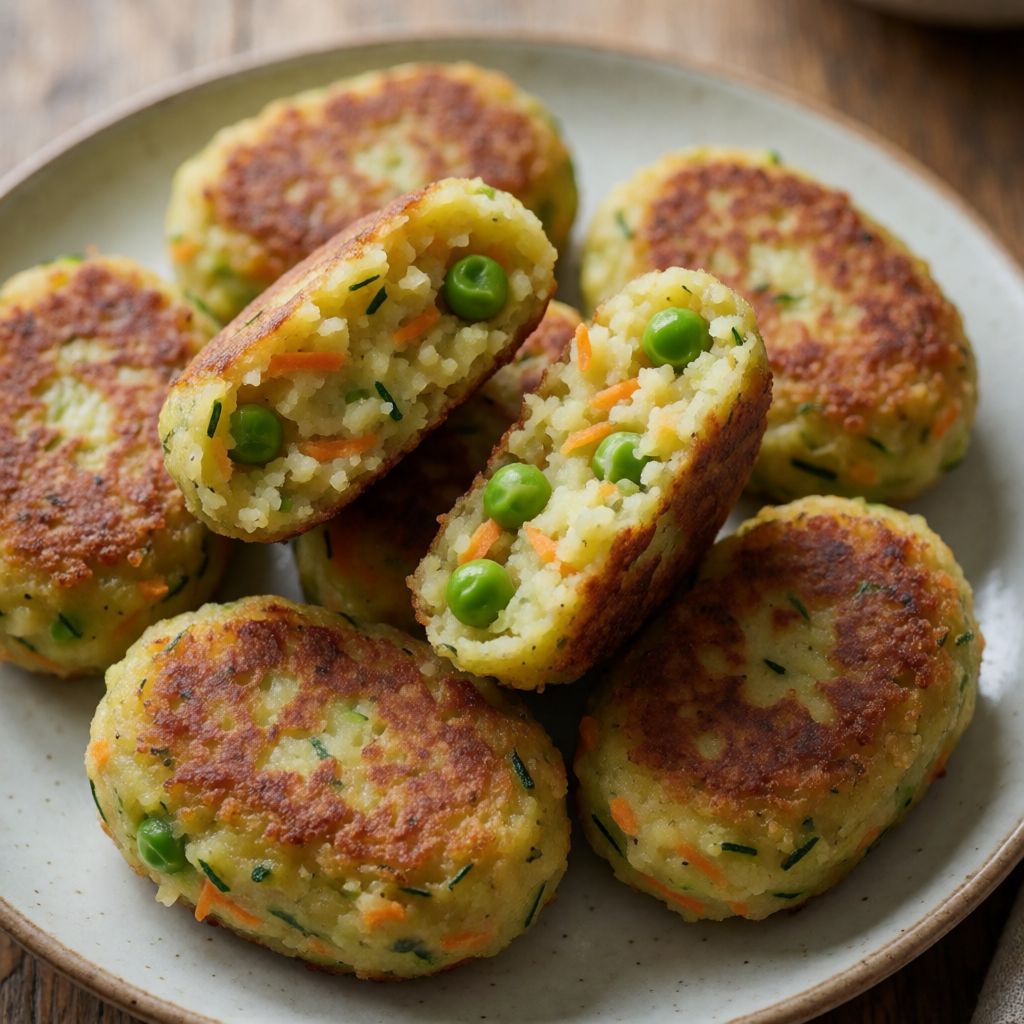
 AI photo
Tender Vegetable Croquettes in the Air Fryer
A light vegetable croquette made with potato, courgette, carrot and peas, finished in the air fryer.
Labels are worked out automatically from the ingredients and can be wrong. Check the packaging if it matters to you.
Ingredients
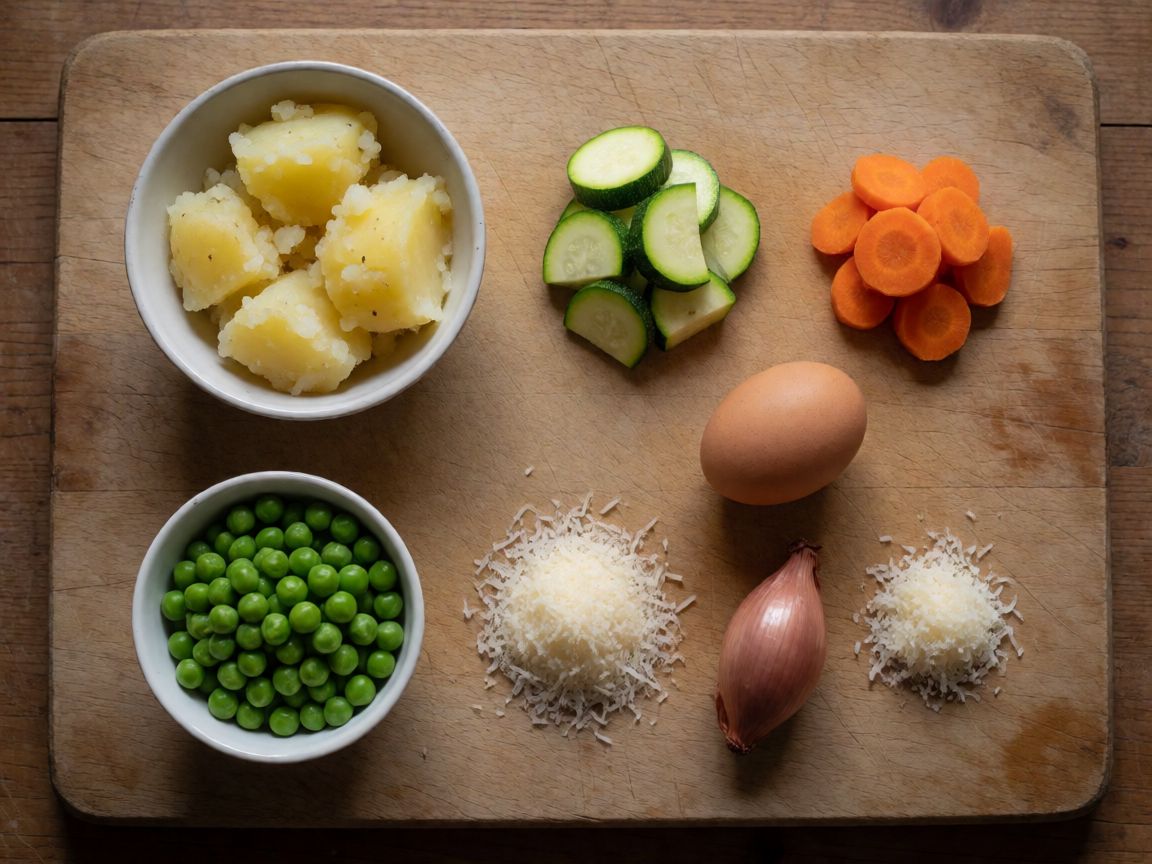
- 500 g Potato boiled
- 100 g Courgette
- 100 g Carrot
- 150 g Peas
- 1 pcs Egg
- 100 g Parmesan grated
- 1 pcs Shallot
- Olive oil to taste
- Salt to taste
- Hard cheese to taste
- Breadcrumbs dried
- Black pepper to taste
Steps
Peel the potatoes and boil them in lightly salted water until soft.
Wash the courgette and carrot, trim the ends, peel if needed and cut into even cubes.
Heat a little olive oil in a pan and gently cook the finely chopped shallot over low heat.
Add the carrot and courgette, raise the heat slightly and sauté.
3 minAdd the peas, stir, season with salt and pepper, cover and cook.
15 minOnce the potatoes are cooked, drain and mash them with a potato masher.
Add the warm sautéed vegetables, the egg and the grated Parmesan, and mix thoroughly.
With slightly damp hands, shape the mixture into balls — the croquettes.
Coat each croquette in breadcrumbs and place in the air fryer basket.
Drizzle with a little oil and cook at 180°C, turning halfway through.
15 min
This is mash with vegetables and cheese, bound by egg, rolled, breaded and crisped in hot moving air instead of hot oil. It's a croquette only in shape — classic croquettes get their crust from a deep plunge in oil at frying temperature, which seals the surface in seconds and keeps the inside soft and almost liquid underneath. An air fryer can't do that in one go. It cooks slower and drier, so the whole thing firms up more evenly, which is actually fine here — you're not chasing a molten centre, you're chasing a croquette that holds its shape on a weeknight without a vat of oil to deal with afterwards.
What decides whether it works is moisture. Potato, courgette, peas — all of them carry water, and water is the enemy of a croquette that's meant to hold together and crisp on the outside. Mash the potato dry rather than wet (no splash of milk here, no butter beaten in loosely), drain the vegetables properly after their covered simmer, and let everything cool to just-warm, not hot, before you add the egg — hot mixture plus raw egg risks scrambling at the edges, which loosens the binding exactly where you need it tightest.
Shaping with damp hands isn't a flourish, it's practical: the mix is starchy and sticks to dry skin, and dry skin tears the surface you're about to coat. A torn surface means a crack, and a crack is where the air fryer's dry heat finds the soft interior and dries it out before the crust is even brown. Smooth hands, smooth ball, even crumb coat — that's the whole logic in one sentence.
Potato is the structure, and it has to be the right kind of potato: a floury variety that breaks down dry and fluffy when boiled — Maris Piper or King Edward, the ones your Sunday roast already relies on for proper crisp-edged roasters. A waxy salad potato holds together when boiled but mashes wet and gluey, and a wet mash means a croquette that slumps rather than holds. Boil it in its skin if you can be bothered — less water gets in through unbroken skin than through cut flesh — then peel while hot, when the skin comes away easiest.
Courgette and carrot are cut into even cubes for one plain reason: uneven pieces cook unevenly, and a raw-cored bit of carrot in a croquette ruins the bite far more than it would in a stew, because here there's no sauce around it, nowhere to hide. Courgette itself is nearly all water held in a sponge of cell walls; sautéing it hot and briefly, rather than stewing it long and gentle, drives some of that water off as steam before it has the chance to sweat its way into your mash later. That's the real reason for raising the heat once the carrot and courgette go in — not flavour, moisture control.
Peas go in last and get a lid for a short covered cook — they're already essentially cooked (frozen peas are blanched before freezing), so this step is just warming them through and letting the covered steam finish the carrot without needing more oil or more watching. If you only have fresh peas in season, they'll want a touch longer; if tinned, drain hard and add even later, they need almost nothing.
Egg is the binder — it coagulates with gentle heat and holds the starch and vegetable matter together the way nothing vegetal reliably can at home without a long reduction. One egg for 500 g potato plus vegetables is a modest ratio; don't double it on instinct, excess egg makes the mix wetter and softer, the opposite of what you want going into dry heat. Parmesan does two jobs at once: salt and savour, but also a little extra binding as it melts and re-sets, and a little crust-browning help once it's on the outside under the crumbs. Any hard, dry grating cheese works on the same logic — a mature Cheddar, Grana Padano, Pecorino if you like it sharper — the test isn't the name, it's "hard enough to grate fine and low enough in moisture that it won't loosen the mix."
Shallot cooked low and slow first, before anything else goes in the pan, is standard onion logic: raw alliums are harsh and watery, and a hard sear turns them bitter at the edges before the inside softens. Low heat lets the sugars develop gently — gold, not brown — while the moisture cooks off gradually rather than seizing. If shallot's not in, a small ordinary onion, finely chopped, does the same job; it's milder and slower to turn, so give it a little more time rather than more heat.
Breadcrumbs — dried, not fresh — matter because fresh breadcrumbs still carry moisture of their own, which steams under the heat instead of crisping, and you end up with a soggy coat over a dry-ish core, the texture inverted from what you want. Dried crumbs are already dehydrated; they only have one job left, which is to brown and crunch. A light oil drizzle over the crumbed croquettes isn't there to fry them — there's nowhere near enough for that — it's there because the air fryer's moving hot air browns fat far more readily than it browns bare starch, so a little oil gives the crumbs something to catch and colour on, rather than them just drying pale and dusty.
Patience here isn't about watching a pot — it's about letting the sautéed vegetables cool to warm before they meet the egg, and letting the shaped croquettes sit a few minutes before they go in the basket so the crumb coat sets rather than shears off against the mesh. Skip that and you lose crumbs to the basket, not to the croquette.