
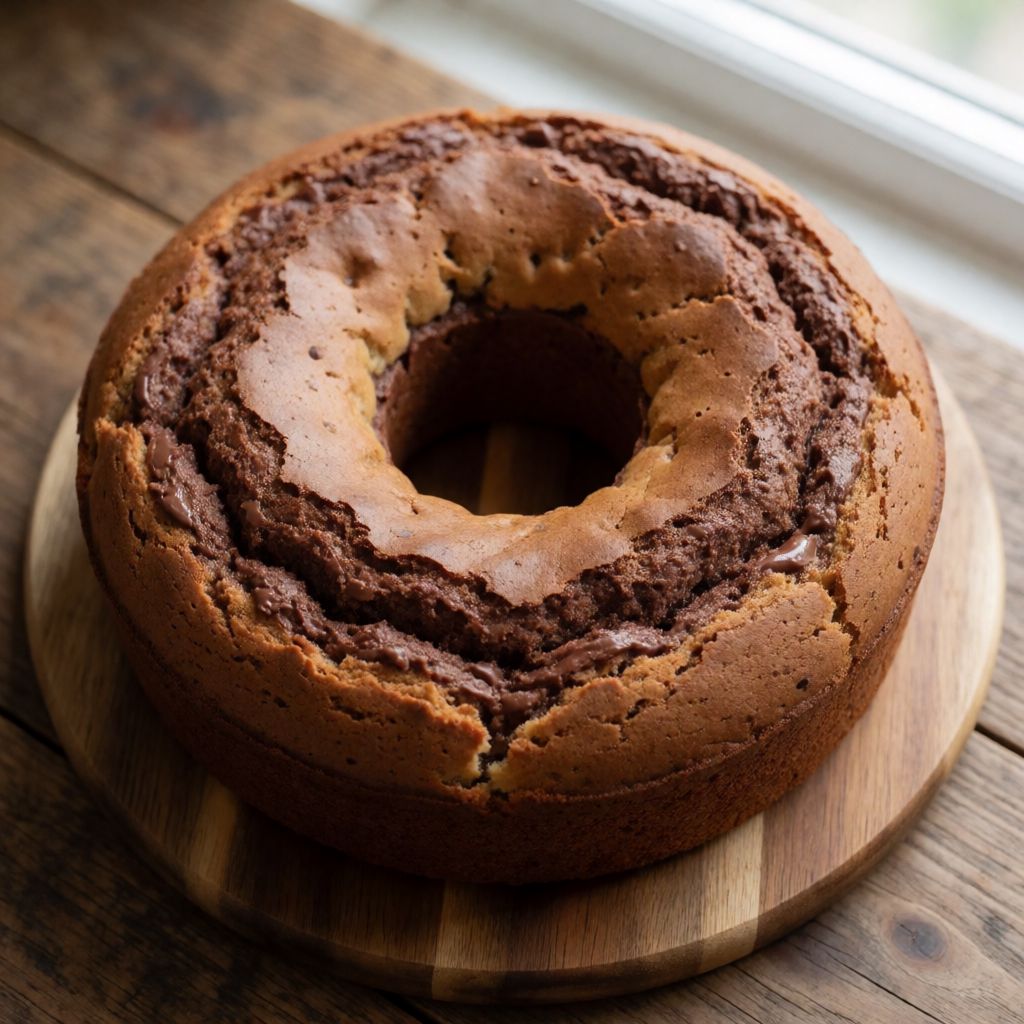
 AI photo
Nutella Ring Cake
A light ring-shaped cake swirled with Nutella and finished with a scattering of chopped hazelnuts.
Labels are worked out automatically from the ingredients and can be wrong. Check the packaging if it matters to you.
Ingredients
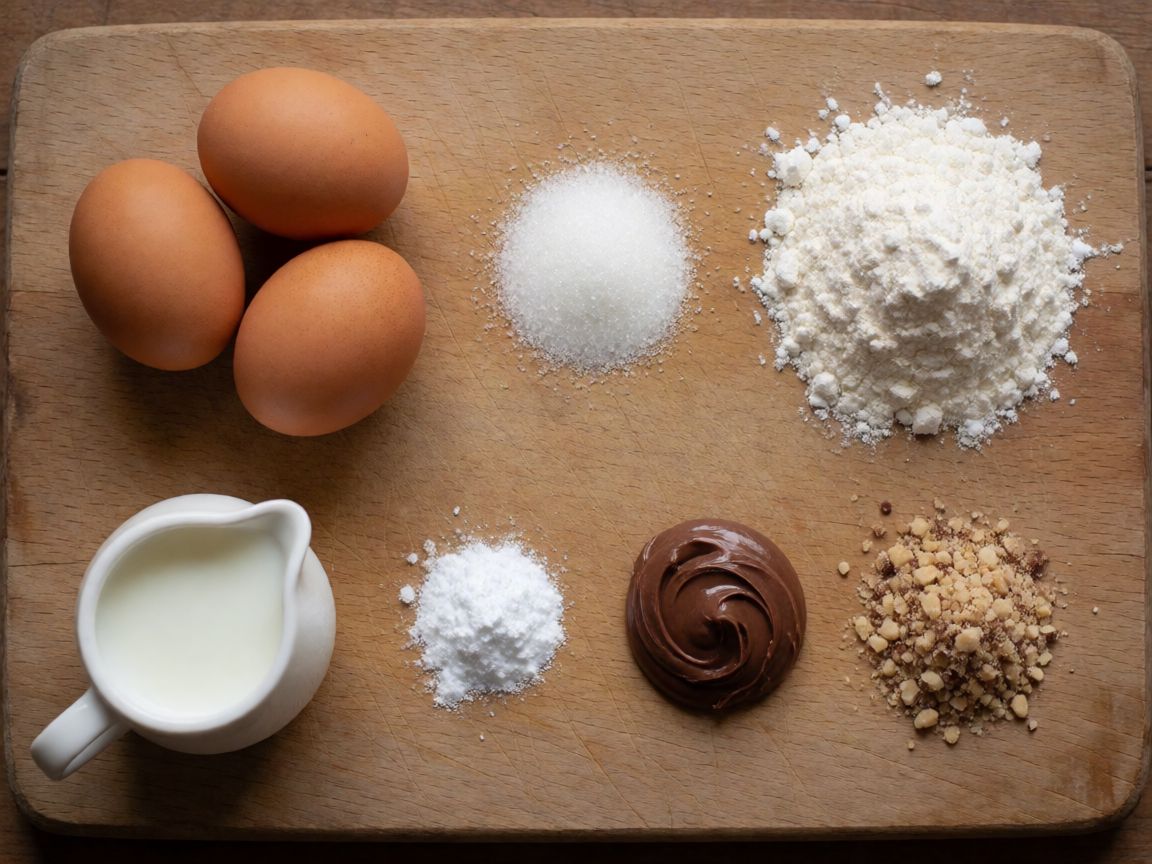
- 3 pcs Eggs
- 150 g Caster sugar
- 200 ml Milk room temperature
- 160 g Plain flour sifted
- 10 g Baking powder
- 200 g Nutella
- to taste Nutella for decoration
- to taste Hazelnuts chopped, for decoration





Steps
Whisk the eggs and sugar with an electric mixer until pale and fluffy.
Gradually pour in the room-temperature milk in a thin stream.
2 minAdd the sifted flour and baking powder, mixing until no lumps remain.
1 minAdd the Nutella, softening it in the microwave or over a water bath if needed, and fold it into the batter.
2 minPour the batter into a 22–24 cm ring cake tin, greasing it with butter and dusting with flour if needed.
Bake in an oven preheated to 180°C for 40–45 minutes with the fan on, or about 50 minutes without the fan. Before removing, check it's done with a wooden skewer.
45 minLet it cool slightly, then transfer it to a plate.
Decorate with Nutella and chopped hazelnuts, if desired.
This is a pound cake that got rid of butter and let Nutella do both jobs — fat and flavour at once. Whisk eggs with sugar long enough and you build a foam, tiny bubbles trapped in egg protein, and that foam is the actual scaffolding of the cake, not the baking powder. The baking powder just finishes what the whisking started. Skip the whisking, or cut it short, and you get a chocolate-ish brick with good intentions.
What decides whether this cake rises properly and stays soft is how you treat the batter after the eggs are whipped. Pour the milk in a thin stream, not a splash — a splash shocks the foam and knocks air out of it before the flour even arrives. And soften the Nutella before you fold it in. Cold Nutella doesn't mix, it clumps, and chasing those clumps with a spoon means over-stirring, and over-stirring is exactly what deflates the air you worked for. Fold, don't beat, once the Nutella is in.
The ring shape isn't there to look like a wedding gift. A dense, egg-rich batter like this one needs heat to reach the centre fast, and a tube running through the middle means there's no thick, cold core waiting to stay raw while the edges burn. Some say a ring tin is only for presentation — no, because without that hole, in an ordinary home oven that heats unevenly at the best of times, you'd need a lower temperature and a lot more patience to cook the middle through without drying the outside.
Eggs are doing the structural work here, so don't treat them as an afterthought. Whisking with sugar isn't about combining two ingredients, it's about mechanically beating air into the mixture until it's pale and holds its shape for a second when you lift the whisk — that's the 'fluffy' you're aiming for, and it takes the time it takes. There's no shortcut version of this step; patience is an ingredient same as flour is.
Caster sugar dissolves into that foam without grinding against your teeth later — it's fine enough to melt into the eggs as you whisk rather than sitting there as grit. If you've only got ordinary granulated sugar, a minute in a blender gets it close enough. Milk at room temperature matters for the same reason the pouring-in-a-thin-stream instruction matters: cold milk cools and deflates the foam on contact, and dumping it in all at once breaks the smooth emulsion you want, leaving you fishing little curdled threads out of your batter.
Plain flour, sifted, goes in because this recipe already calibrates its own lift with the baking powder measured against it — self-raising flour here would double up the leavening and you'd get a cake that rises fast, then sinks, because the structure can't hold gas it wasn't built to hold. Sift it for the same reason you sift any flour: lumps don't dissolve in batter, they sit there as dry pockets, and sifting also knocks a little air into the flour before it ever meets the wet mixture.
Nutella is the whole point, so don't buy whatever's cheapest without reading what's in the jar — you want a hazelnut-cocoa spread with real fat content, because that fat is what tenderises the crumb and carries the flavour through every bite, not just the top layer you smear on for decoration. Softening it — microwave in short bursts, or set the jar in a bowl of hot water — isn't optional fuss, it's what lets it fold into the batter without turning into a workout. Any chocolate-hazelnut spread with a similar fat-to-sugar balance will behave the same way; a drier, low-fat 'light' version won't, and you'll feel the difference in how easily it blends and how dry the finished cake turns out.
Butter for greasing the tin is a release agent, nothing more — any flavourless fat does the job, including a neutral oil or a cooking spray, with a dusting of flour afterwards to help the batter let go of the tin's grooves once it's baked. If you don't own a proper ring tin, a bundt-style tin or anything with a central tube will do; a plain round or loaf tin works too, but expect a longer bake and check the centre more carefully, since you've lost the hole that was helping heat get there quickly.
The oven note about fan versus no fan isn't decoration either — a fan pushes hot air around the cake continuously, so it cooks faster and more evenly; without one, the oven relies on heat simply rising and settling, which is slower and less even, hence the extra time on the clock. Chopped hazelnuts on top are there for contrast, a bit of crunch against a soft crumb, and toasting them first, though the recipe doesn't insist on it, won't hurt if you like a deeper nut flavour.