
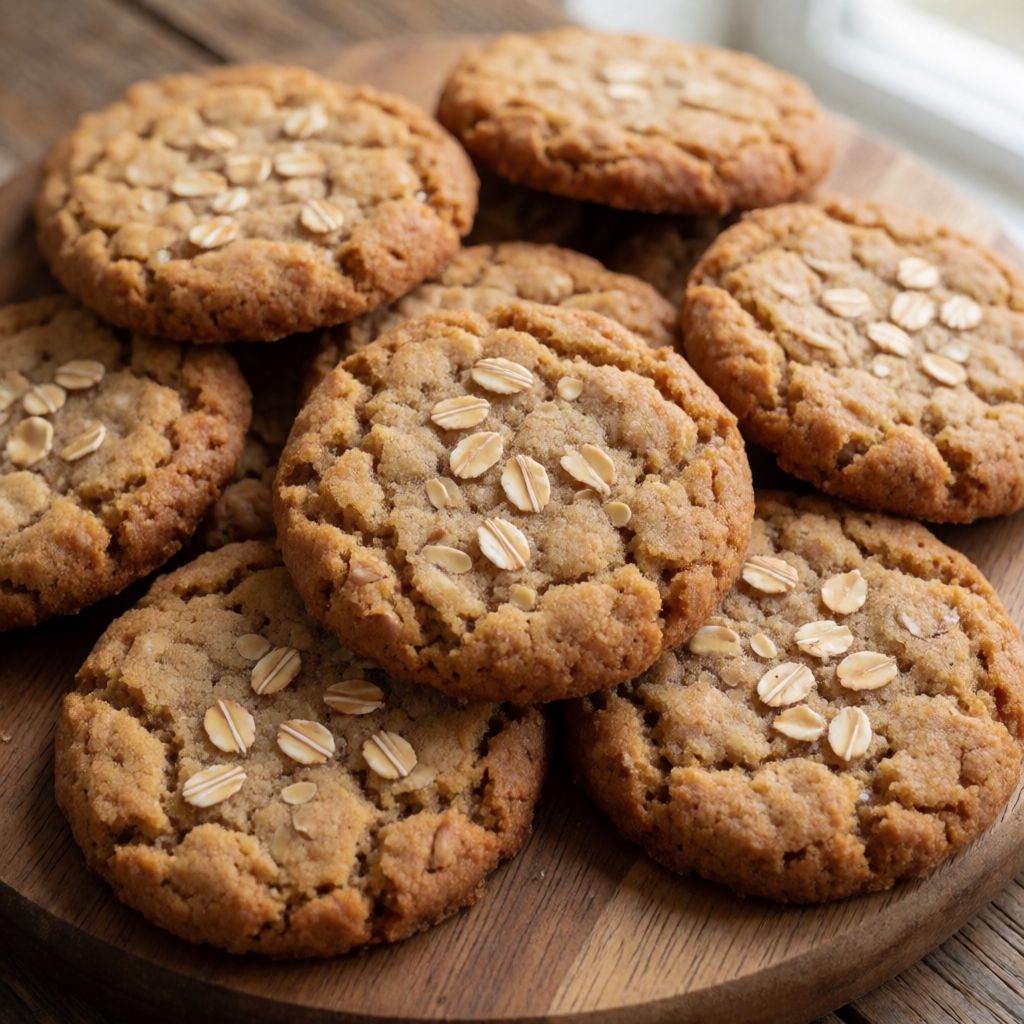
 AI photo
Oat and Cinnamon Cookies
Soft oat biscuits with dates and dark chocolate, spiced with cinnamon and cardamom.
Labels are worked out automatically from the ingredients and can be wrong. Check the packaging if it matters to you.
Ingredients
- 80 g Butter
- 50 g Caster sugar
- 50 g Muscovado sugar
- 1 pcs Egg
- 120 g Porridge oats
- 100 g Wholemeal flour
- 1 pinch Salt
- 1 tsp Baking powder
- 1 tsp Cinnamon
- 1 tsp Cardamom
- 50 g Dates chopped
- 30 g Dark chocolate chopped











Steps
Beat the butter, caster sugar and muscovado sugar until light and fluffy, then beat in the egg.
Mix all the dry ingredients together, add the chopped dates, toss them in the flour mixture, then combine with the butter mixture to form a smooth dough.
Fold the chopped chocolate into the dough.
Shape into a log about 12 cm long and cut into 12 slices, 1 cm thick.
Arrange the slices on a baking tray lined with baking parchment.
Bake in a preheated fan oven at 175°C for 13–15 minutes, until the biscuits are golden.
14 minLet the biscuits cool on the tray before transferring to a wire rack.
5 min
This is a fridge-and-biscuit-tin cookie, not a cafe showpiece — a log of dough you slice like a sausage roll and bake in batches, which is exactly why it suits a flat with one oven tray and no patience for twelve separately-shaped rounds. The whole dish stands or falls on two things: how you beat the butter and sugar at the start, and how far you let the slices go in the oven before you pull them.
Beating butter and the two sugars "until light and fluffy" isn't decoration — it's the only leavening step that's actually in your hands. You're whipping air into fat, thousands of tiny bubbles that the baking powder later inflates. Rush this and the cookies spread flat and dense instead of holding a slight dome with a few proper cracks on top. Caster sugar does the main fluffing because its small crystals cut into the butter fast; muscovado is there for flavour and moisture, not lift — swap the ratio the other way and you'll get a wetter, softer biscuit, not a bad one, just a different one.
The log-and-slice method is the real trick for a domestic kitchen. You're not shaping twelve lumps by eye and hoping they're the same size — you're shaping one log once, chilling the whole problem of consistency away, then cutting. Uneven thickness is the single biggest reason home-baked cookies bake unevenly: thin ones burn at the edge while thick ones stay raw in the middle. A ruler-straight 1 cm slice fixes that before the oven even gets a vote.
Doneness here is a colour, not a stopwatch. "Golden" means the edges have gone past pale and are tipping into brown while the centre is still a shade lighter — that's the sugar caramelising at the rim before the middle, which is thicker and cooler, catches up. Some say pull cookies the second they look done in the middle; no, because they carry on cooking from their own heat for a good minute after the tray leaves the oven, and a centre that looks slightly underdone at 14 minutes is usually exactly right once it's rested. The 13–15 minutes in the recipe is a lower bound dressed up as a range — get to know your oven's hot spots and you'll learn whether yours wants the low end or the high end.
Letting the biscuits cool on the tray before moving them isn't fussiness, it's physics: straight out of the oven they're still mostly melted sugar and fat held in a loose starch net, and that net only sets as it cools. Lift one too early and it folds in half in your hand. Five minutes of patience on the tray, then onto a wire rack so steam escapes from underneath instead of turning the base soggy — a plate works if you don't own a rack, just don't stack the biscuits while they're warm or they'll weld together.
On the ingredients: the oats give you texture and a reason to call this a flapjack's more grown-up cousin — any rolled or porridge oat works, but don't reach for instant oats, they're cut too fine and dissolve into the dough instead of staying chewy. The wholemeal flour is there for a slight nuttiness and a less cakey crumb than white flour gives; if you've only got white in the cupboard, it'll still work, just softer and milder. Cinnamon and cardamom together is a Scandinavian-leaning pairing rather than a strictly British one — cardamom brings a citrusy lift that stops the cinnamon from being the only thing you taste, and if you haven't got it, more cinnamon alone is a fair trade, not a failure.
Dates are tossed in the dry mix before they meet the wet dough for a reason: a sticky, chopped date dropped straight into soft butter clumps together and you end up with one date-boulder instead of flecks through the dough. Coating them in flour first keeps them separate. Any soft dried fruit — raisins, chopped apricots, dried figs — can stand in, though dates bring a caramel note the others don't. The dark chocolate goes in last and folded, not beaten, so you don't melt it against warm dough and smear it through everything; chop it yourself rather than buying chips if you want proper molten pools rather than uniform little dots.
Butter should be soft, not melted — melted butter won't hold air when you beat it, and you're back to flat, dense cookies. If you're dairy-free, a baking margarine will beat up similarly; oil won't, because it has no structure to hold bubbles in. None of this needs a mixer either — a wooden spoon and a warm kitchen get you there, just allow more of your own patience instead of a machine's.