
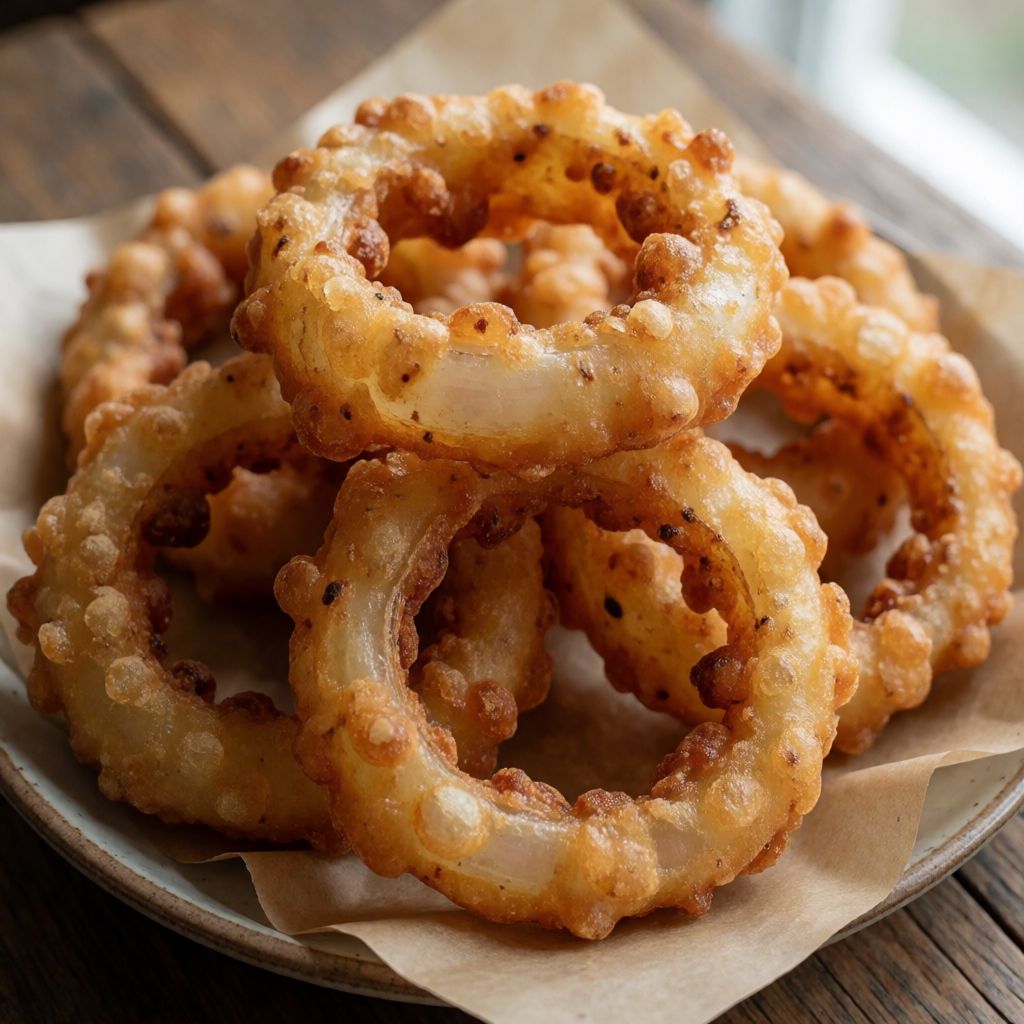
 AI photo
Crispy Beer-Battered Onion Rings with Chilli Cheddar Dip
Crispy onion rings in a light beer batter, served with a smoky chilli cheddar dip.
Labels are worked out automatically from the ingredients and can be wrong. Check the packaging if it matters to you.
Ingredients
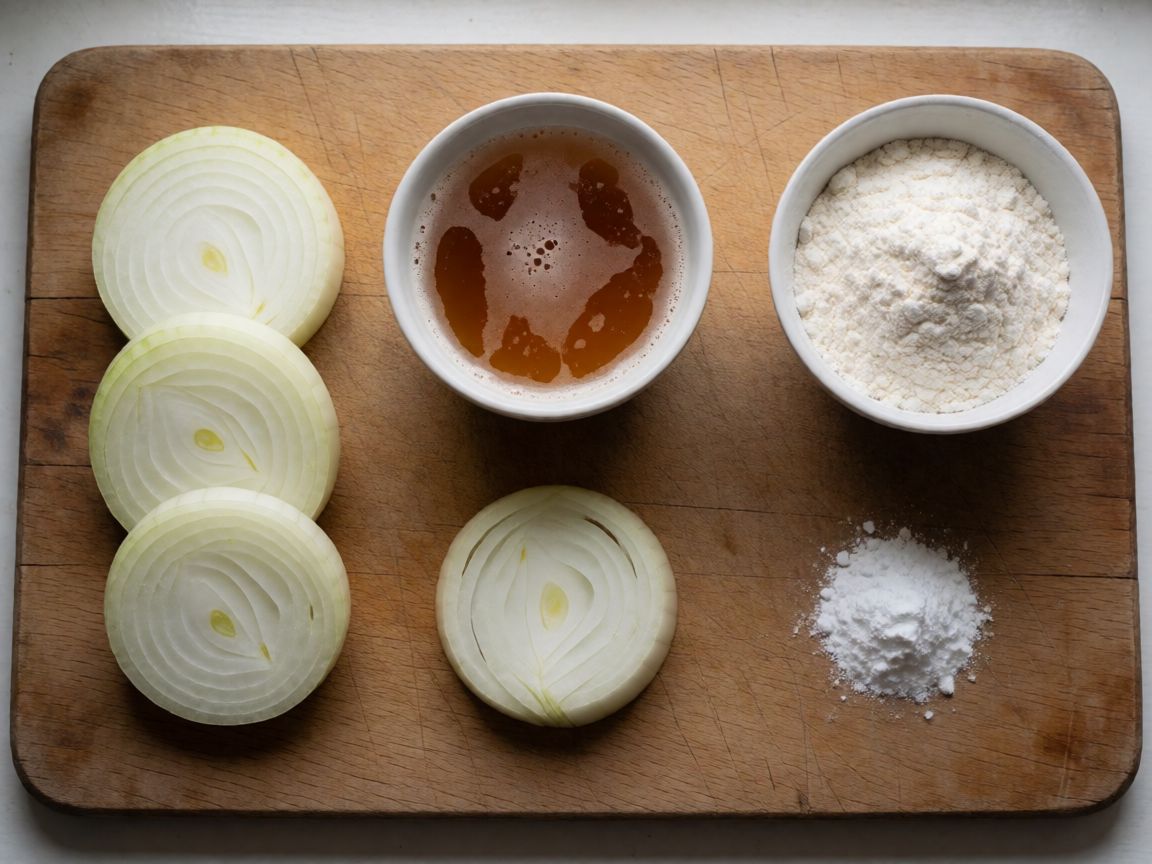
- 4 pcs Onion cut into rings
- 200 ml Beer
- 175 g Plain flour
- 0.5 tsp Baking powder
- Salt
- Black pepper freshly ground
- 1 l Vegetable oil for deep-frying






Chilli cheddar dip
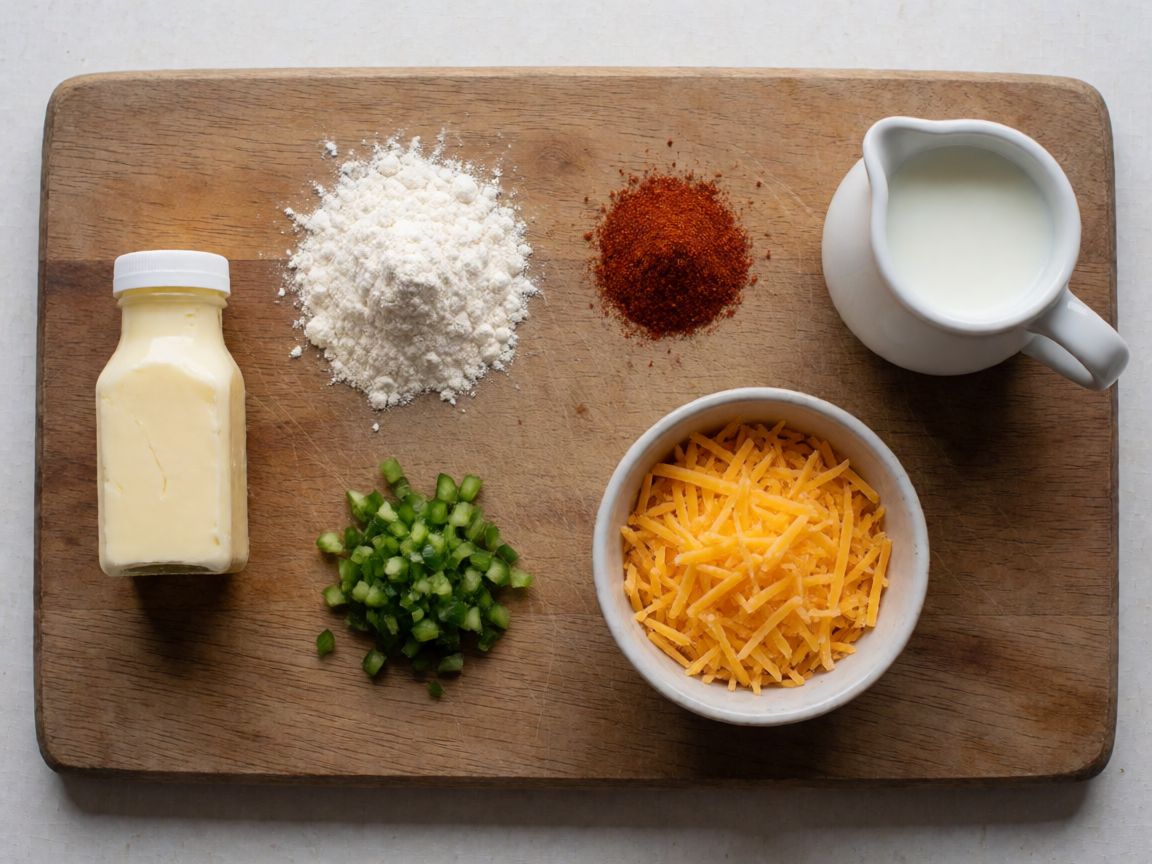
- 1 tbsp Butter
- 1 tsp Plain flour
- 0.5 tsp Smoked paprika
- 100 ml Milk
- 150 g Mature cheddar freshly grated
- Salt
- Black pepper freshly ground
- 1 tbsp Jalapeño finely chopped



Steps
Mix the flour, baking powder, salt and pepper. Pour in the beer, whisking until the batter is smooth and runny.
Heat the oil in a saucepan. Check the temperature by dipping the tip of a wooden skewer into it – it's ready when small bubbles form and sizzle around the tip.
Separate the onion rings so you have plenty of individual rings.
Dip a handful of onion rings into the beer batter, then lower them into the oil one ring at a time.
Fry 10-12 rings at a time.
Lift the onion rings out with a slotted spoon once golden and crisp.
Drain on kitchen paper, then sprinkle with flaky salt and serve with the dip.
Melt the butter in a saucepan and stir in the flour and smoked paprika to form a roux.
Gradually add the milk in small amounts while heating, whisking until the sauce is free of lumps.
Let it simmer gently, stirring, for a few minutes until the sauce reaches a good consistency.
Add the cheddar and stir until melted.
Season to taste with salt, pepper and jalapeño. Serve warm.
An onion ring is a trick of engineering, not a deep-fried onion. The ring is a tube of sweetness wrapped in a shell that has to be rigid enough to snap but light enough to shatter — and that shell is batter, carbonated by beer instead of by effort. That's the whole mechanism. The CO2 bubbling out of the beer as it hits hot oil puffs the coating into a lace of tiny holes before the starch has time to set solid, so you get crunch with air in it, not crunch like a brick. Some say you must use flat, warm beer, left out to go stale, to get the batter "right" — no, because the gas is exactly what you want working for you at the moment of frying, not before. Cold, fizzy, straight from the fridge is better: it keeps the batter cool and loose until it hits the oil, where the real reaction happens.
The oil temperature decides everything else. Too cool and the batter soaks in oil like a sponge before it has set — that's the greasy, heavy ring everyone blames on "bad batter" when it's really a cold pan. Too hot and it colours in seconds while the onion inside stays raw and sharp, biting back at you instead of going sweet. The skewer trick — bubbles forming steadily around the wood — is a domestic stand-in for a thermometer, and it's honest: you're reading roughly 170–180°C, the zone where starch sets into crust before oil has time to penetrate deep, and the onion has long enough in the heat to soften and turn mild.
Onion: go for a standard yellow or white onion rather than red — red onions are wetter, sharper raw, and the colour bleeds oddly through pale batter. Size matters more than variety: pick large onions so the rings hold their shape and don't collapse into thin curls that cook through in ten seconds and burn. Cut thick, a good centimetre, because a thin ring has no structural resistance — it's all crust and no bite.
Beer: any pale lager works, nothing dark or heavily hopped — you want carbonation and a faint malt note, not bitterness fighting the sweetness of the onion. No beer in the house? Sparkling water with a splash of vinegar gets you the bubbles without the flavour, though you lose a little colour and depth in the crust. The point of using beer at all is cheap, reliable fizz that a Victorian cook would've got from yeast and time — beer is just carbonation you don't have to wait for, which is exactly why it became a fryer's shortcut rather than a flavour statement.
Flour and baking powder: plain flour for structure, baking powder as backup leavening in case your beer's gone a bit flat by the time you're elbow-deep in rings — it's insurance, not the main mechanism. Don't be tempted to add egg for "binding"; egg sets denser and turns the crust leathery rather than crisp, which is the opposite of what beer batter is for.
Vegetable oil: you need something with a high smoke point and no flavour of its own — sunflower, groundnut, or a cheap vegetable blend all do the job; extra virgin olive oil is wasted here and will smoke before the onions are even in. A litre sounds like a lot for a domestic hob, but shallow frying in a wide pan instead of a proper deep-fryer means you need real depth, or the rings will catch the base and burn on one side before they're cooked through. Fry in small batches — 10 to 12 rings — because a crowded pan drops the oil temperature fast, and that's the second-most common cause of soggy rings after cooking too cool to start with.
Butter, flour, paprika, milk: this is just a béchamel with smoke in it. Smoked paprika isn't there for colour, it's there because plain cheddar sauce is a bit one-note and the smoke gives it a second register, something that reads almost like it's been near a grill. Add the milk gradually and keep whisking — that's not fussiness, it's what stops lumps forming, since flour reacts instantly to hot liquid hitting it all at once.
Cheddar and jalapeño: grate your own cheddar rather than buying pre-grated — the anti-caking starch on bagged cheese stops it melting smoothly and you'll get a grainy sauce instead of silk. Mature cheddar earns its place here because it has enough sharpness to stand up to the fried batter; mild cheddar just disappears into butter and milk. Jalapeño goes in at the end, off the heat or close to it, so it keeps some bite instead of going soft and flat — if you can't get fresh, pickled jalapeño works, just drain it well so you're not watering down your sauce.
This feeds four as a side, generously, alongside something like a roast where it can sit next to the gravy boat without feeling out of place — onion rings have wandered a long way from being a roadside American novelty to turning up on pub menus here, mostly because the mechanism (batter plus hot fat plus something sweet underneath) is universal, it just needed a name and a fryer to travel.