
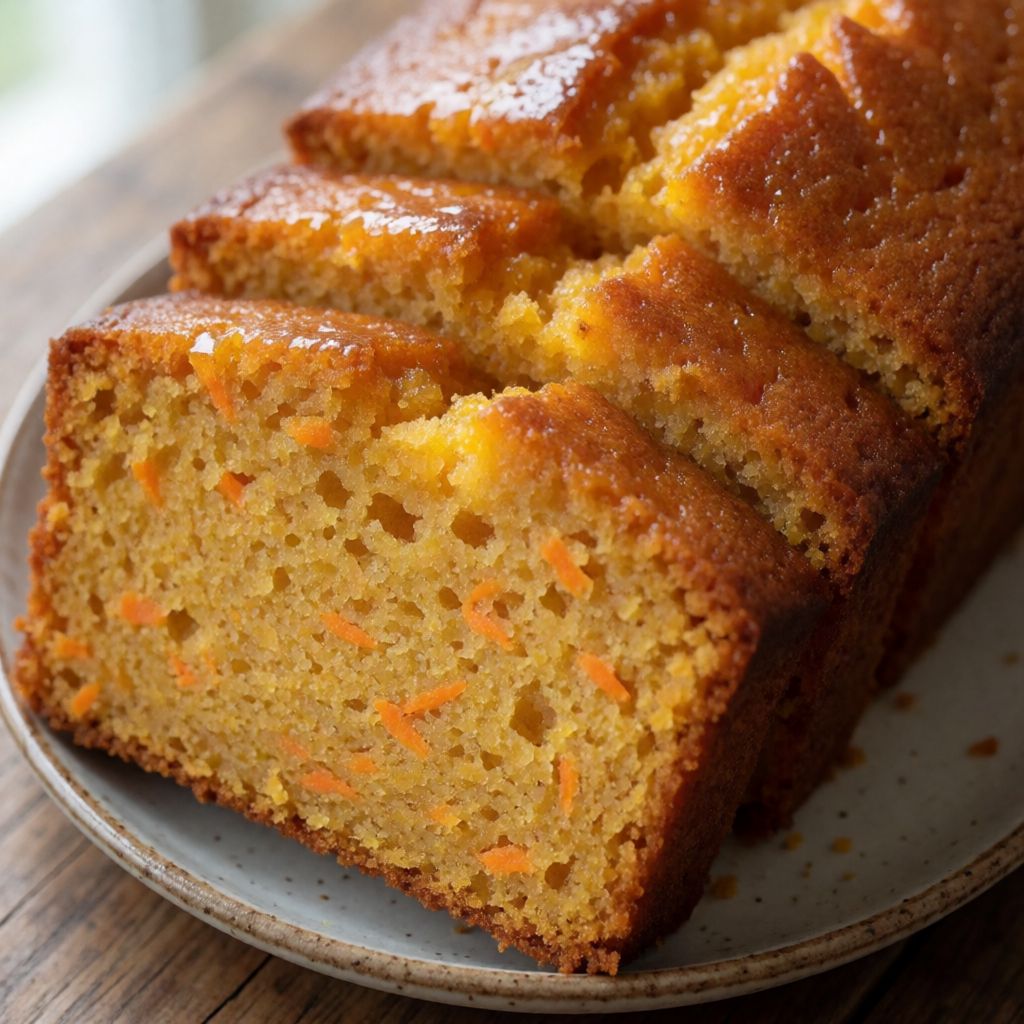
 AI photo
Orange, Carrot and Lemon Cake
A soft orange, carrot and lemon cake, finished with a dusting of icing sugar.
Labels are worked out automatically from the ingredients and can be wrong. Check the packaging if it matters to you.
Ingredients
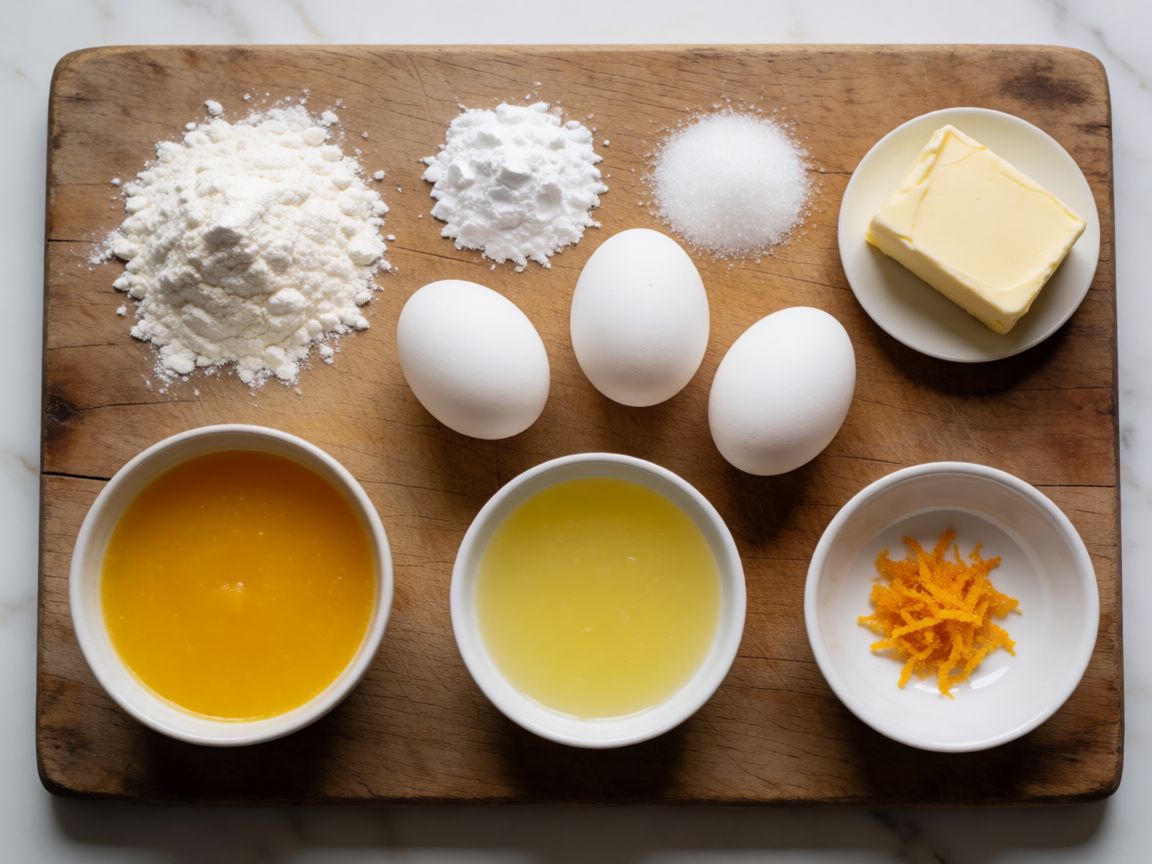
- 200 g Plain flour
- 50 g Potato starch
- 180 g Caster sugar
- 3 pcs Eggs
- 120 g Butter
- 50 ml Orange juice
- 40 ml Lemon juice
- 20 g Orange zest
- 1 pcs Lemon zest
- 1 pcs Carrot
- 16 g Baking powder
- 1 tsp Vanilla extract
- Icing sugar to taste












Steps
Crack the eggs into a bowl and beat with a mixer; then add the caster sugar.
Pour in the orange juice and lemon juice in a thin stream into the creamy mixture.
Blitz the carrot in a blender and add the resulting purée to the mixture.
Flavour with the lemon and orange zest and the vanilla extract.
Add the melted butter, previously cooled.
Stir so that all the flavours and ingredients combine well.
Sift in the potato starch, flour and baking powder.
Mix the batter well with the mixer so the dry ingredients blend evenly.
Pour the mixture into a 22 cm springform tin, greased with butter and dusted with flour.
Bake in a preheated fan oven at 180°C.
33 minLet it cool and dust with icing sugar if desired.
This is a carrot cake wearing citrus instead of spice — the carrot here isn't the star, it's structure. Grated-then-blitzed into purée, it does what it does in the classic American carrot cake: holds moisture so the crumb stays damp for days instead of drying out by Tuesday. The orange and lemon do the flavour work the cinnamon usually does. Nothing exotic, just a different division of labour.
What decides whether it works is the starch-to-flour ratio and how you treat the eggs. Potato starch is a quarter of the dry mix — that's deliberate, not filler. Starch has no gluten to speak of, so it dilutes the flour's gluten-forming power, giving you a cake that's tender rather than chewy, closer to a Victoria sponge crumb than a dense teabread. Skip it and sub in all flour and you'll get a cake that's a shade tougher, more bread, less cake. If you've no potato starch, cornflour does the same job — any starch with no flavour of its own and no raising power works, it's there to get in gluten's way, nothing more.
The eggs and sugar beaten first aren't decoration either. You're building an aerated base — pale, thick, ribbon-trailing when you lift the whisk — because this cake has no cream-the-butter stage to trap air. The air goes in here, right at the start, or it doesn't go in at all. Pour the juice in slowly ("in a thin stream") because dumping cold liquid into an aerated foam collapses it faster than you built it; a thin stream lets the mixture absorb it without deflating.
Flour: plain, no need for self-raising — you're adding your own baking powder (16 g is a proper dose, not a token teaspoon, because the starch and the carrot purée both weigh the batter down and it needs real lift to counter that). If you only have self-raising, cut the baking powder back by roughly two-thirds and watch the rise — too much leavening and the crumb goes coarse and collapses as it cools.
Butter: melted and cooled, not softened and creamed. That's the tell that this isn't a classic creaming-method cake — the air comes from the eggs, the butter just adds richness and tenderness once it's liquid and cool enough not to scramble the eggs it meets later. Any neutral butter works; don't reach for a strongly salted one, it'll fight the citrus.
Carrot: one is enough — this isn't a cake built on carrot, it's a cake carrot happens to be in. Choose one that's firm, not limp and rubbery; a tired carrot has lost moisture to the fridge drawer and gives you less of what you want from it. Peeled or not is your call, the blitzing hides the skin either way.
Orange and lemon zest and juice: zest first, before you juice — once you've squeezed the fruit the zest is harder to get off cleanly, and it's the zest, not the juice, that carries most of the aromatic oil. The juice is there for acidity and moisture; it also reacts a little with the baking powder, giving a touch more lift. If you're using bottled juice instead of fresh, fine, but you'll lose some zest-level aromatics, so lean on fresh zest even if the juice is from a carton.
Vanilla extract: use actual extract, not essence — essence is often synthetic vanillin and tastes sharper, thinner. If you've only got a vanilla pod, scrape the seeds from half a pod in instead.
On the tin and oven: a 22 cm springform in a domestic fan oven at 180°C isn't an arbitrary pairing — fan ovens run a touch more evenly than conventional, which matters for a batter this thin and starch-heavy, since unevenness shows up fast as a sunken middle or a dry edge. The 33 minutes is a floor, not a verdict: this cake is done when a skewer comes out clean and the top springs back when pressed, not when the clock says so. Let it cool properly before you dust icing sugar on — dust it warm and the sugar just melts into a wet patch, which rather defeats the point of dusting it at all.
This isn't a kazan dish and needs no theatre around it — a wide pan role isn't relevant here, but the same domestic honesty applies: your oven's actual temperature may drift from the dial by ten degrees either way, so trust the skewer and the spring-back over the timer, every time.