
 AI photo
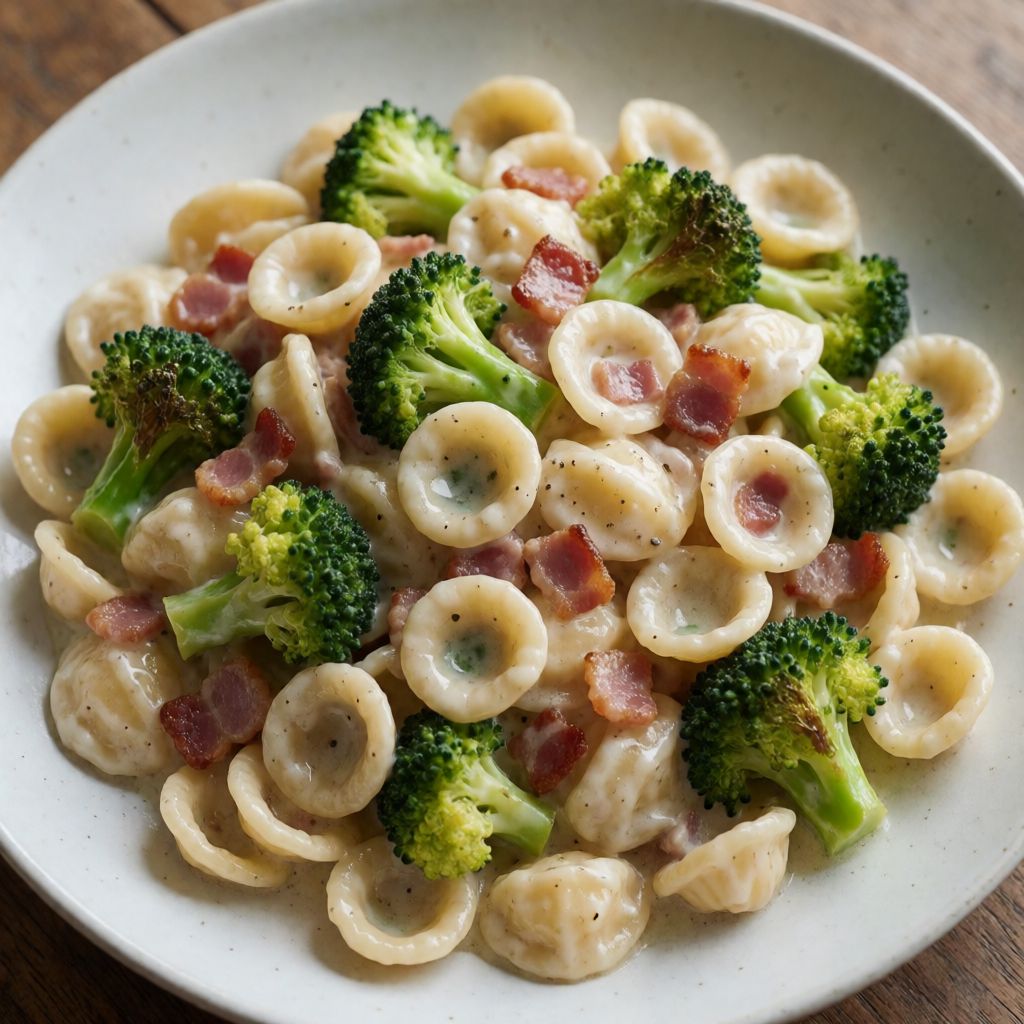
Orecchiette with Broccoli and Bacon
A simple, comforting pasta dish of orecchiette with broccoli and smoky bacon in a creamy sauce.
Labels are worked out automatically from the ingredients and can be wrong. Check the packaging if it matters to you.
Ingredients
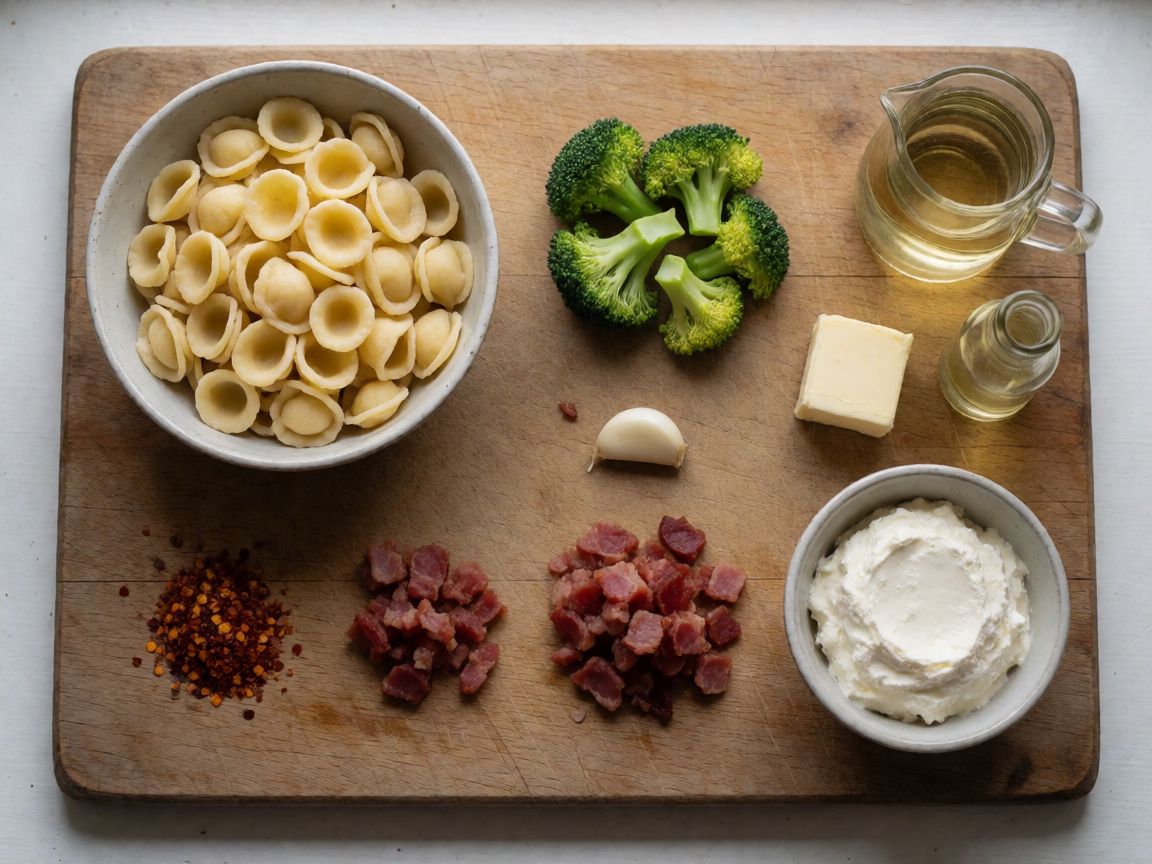
- 320 g Orecchiette
- 500 g Broccoli
- 250 g Bacon smoked
- 150 g Cream cheese
- 1 clove Garlic
- Butter for frying
- 125 ml White wine
- Salt to taste
- Black pepper to taste
- Chilli flakes to taste
- Parmesan for serving










Steps
Boil the broccoli in plenty of salted boiling water for about 5-8 minutes
8 minDrain the water and set the broccoli aside
Bring water for the pasta to the boil, salt it and add the orecchiette
Heat olive oil in a pan, add the garlic for flavour, then remove it
Add the smoked bacon and fry for a few minutes until cooked
5 minPour in the white wine and let it evaporate
Add the broccoli, season with salt, pepper and a pinch of chilli flakes
When the pasta is ready, drain it and add the orecchiette to the pan
Add the cream cheese and mix well so the sauce becomes smooth
Serve the orecchiette with broccoli and bacon, sprinkled with Parmesan
Orecchiette means "little ears" — flat discs with a cupped middle, made that way on purpose. Pasta shapes aren't random: a smooth tube like penne is for sauces that run, a shape with a hollow is for sauces that have something to grab onto. Here the cup catches broken florets of broccoli and flecks of bacon instead of letting them slide to the bottom of the bowl. If you only have fusilli or shells, fine — anything with a pocket works. A thin spaghetti will just watch the sauce go past.
What decides this dish isn't the pasta, it's the broccoli. You boil it first, briefly, in the same kind of aggressively salted water you'd use for pasta — not to cook it through, but to soften it just enough that it finishes breaking down in the pan later, picking up fat and wine instead of water. Some cooks blanch vegetables "to keep the colour." That's true enough, but the real reason here is texture: boiled-then-pan-fried broccoli collapses into a rough, sauce-like mass with the bite gone soft but not mushy — closer to a puree with lumps than a vegetable side. If you boiled it all the way to tender and stopped, you'd get florets sitting on top of the sauce rather than becoming part of it.
Cream cheese here is doing the job a proper Italian kitchen would hand to pasta water and parmesan rind — it's the shortcut that makes a glossy sauce without a roux or a long simmer. Stirred in off the heat of the broccoli-bacon pan with a splash of the hot starchy pasta water, it melts into something that coats rather than pools. Any soft, mild, high-fat cheese that melts smoothly will do the same job — mascarpone, a soft goat's cheese — but avoid anything that was built to hold its shape (hard cheeses, feta), because those seize into grains under heat instead of flowing.
Butter for frying rather than oil is a flavour decision, not a technical one: it browns and smells of itself in a way neutral oil doesn't, and with bacon already in the pan you want that richness doubled, not diluted. If you're avoiding dairy fat, use an oil with no character of its own — a plain sunflower or light olive oil — so it doesn't fight the smoke of the bacon.
The pasta water is not an afterthought. It's salted and cloudy with starch, and a splash of it loosens the cream cheese into sauce rather than paste. This is the bit people skip when they drain pasta into the sink without thinking, then wonder why the sauce sits stiff and dry in the bowl ten minutes later — the water is free emulsifier, and you've just poured it away.
On a domestic hob you're working with one wide pan and no kazan-sized surface to spread things out, so sequence matters more than it would over a bigger flame: garlic and bacon first because they need direct contact with hot metal, broccoli and wine next because they need to simmer down, cheese last because it only needs gentle heat to melt, not to cook. Doing it any other way crowds the pan and nothing browns properly — everything just steams.
Chilli flakes and black pepper are seasoning, not heat for its own sake — add them with the broccoli so they bloom in the fat rather than sitting raw on top at the end. Salt the broccoli water properly; that's your only real chance to season the vegetable itself, because by the time it's in the sauce it's absorbing flavour from everything else and it's too late to fix underseasoned broccoli from inside a finished dish.
Parmesan at the table, not in the pan — it's a dry, salty, hard cheese and if you melt it into the sauce alongside the cream cheese you just get a grainy mess instead of two separate pleasures: a smooth sauce and a sharp grating on top. Keep them apart and you get both.
This isn't a fifteen-minute pasta, and it shouldn't pretend to be one. Give the bacon its few minutes to actually render, give the wine time to actually reduce — rushing either just leaves you with watery fat and sauce that tastes thin. Thirty minutes is the lower bound, not the target; the pan will tell you when it's ready by how it looks, not by the clock on the cooker.