
 AI photo
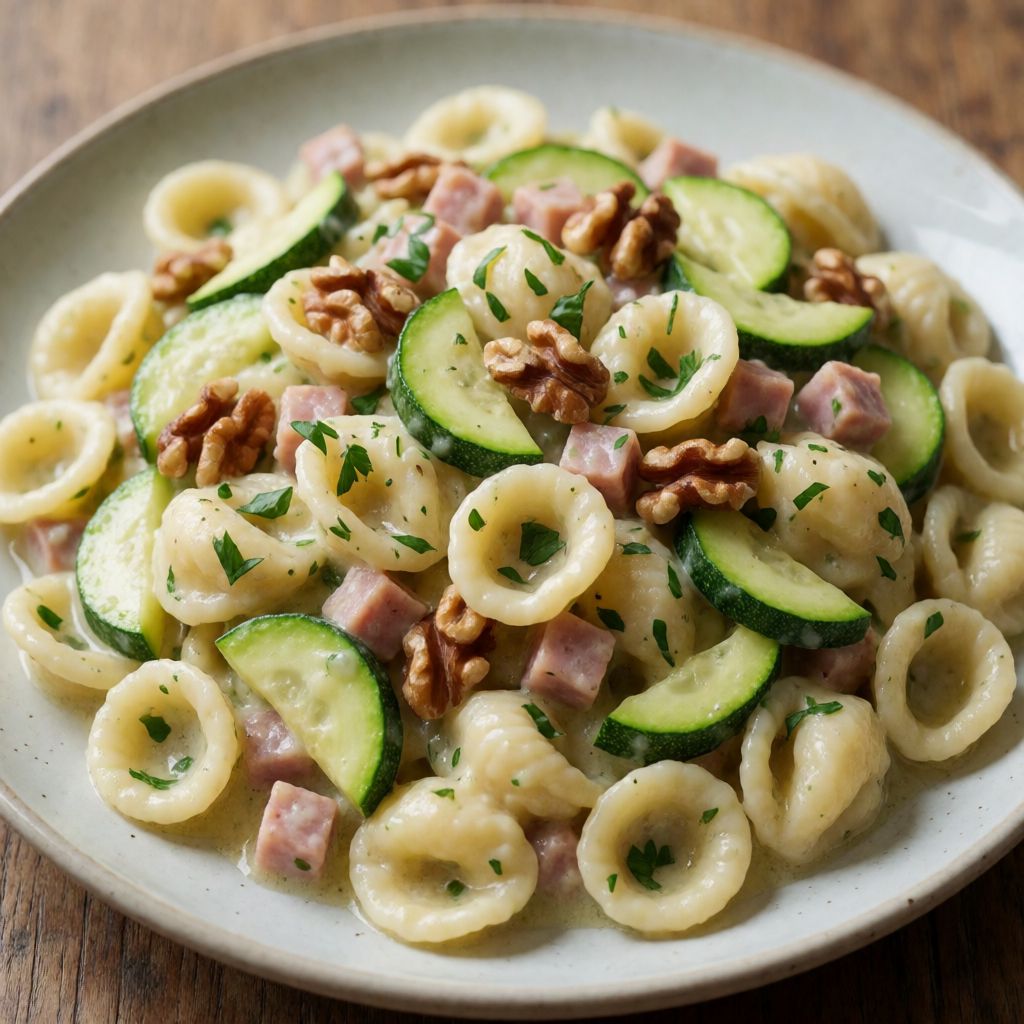
Orecchiette with Courgette, Ham and Walnuts
A quick pasta dish of orecchiette tossed with courgette, ham, cream cheese and crunchy walnuts.
Labels are worked out automatically from the ingredients and can be wrong. Check the packaging if it matters to you.
Ingredients
- 400 g Orecchiette
- 3 pcs Courgettes
- 1 pcs Shallot
- 150 g Ham
- 120 g Cream cheese or plant-based cream
- Parsley to taste
- 40 g Walnuts chopped
- 8 tbsp White wine
- 2 tbsp Olive oil to taste
- Salt to taste
- Black pepper to taste
- Pecorino Romano to taste







Steps
In a non-stick pan, fry the finely chopped shallot in 2 tbsp of olive oil.
5 minAdd the courgettes, sauté briefly, then add the ham, fry and deglaze with the white wine (8 tbsp), letting it reduce.
10 minSeason with salt and black pepper to taste.
1 minCook the orecchiette in plenty of salted boiling water until al dente, drain and tip into the pan.
12 minFry for a few minutes, sprinkling with the chopped walnuts, parsley and Pecorino Romano.
3 min
Orecchiette means "little ears" - and the whole dish depends on that shape doing its job: each disc cups up at the edges, built to trap whatever is small and loose in your sauce. Here that's courgette cut into bits, slivers of ham, crumbs of walnut. Use spaghetti instead and you'd just watch it all slide to the bottom of the bowl.
This isn't the orecchiette Puglia built around - over there it's turnip greens and anchovy, dry and sharp. This is a different economy: cream cheese and walnuts, things that live comfortably in a UK fridge or store cupboard, put onto a southern Italian shape that happens to suit any chunky sauce, not just the one it was invented for. No tradition broken by using it this way - just a different century's shopping list poured into an old mould.
What decides whether it works is the courgette. Diced small, it has maybe ninety seconds between "cooked through, still some bite" and "collapsed, weeping water into your cream until it's soup." Watch the colour, not the clock - the edges turn slightly translucent, the centre keeps its colour and a little resistance when you press it with the spoon. That's the moment, not a number of minutes.
The other hinge is when the Pecorino goes in. Thrown onto a pan that's still roaring, its proteins seize and the fat weeps out - grainy instead of silky. Back the heat off first, pan right at the edge of the flame or off it entirely, so the cheese melts into what's already there instead of fighting it.
Start with the shallot, softened gently in the oil - this is your base note, sweet rather than sharp. Fried hard it turns bitter and you'll taste it in every bite that follows; fried gently it disappears into the background where it belongs. A thin domestic pan has no copper core to spread heat evenly, so a shallot catches fast in the hot spots - keep it moving.
Courgettes: buy them firm, skin taut, no give under your thumb - a soft one has already begun losing water in storage and will only cause you grief in the pan. Some say you must salt and drain courgette slices first to pull out "bitter water" - that's a rule for thick planks you want to crisp, not for small dice cooked fast. There's no time for that ritual to do anything here; the water that matters is the water released while cooking, and you manage that by not overcooking, not by salting in advance.
Ham in this recipe means something already cured and cooked - it needs only warming through and a little colour, not real cooking. That's why it goes in after the courgette, briefly: push it in too early and it turns rubbery, giving up its fat for nothing back. Any cured meat with decent fat does the same job - smoked bacon lardons, trimmings off a Sunday gammon, prosciutto cotto if you want it milder. The fat it renders carries straight into the wine that follows.
The wine isn't there for "wine flavour" - it lifts the browned bits stuck to the pan, built from the shallot and the ham, and brings acid to balance the richness of the cheese. Let it bubble down properly before the cream cheese goes in; wine that hasn't reduced is still carrying raw alcohol and too much liquid, and your sauce ends up thin and sharp instead of coating.
Cream cheese does the job double cream used to do, with less risk - ordinary cream can split when it meets acid and real heat at once, and cream cheese's structure holds together through both. For the dairy-free version, pick any plant cream labelled suitable for cooking, meaning it's been stabilised against splitting under heat - the label usually says so plainly. Either way you're not buying flavour, you're buying body: something to coat the pasta instead of pooling at the bottom of the bowl.
Salt the pasta water properly, like seawater - it's the only seasoning the orecchiette gets directly, everything after is sauce clinging to the outside. Drain with a little water still clinging rather than shaking it bone dry; that starchy film helps the sauce grip the curve of each "ear" instead of sliding off. Walnuts go in raw, right at the end - the pan's residual heat is enough to wake their oil without pushing them toward the bitterness that proper roasting can give. Choose walnuts that smell of nothing unpleasant; rancid nut oil smells sharp, a bit like old paint, and no amount of Pecorino hides it. 400g for four is the ordinary Italian ratio - 100g a head - and this dish is rich enough from the cheese and nuts that more would go to waste on most appetites. The patience here isn't a long wait, it's attention at two short moments: the courgette's window, and the cheese going in once the heat's been pulled back. Rush either and you've made two lesser dishes by accident.