
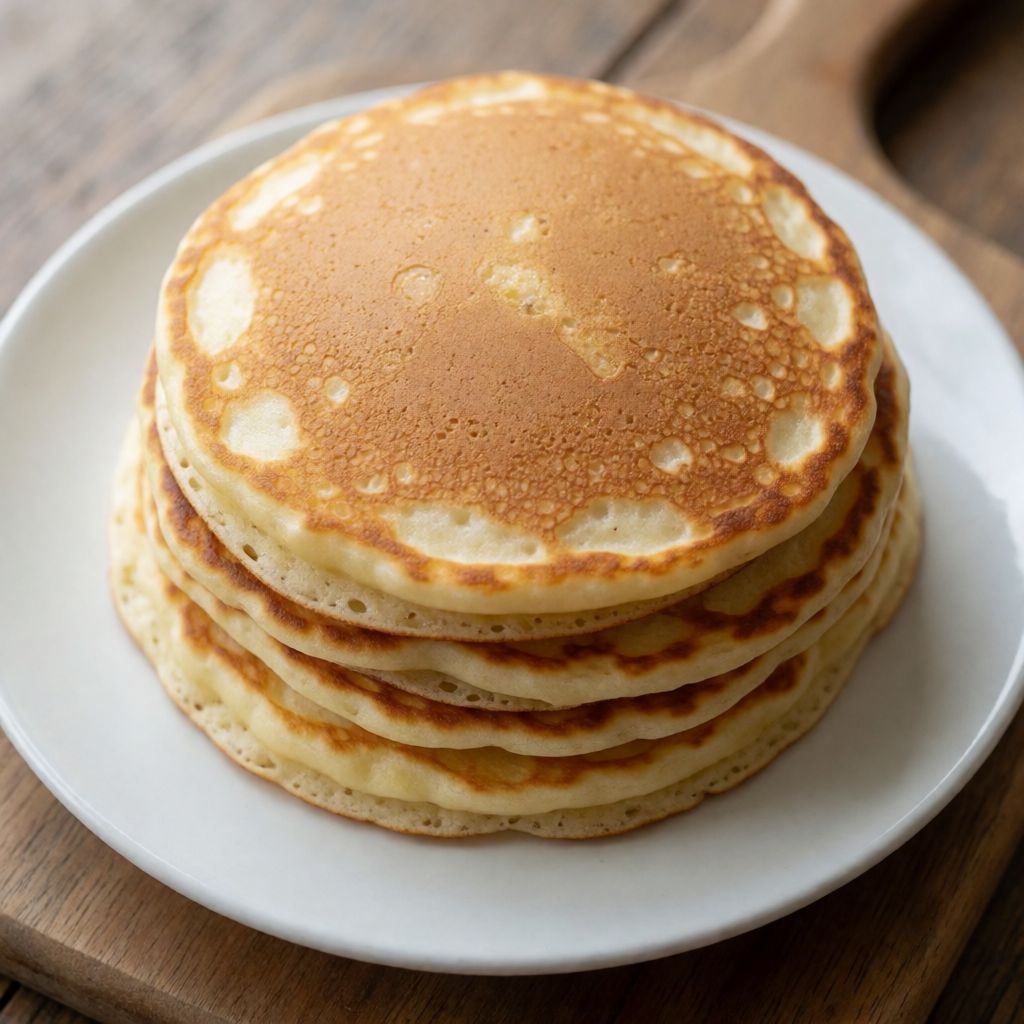
 AI photo
Simple and Quick Pancakes
Light, fluffy pancakes made with separated eggs, ready in minutes for a simple home breakfast.
Labels are worked out automatically from the ingredients and can be wrong. Check the packaging if it matters to you.
Ingredients
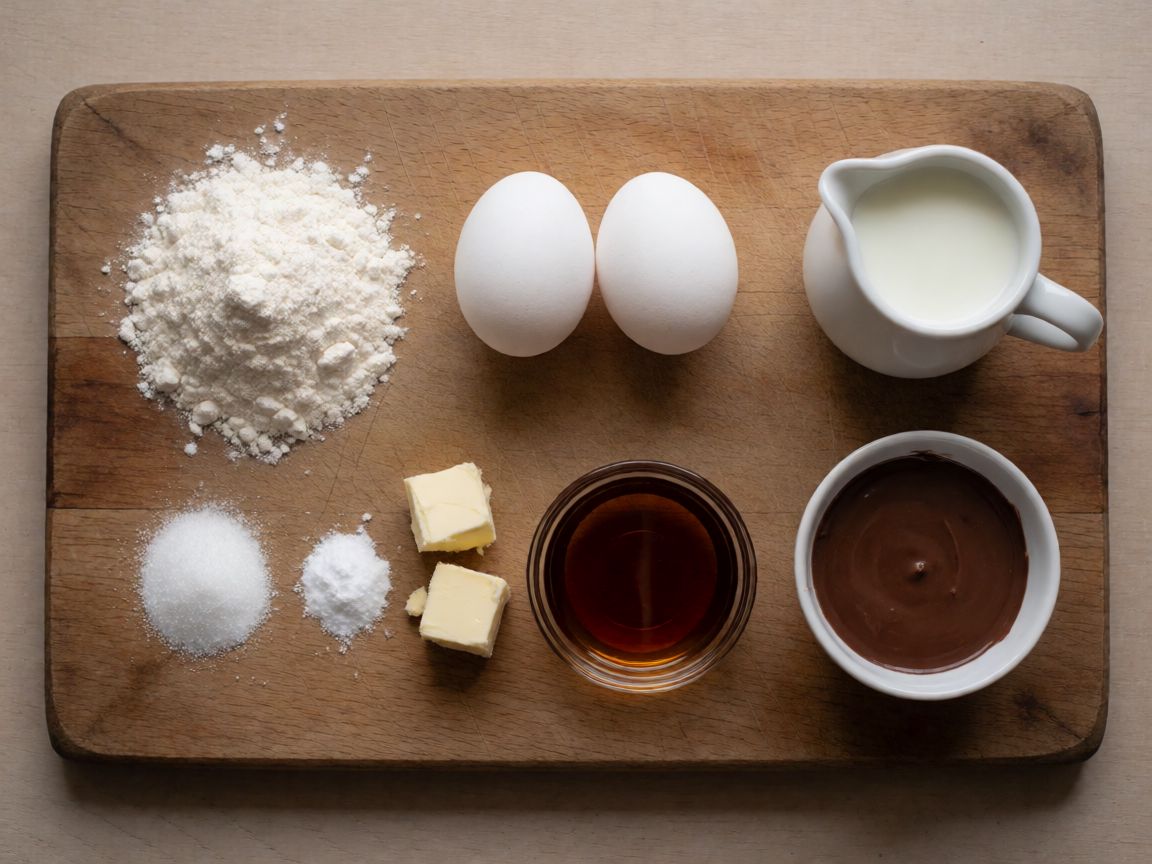
- 130 g Plain flour
- 2 pcs Eggs
- 15 g Caster sugar
- 0.5 pcs Baking powder
- 200 ml Milk
- 30 g Butter
- Maple syrup to taste
- Nutella to taste
- Jam to taste









Steps
Separate the egg yolks from the whites and whisk the whites to stiff peaks.
In a separate bowl, mix the yolks with the sugar using a whisk or mixer.
Add the melted butter and milk little by little, mixing well.
Add the baking powder and the sifted flour, folding it in gradually.
Keep mixing until the batter is smooth; if needed, strain it through a sieve.
Gently fold in the whisked egg whites until the batter is light and creamy.
Melt a little butter in a non-stick frying pan over medium heat.
Pour in a ladleful of batter, shaping it into a round.
Fry the pancake for about 2–3 minutes, then flip it with a spatula.
3 minContinue frying until golden brown.
2 minRepeat the process until the batter is used up.
Serve the pancakes with maple syrup, Nutella or jam.
These aren't crepes and they aren't American fluffy pancakes either — they sit in between, because of one move most quick-pancake recipes skip: separating the eggs. The yolks go into the batter for richness, the whites get whisked on their own and folded in at the end for lift. That's the whole trick. Skip it and you get a flat, rubbery disc that tastes fine but has no structure. Do it properly and you get something with actual crumb to it, air trapped inside instead of just baking powder doing all the work.
What decides whether it works isn't the flour or the sugar — it's how gently you fold those whisked whites in at the end. You've just spent effort building a foam of tiny air bubbles. Stir it in hard with a spoon like you're finishing a sauce and you knock half of them out. Fold means cutting down through the middle and turning the bowl, not beating. Some say whisked egg whites are just for show, for meringues and soufflés — no, because here they're doing structural work, holding the pancake up while it sets on the pan.
Flour first: 130 g of plain flour is nothing special, no need to hunt down self-raising — the baking powder in the recipe is doing the lifting job that self-raising flour would otherwise do for you, and using both would just make the pancakes puff too fast and then collapse. Sift it in, not because sifting is some ritual, but because lumps of flour don't dissolve once they hit warm batter — they just sit there and you bite into a chalky pocket later. If you've only got self-raising flour in the cupboard, use it and drop the baking powder — don't stack two raising agents on top of each other.
The eggs are doing two separate jobs, which is why you split them. Yolks carry fat and colour into the batter — that's what gives you the faint custard-yellow crumb and some of the richness. Whites, whisked alone, trap air that nothing else in this batter can give you; baking powder produces gas bubbles chemically, but it can't build the fine, even foam structure whipped whites give. Whisk to stiff peaks means the peak stands up and holds its shape when you lift the whisk out — if it slumps back down, keep going. Over-whisk past that point, though, and the whites go grainy and start weeping liquid, and folding grainy whites in gives you a batter with white flecks running through the cooked pancake. There's no substitute here that does the same job — this is the one ingredient you just have to get right, not swap.
The 15 g of caster sugar isn't there to make these dessert-sweet — it's a small amount, meant to round off the egginess and give a little colour help on the pan, since sugar browns faster than plain batter. Caster sugar specifically dissolves into the yolk mixture quickly because the grains are fine; granulated will work but needs more whisking to vanish, and if it doesn't fully dissolve you'll get a faint grittiness. No sugar in the house at all — honey melted into the warm milk works, just mind it doesn't go in so hot it starts cooking the yolks when you combine them.
Milk and melted butter go in gradually for the same reason you don't dump cold stock into a hot roux — temperature and volume shocks separate things that should stay combined. Pour butter or milk in all at once and the yolk-sugar mixture can split or go lumpy rather than emulsifying smoothly. Butter itself is there for fat and flavour — 30 g split between batter and pan is modest, so don't expect a buttery crepe, expect a batter that doesn't stick and a pan surface that browns rather than just heats. Any neutral oil with no smell of its own can stand in for the butter in the batter if you're out — sunflower, a mild vegetable oil — but you lose the browning and the flavour, so use butter in the pan regardless if you can.
On straining the batter: this isn't fussiness, it's insurance. Even careful mixing leaves the odd stubborn lump of flour or a yolk string, and a sieve catches that in ten seconds flat rather than leaving you to discover it mid-bite. If your batter came together smooth from the start — no visible lumps when you tilt the bowl — skip it, nothing's gained from straining something that's already clean.
Serving these British-style, Sunday-roast habits aside, these sit better at breakfast or as a weekend treat with a pot of tea than as part of any roast — maple syrup, Nutella, jam, whatever's in the cupboard, the recipe doesn't pretend any one is more correct than another. A squeeze of lemon and a scrape of sugar works too if you want something less sweet against the richness of the batter — that's not in the list but it's worth knowing it exists, since not everyone wants syrup first thing.
Patience is the one ingredient the recipe sheet never lists but every batch needs. Rushing the fold on the egg whites, cranking the pan too hot to save two minutes, flipping before the underside has actually set — all of that saves you ninety seconds and costs you a pancake that's dense, patchy, or torn. Make the first one as a test, expect it not to be perfect, adjust your heat, and the rest of the batch will be fine. That first pancake being slightly wrong isn't failure, it's just the pan telling you where its heat actually sits.