
 AI photo
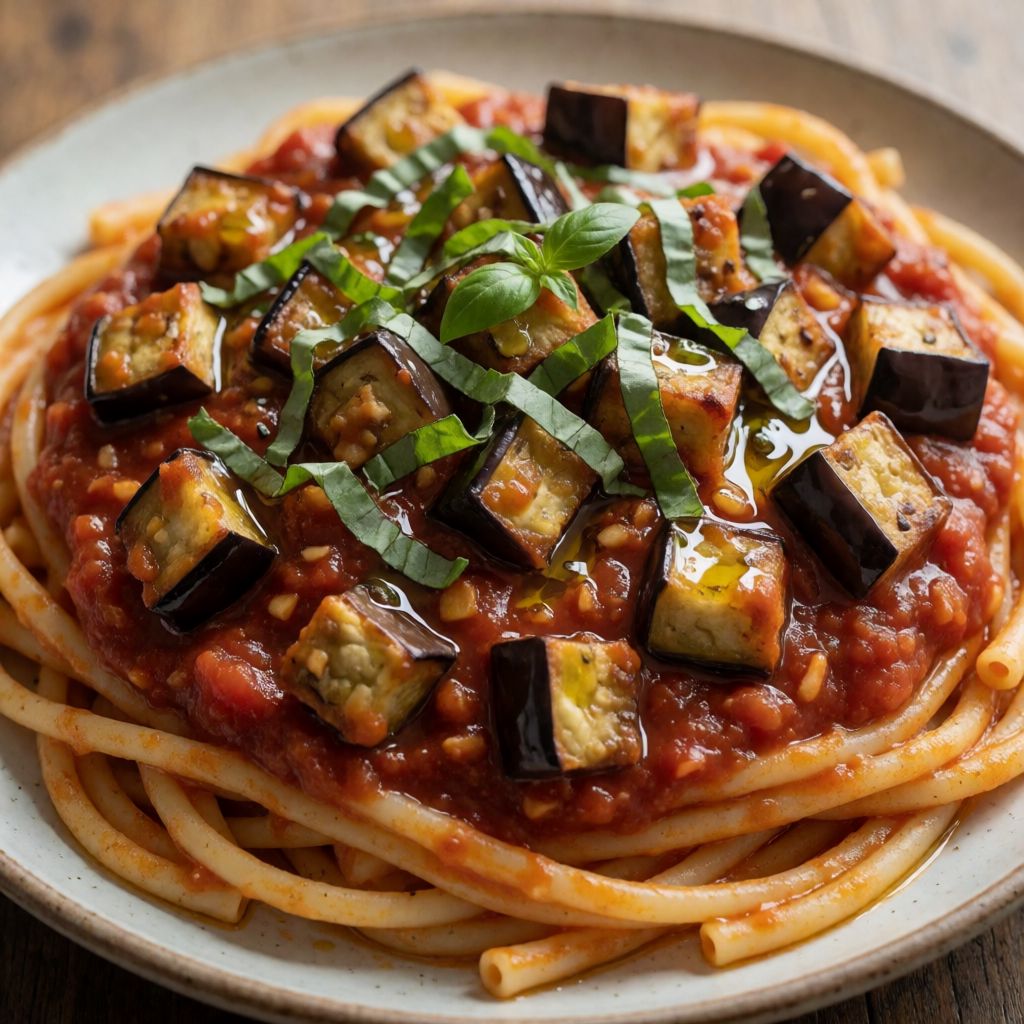
Pasta alla Norma
A classic Sicilian pasta with fried aubergine, tomato sauce, basil and salty cheese.
Labels are worked out automatically from the ingredients and can be wrong. Check the packaging if it matters to you.
Ingredients
- 2 pcs Aubergine cut into 1 cm cubes
- 1 tsp Salt
- 100 ml Olive oil
- 400 g Tinned chopped tomatoes
- 3 clove Garlic finely grated
- 1 bunch Fresh basil
- 400 g Pasta
- 1 tsp Sugar
- Salt to taste
- Freshly ground black pepper to taste
- 100 g Parmesan
- 1 bunch Fresh basil







Steps
Mix the aubergine with salt in a bowl and leave to stand for 30 minutes.
30 minSqueeze out the moisture from the aubergine and pat dry.
Heat the oil in a frying pan over a medium-high heat until hot.
Fry the aubergine cubes in the pan, stirring constantly, until nicely golden.
Set the fried aubergine aside on a plate lined with kitchen paper.
Add the tinned tomatoes, garlic, salt, pepper and basil to the same pan, and let it simmer.
Cook the pasta until just shy of al dente, keeping back some of the pasta water.
Add the pasta to the pan with the sauce and mix well, loosening with a splash of pasta water to a creamy consistency.
Season with sugar, salt and pepper to taste, and serve topped with the aubergine, Parmesan and basil.
This is Sicily's way of saying "we don't have meat today, but we have an aubergine the size of a fist and we're not sorry about it." Pasta alla Norma is named after Bellini's opera, apparently because a writer took one bite and declared it "a Norma" — the highest praise he had. Nobody tested that story. It doesn't need to be true to tell you something real: this dish was always meant to feel grander than its ingredients cost.
What decides whether it works is not the tomato, not the pasta — it's the aubergine, and specifically whether you let it dry out properly before it meets hot oil. Aubergine flesh is a sponge full of water locked in bitter juice. Salt it, and the salt pulls that water out by osmosis — you'll see it bead on the surface like sweat. Squeeze and pat it dry, and what's left is flesh that will actually fry instead of just steaming inside its own moisture. Skip this and you get grey, soggy cubes swimming in oil that never crisps, no matter how long you leave them in the pan. Some say you must peel the aubergine first — no, because the skin holds the cube together under high heat and most of its flavour sits just under it. Leave it on.
Start with the aubergine itself. You want ones that feel heavy for their size and give very slightly under thumb pressure — too firm and they're underripe and bitter past rescue, too soft and they're already breaking down, full of seeds and air pockets. Any decent supermarket aubergine in the UK will do; there's no need to chase a specific variety. If aubergine genuinely isn't available, courgette fried the same way gets you a similar textural idea, though it won't carry the dish's particular savoury depth — aubergine's near-meaty quality when browned is the whole point, and nothing else quite fakes it.
The oil matters more than people think, because you're using 100ml of it and most of that flavour ends up in the final dish. Olive oil here isn't decoration — it's doing real cooking work at real heat, so don't reach for your most expensive bottle meant for drizzling raw; use a workaday extra virgin that's fine with a frying pan. Any oil with no strong smell of its own and a reasonably high smoke point will fry the aubergine fine — sunflower or vegetable oil at a pinch — but you lose the faint grassiness olive oil leaves behind, which is part of what makes this dish taste Sicilian rather than generic.
Tinned chopped tomatoes are the correct choice here, not a compromise — Italian tinned tomatoes are often riper and more consistent than whatever's sold fresh and pale in a UK supermarket in February. Garlic should be finely grated rather than chopped because grated garlic dissolves into the sauce rather than sitting as distinct bits that can burn and turn bitter in the simmer; if you only have a chopping board and a knife, mince it as fine as patience allows and add it slightly later so it has less time to catch.
Basil appears twice in the list — once cooked into the sauce, once fresh on top — and that's deliberate, not an error to tidy up. Cooked basil mellows into the tomato base; raw basil scattered at the end gives you the sharp, peppery hit that cooking destroys. If you only have one bunch, hold half back and add it at the very end — don't skip the raw stage, it's doing a different job than the cooked one.
Parmesan at the end should be a block you grate yourself, not the ready-grated tub kind, which dries out and clumps rather than melting into warmth from the pasta. Pecorino is the more traditionally Sicilian cheese for this dish, sharper and saltier — reach for it if you can find it, but parmesan is not a downgrade, just a different register, milder and nuttier.
On the pasta: cook it until just shy of al dente because it finishes cooking in the sauce, absorbing flavour as it goes rather than just being coated after the fact — this is also why you keep back some pasta water. That starchy water, added a splash at a time, is what turns "tomato sauce sitting next to pasta" into "sauce that clings to every strand." Some say this step is restaurant fussiness for a home kitchen — no, because without it the sauce sits in a puddle at the bottom of the bowl rather than dressing the pasta evenly, and you end up eating bare noodles with tomato soup pooling underneath.
Lastly — patience is doing real work in step one, not filler. Thirty minutes salting the aubergine feels like a long wait when you're hungry and the pan's already hot, but rush it and you're frying wet vegetable rather than dry, and no amount of heat afterward fixes that. Put the kettle on, make your tea with milk, and let the salt do its slow, quiet job.