
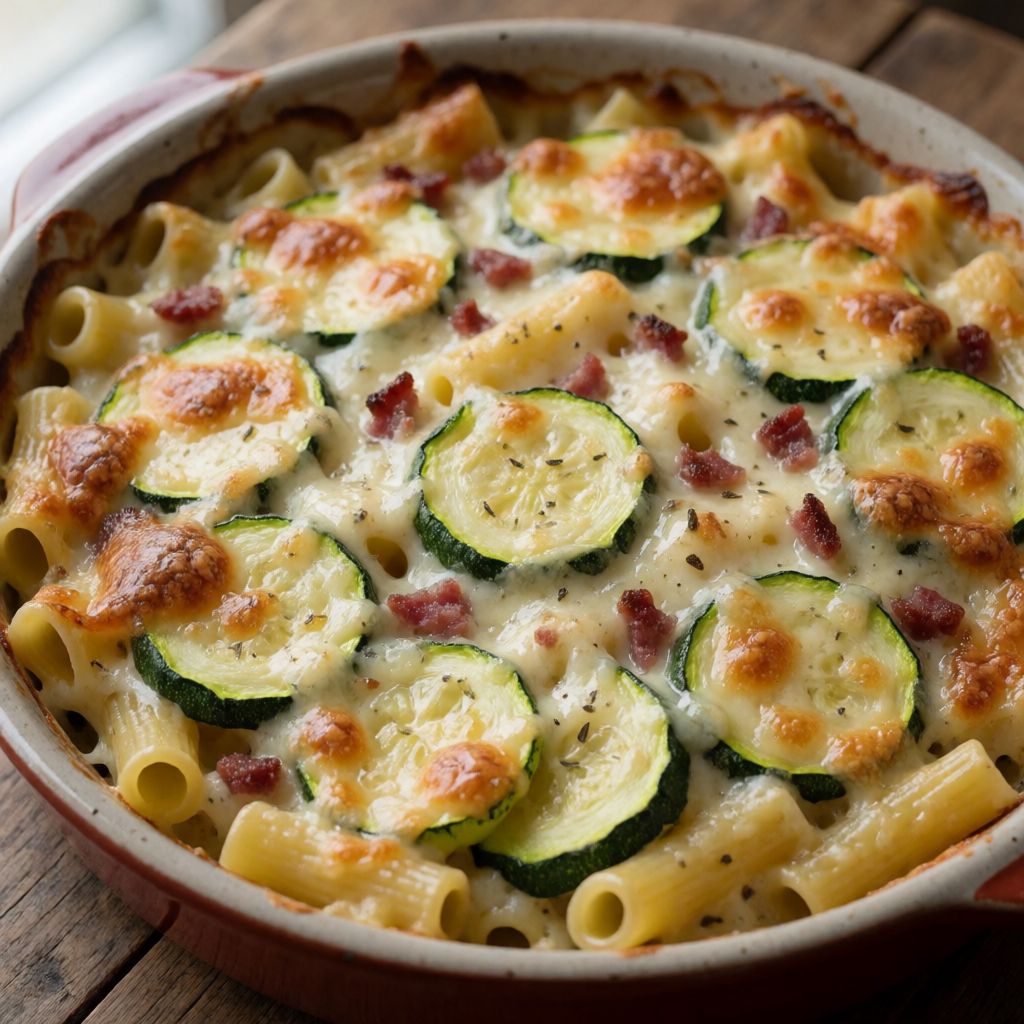
 AI photo
Baked Pasta with Smoked Scamorza, Courgette and Speck
Baked pasta with smoked scamorza, courgette and speck, finished in a hot oven.
Labels are worked out automatically from the ingredients and can be wrong. Check the packaging if it matters to you.
Ingredients
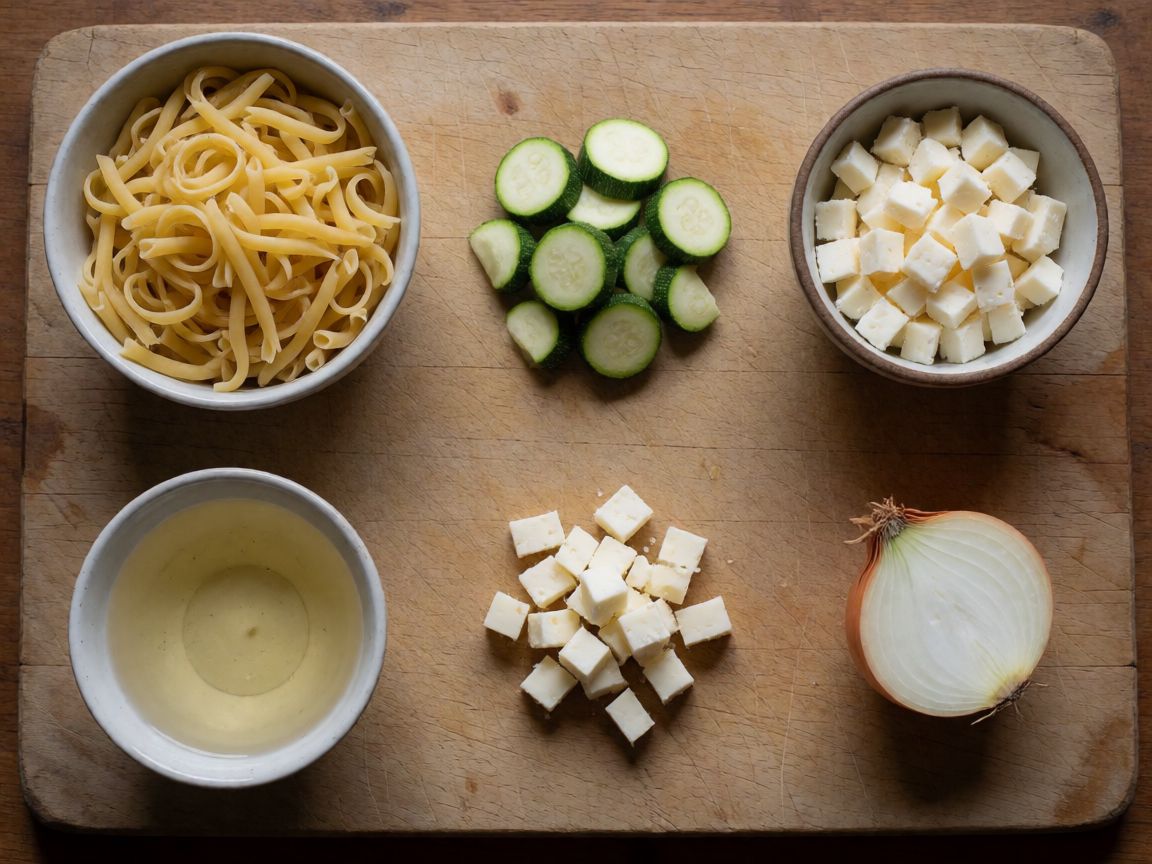
- 320 g Pasta
- 350 g Courgette
- 250 g Smoked Scamorza diced
- 250 g Speck diced
- 8 tbsp White Wine
- 1/2 pcs Onion
- Olive Oil to taste
- Salt to taste
- Black Pepper to taste






Steps
Wash the courgettes, trim the ends and slice into rounds. Finely chop the onion.
5 minIn a frying pan with olive oil, sauté the onion together with the courgette.
5 minPour in the white wine and let it evaporate, stirring.
3 minAdd salt and black pepper and simmer gently over low heat.
5 minIn a large pot, bring water to the boil and cook the pasta until al dente.
10 minTransfer the pasta to the pan with the courgette, then add the smoked scamorza and speck.
2 minTransfer everything to a baking dish and place in an oven preheated to 250°C.
15 min
This is not really a baked pasta in the Italian grand sense — it's a frying-pan sauté that gets a short, hot finish in the oven to set a crust. Two cooks, not one: first the pasta boils, half-finished on purpose; then it bakes with cheese and cured meat until the top turns from pale to gold. That's the whole mechanism, and it decides everything else.
What makes or breaks it is timing the pasta wrong. If you boil it to full doneness in the pot, the oven finishes the job for you — straight into mush. Al dente here doesn't mean "nice and firm to eat now"; it means "has one more cook ahead of it." Pull it out a shade earlier than you would for a plate.
The courgette is the other quiet decision point. Courgette is mostly water held in a thin green skin. Throw it into a cool or crowded pan and it won't fry, it'll steam in its own juice, and you get a wet, flavourless dish no amount of cheese will fix. The pan has to be hot enough that the onion and courgette hiss, not whisper, the moment they land — that's your cue, not a dial setting nobody wrote down for you.
Some say the wine is there for flavour. No — its job is to deglaze and to cut the fat that speck and oil will have left behind, then boil off its alcohol and leave only the acid and a little body. If you rush this step, you carry raw alcohol sharpness into the oven, and it never fully leaves.
Courgette: buy it young and firm — heavy for its size, skin tight, no soft give at the stem end. An old, watery courgette is the single biggest cause of a soggy bake, more than any step you follow or skip. If courgette is out of season or looks tired, swap for aubergine cut the same way; it behaves differently (it drinks oil rather than releasing water) but won't betray you with a puddle in the baking dish.
Onion: here it's background, not a lead player — it sweetens the fat the courgette fries in. Half an onion for four people tells you its job is support, not statement. Any onion works; just chop it fine enough that it softens at the same pace as the courgette slices, or you'll find raw bite in some spoonfuls and collapse in others.
White wine: any dry white does the job — the criterion is "dry and not sweet," because sugar in the glass means caramelising sugar in the pan, and that's a different, stickier outcome than the clean acidity this dish wants. No open bottle in the house? A spoon of wine vinegar loosened with water gets you the acid without the alcohol to cook off, though you lose a little of the aroma.
Smoked scamorza: scamorza gets its name from being "beheaded" — tied with string and hung to dry and age, the way mozzarella's cousins have been made in southern Italy for centuries, back when a family with one cow needed a cheese that would keep past the morning milking. Smoked, it melts into long, slightly resinous strings rather than just going liquid. If you can't find it, reach for smoked mozzarella, or a smoked provolone or smoked Cheddar from a British supermarket cheese counter — the criterion is a semi-hard cheese that melts under heat and carries real smoke, not liquid smoke flavouring poured over something bland.
Speck: cured and smoked pork, originally a mountain answer to a mountain problem — in places too cold and too far from the sea for heavy salting, a light cure finished with smoke did the preserving work that salt alone would have needed far more of. In the dish, its fat renders a little in the oven's heat and seasons everything around it; that's its real function, not just "ham chunks." Pancetta or good smoked bacon, diced, will stand in — look for a visible fat seam and an actual smoke character, not just salt.
Olive oil: use a plain, mild olive oil for the frying — not your good extra virgin, which turns bitter and loses its own point once it's been pushed to a hiss in a hot pan. Save the good stuff, if you have it, for a thread over the top once the dish comes out.
Pasta: no shape is named, so pick a short, ridged or tubular one — penne, rigatoni, something with a hollow or a groove — because flat or long shapes won't hold the courgette and cheese the way a baked dish needs; they'll slide to the bottom.
On the oven: 250°C is about forcing a crust fast on something that's already cooked underneath, not about cooking it through — so don't wait for a timer, watch for the surface to go from pale and matte to blistered and gold, with the edges just starting to catch. Be honest with your own oven here: most domestic ovens, especially older British ones, don't actually reach the number on the dial, and a fan oven behaves differently from a conventional one. Put it on the highest setting you have, use the top shelf for faster browning, and judge by colour and bubble, not by the clock on the step. And give the dish the minute of rest out of the oven before it's touched — patience here isn't optional, it's what stops the cheese running everywhere the second a spoon goes in.