
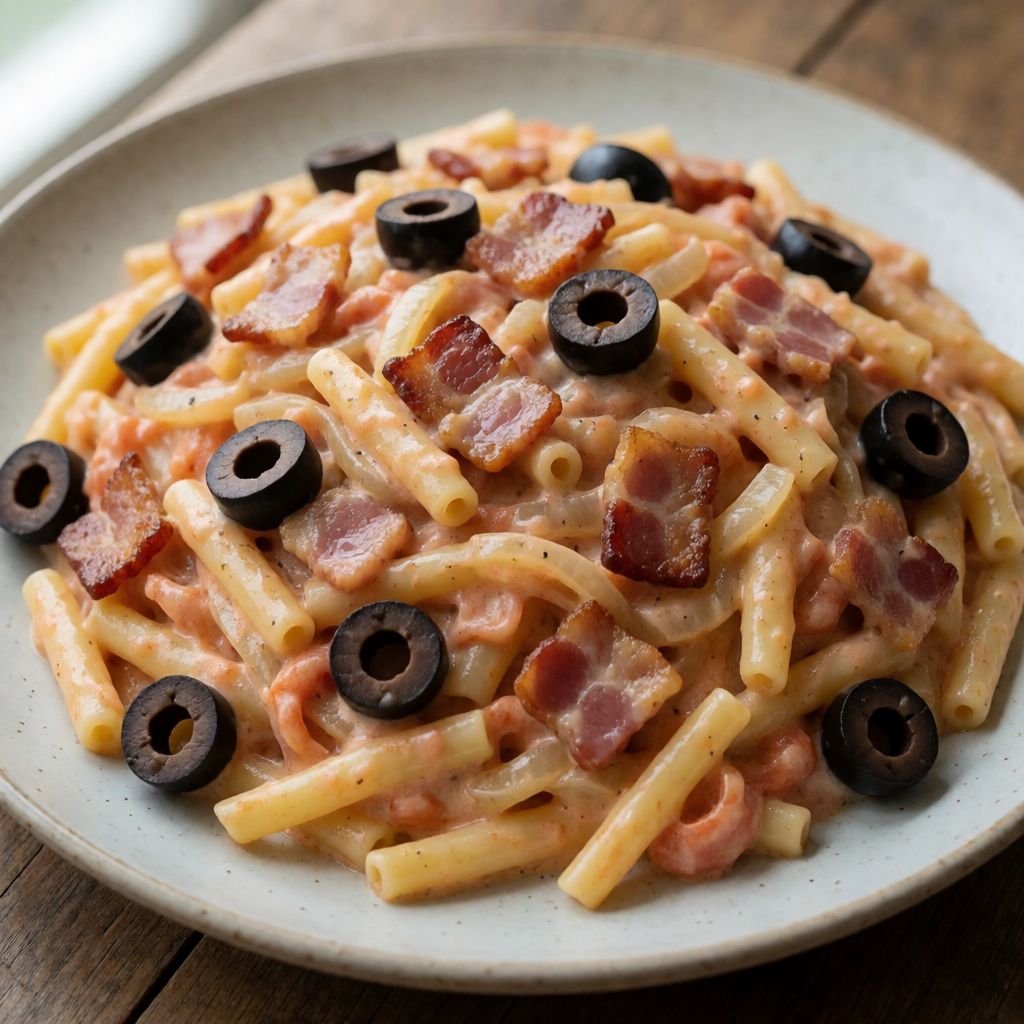
 AI photo
Mama Rosa's Pasta
A creamy tomato and bacon pasta with olives, finished with Parmesan.
Labels are worked out automatically from the ingredients and can be wrong. Check the packaging if it matters to you.
Ingredients
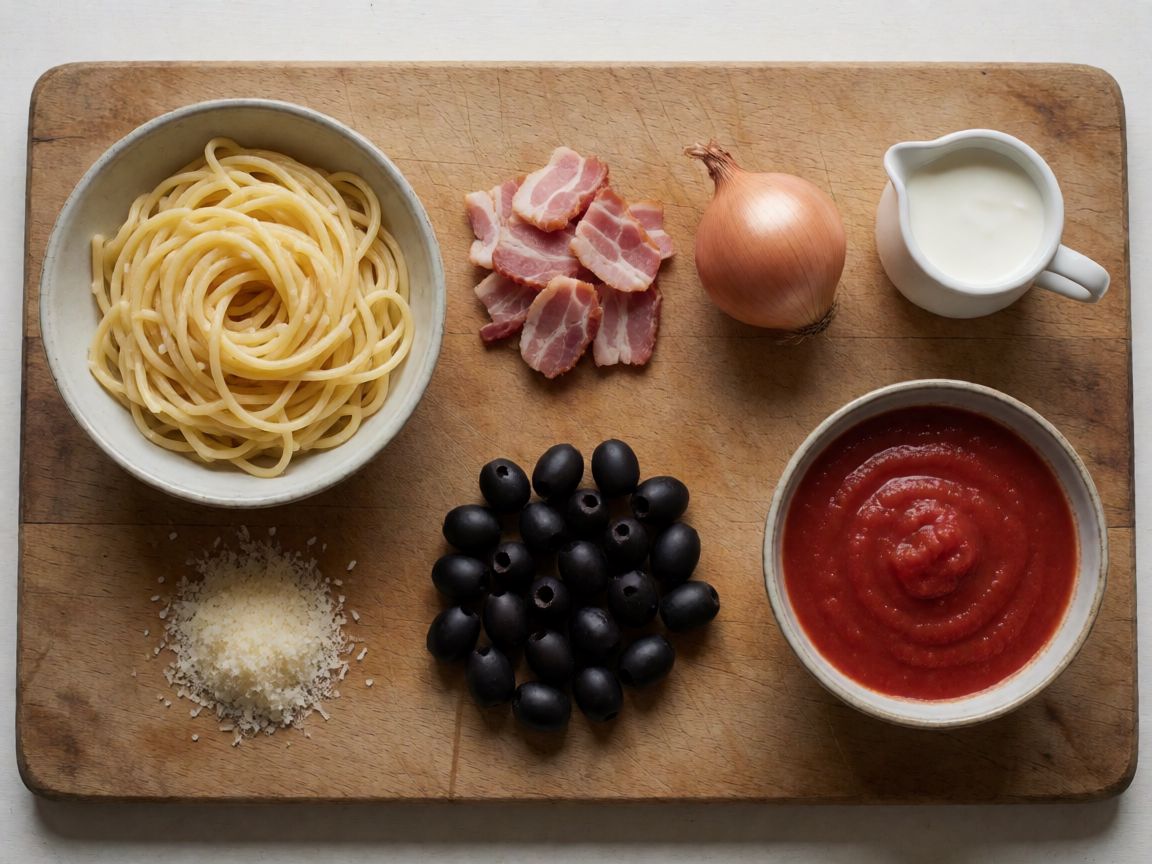
- 400 g Pasta
- 150 g Smoked pancetta
- 1 pcs Onion
- 20 pcs Gaeta olives, pitted
- 1 pcs Double cream
- 0.5 l Tomato passata
- Parmesan to taste
- Olive oil a little








Steps
Finely dice the onion and smoked pancetta.
Fry them in a little olive oil in a pan together with the Gaeta olives; cook until golden.
Add the tomato passata and simmer.
10 minPour in the cream and let the sauce thicken.
Cook the pasta and toss it with the pink sauce, sprinkling with Parmesan.
This is a trattoria "pink sauce" – a dish built on two logics that don't naturally get along: smoky cured pork and sharp tomato pulling one way, cream pulling the other. Whether it works depends entirely on when you let those two sides meet, not on how many minutes anything spends in the pan.
The pancetta goes in first because its job isn't to fry, it's to melt. The fat it gives up becomes the cooking medium for the onion and later carries flavour through the whole sauce. So dice it small, let it render slowly in a little oil rather than cranking the hob and scorching the outside before the fat inside has had the chance to come out – that's the real cause of a pancetta that tastes bitter and dry instead of rich.
The onion cooks in that same fat and you're watching for a colour change, not a clock: it goes from pale and stiff to soft, translucent, then golden. Some say onion in a sauce like this is just there for bite – no, it's there to carry sweetness into something that's otherwise all salt and acid from the pancetta and olives. Rush that stage and you end up with raw onion sharpness sitting inside a finished dish, which no amount of simmering afterwards will cook out.
Pasta: any shape with enough surface to hold a smooth, loose sauce works – short tubes, twists, even spaghetti. The passata-cream mix is thin before it reduces, so save a cup of the starchy pasta water before draining; a splash of it stirred in at the end is how you get the sauce to cling rather than pool at the bottom of the bowl.
Smoked pancetta: you want cured, fatty pork with real smoke on it, diced small enough to render quickly rather than fry into crisp little stones. If you can't get pancetta, streaky bacon lardons do the job, though you lose some of the cure's depth; guanciale is the more traditional Roman cousin but it's harder to find on a UK shelf and pricier for what is, underneath, a using-up-the-larder kind of dish.
Gaeta olives: black, wrinkled, oil-cured rather than brined green ones. That's the criterion that matters – bitterness and a slight chewiness, not the sharp vinegar tang of a jar of pimento-stuffed green olives, which would fight the tomato instead of rounding it off. Kalamata olives, pitted, are the easy stand-in.
Tomato passata: this is tomato already sieved smooth, no skin, no seed, which matters here because the sauce has no long simmer to break anything down – it's a twenty-minute dish, not a four-hour ragù. If you only have tinned chopped or crushed tomatoes, blitz them smooth first or you'll get lumps sitting in what's meant to be a silky sauce.
Double cream: in the UK that's roughly 48% fat, and that fat content is exactly why it holds together over heat instead of splitting – a tea-with-milk splash of single cream, at under 20% fat, won't survive sitting in a hot acidic sauce the same way. If you want something a touch sharper, crème fraîche is stable for the same reason (its acidity actually helps it resist separating) and adds a slight tang that plays well against the sweetness of the onion.
Parmesan: grate it off the block yourself. The pre-grated bagged stuff is dusted with anti-caking starch so it clumps instead of melting into the sauce – that's the real reason it goes stringy rather than silky. Treat it as part of the seasoning, not just a garnish on top: between the pancetta's salt, the olives' salt, and the Parmesan's salt, you'll rarely need to add any extra, so taste before you reach for the salt pot.