
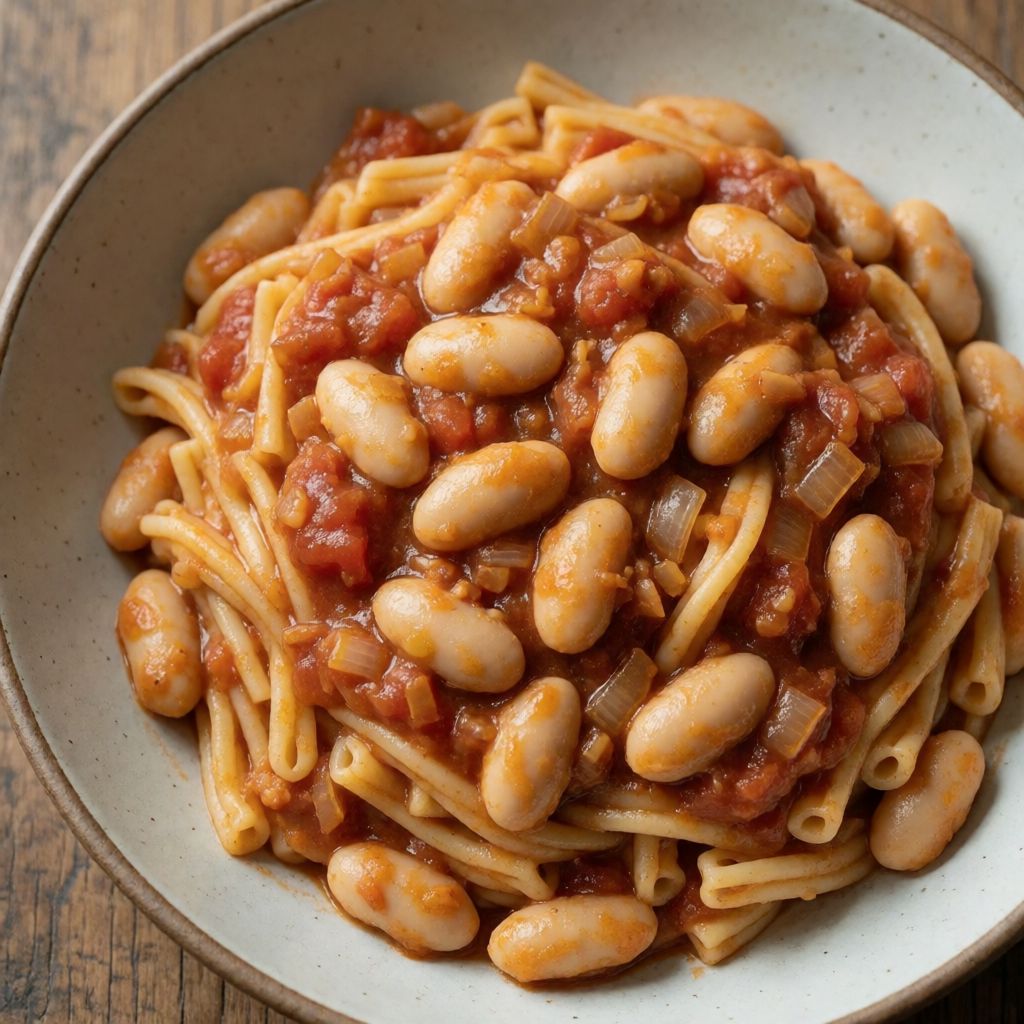
 AI photo
Pasta with Cannellini Bean Sauce
A simple, comforting pasta with cannellini beans, tomatoes and pancetta.
Labels are worked out automatically from the ingredients and can be wrong. Check the packaging if it matters to you.
Ingredients
- 250 g Egg pasta
- 200 g Tinned chopped tomatoes
- 2 can Cannellini beans
- 50 g Pancetta
- 1 clove Garlic
- 1 pcs Onion
- 1 tsp Oregano
- 2 tbsp Olive oil
- Salt to taste
- Black pepper to taste









Steps
Peel and finely chop the onion, drain the cannellini beans, cut the pancetta into thin strips, and peel the garlic.
In a pan, fry the onion, pancetta and garlic in olive oil for a few minutes until fragrant.
Add the cannellini beans and tinned chopped tomatoes, season with salt and pepper. Cook over high heat.
10 minAdd the oregano and mix well.
Bring a pot of water to the boil and salt it.
Cook the pasta for a minute or two less than the packet says, then drain.
Transfer the pasta to the pan with the sauce, mix thoroughly, add a ladle of pasta water and cook until thickened.
Serve the pasta in deep bowls and sprinkle with freshly ground black pepper.
This is a poor man's pasta dressed up as something richer — tinned beans doing the work that a slow-cooked meat sauce would otherwise do, bulked out with pancetta for smoke and fat rather than bulk. What decides it is whether the beans stay beans or collapse into a sauce: cannellini are soft from the tin already, so a few minutes of hard simmering with the tomato is enough to break some of them down and thicken the liquid around the rest, giving you a sauce with body instead of a soup with pasta floating in it.
The pancetta goes in with the onion, not after — this is not a garnish, it's the fat the whole dish is cooked in. Rendered fat carries flavour further than the meat itself does, which is exactly why 50 g feeds four people: you are extracting, not serving, the pork.
The pan has to run hot once the beans and tomato go in — "cook over high heat" means you want fast, visible reduction, the tomato liquid bubbling down and the beans starting to break at the edges, not a gentle simmer that just warms everything through and leaves you with watery sauce forty minutes later.
The last move — pasta into the sauce, pasta water in with it — is the one people skip, and it's the one that makes the dish look like a dish rather than noodles with beans spooned over the top. Starchy water, not fresh water, because the starch is what lets the fat and tomato grip the pasta instead of sitting next to it.
Egg pasta here isn't decoration — it brings its own fat and protein, which helps it hold a sauce that's partly broken bean rather than pure oil. If you only have the ordinary durum wheat kind, fine, it works, but egg pasta is less likely to go gluey when it meets the starchy water step at the end. Cook it short of the packet time on purpose: it finishes in the pan, in the sauce, and that's where it should pick up its last minute or two of cooking, not in the pot alone. Some say pasta should always be "al dente straight from the water" — no, because here it's going to simmer again with liquid clinging to it, and if it's already fully cooked when it goes in, it turns soft and tired by the time you serve it.
Cannellini beans are the whole premise: a tin of beans, broken down a little by heat, has roughly the texture job that slow-cooked minced meat or a long-reduced ragù usually does — body, not just liquid. Two tins, not one, is the real ratio here, because beans lose volume once some of them collapse into the sauce. If you can't get cannellini, any pale, soft-skinned bean that holds its shape under gentle heat does the same job — butter beans, haricot — but skip kidney beans or chickpeas, they're too firm and too assertive in flavour and won't melt the same way.
Pancetta is there for smoked, salted fat, not for meatiness as such. If you haven't got it, streaky bacon cut thin does nearly the same thing, though it's wetter and less concentrated, so you may need a touch more oil. Leaving it out entirely is possible — people did this dish meat-free long before "plant-based" was a label, simply because pancetta was the expensive bit in a poor household — but then the olive oil has to do more work, so don't be shy with it.
Garlic and onion are the base, and they go in together with the pancetta rather than one after the other, because the fat rendering off the pancetta is what both of them fry in — this isn't a classic soffritto built slowly, it's quick, a few minutes until the onion loses its raw bite and the garlic smells rounded rather than sharp. Watch the garlic, not the clock: it goes bitter fast once it catches, and a bitter clove will sit under everything else in the sauce and you won't be able to cook it out later.
Oregano goes in near the end, after the tomato and beans have had their time on the heat, because dried herbs lose their aromatic oils to prolonged boiling — added early, you'd be tasting dust by the time this gets to the table. Tinned chopped tomato is doing a supporting role here, not the lead: it's there to loosen the beans into something sauce-like and give acidity, so there's no need to reach for the most expensive tin — any reasonably thick tinned tomato will do, since you're reducing it down anyway.
Patience, oddly, isn't in the long cooking here — it's in resisting the urge to rush the high-heat stage. Ten minutes of proper bubbling, beans breaking at the edges, tomato liquid visibly dropping, is what turns "beans with tomato" into a sauce that will actually coat pasta. Pull it off the heat too soon and you'll be adding pasta to something closer to soup, and no amount of pasta water will fix that afterwards.