
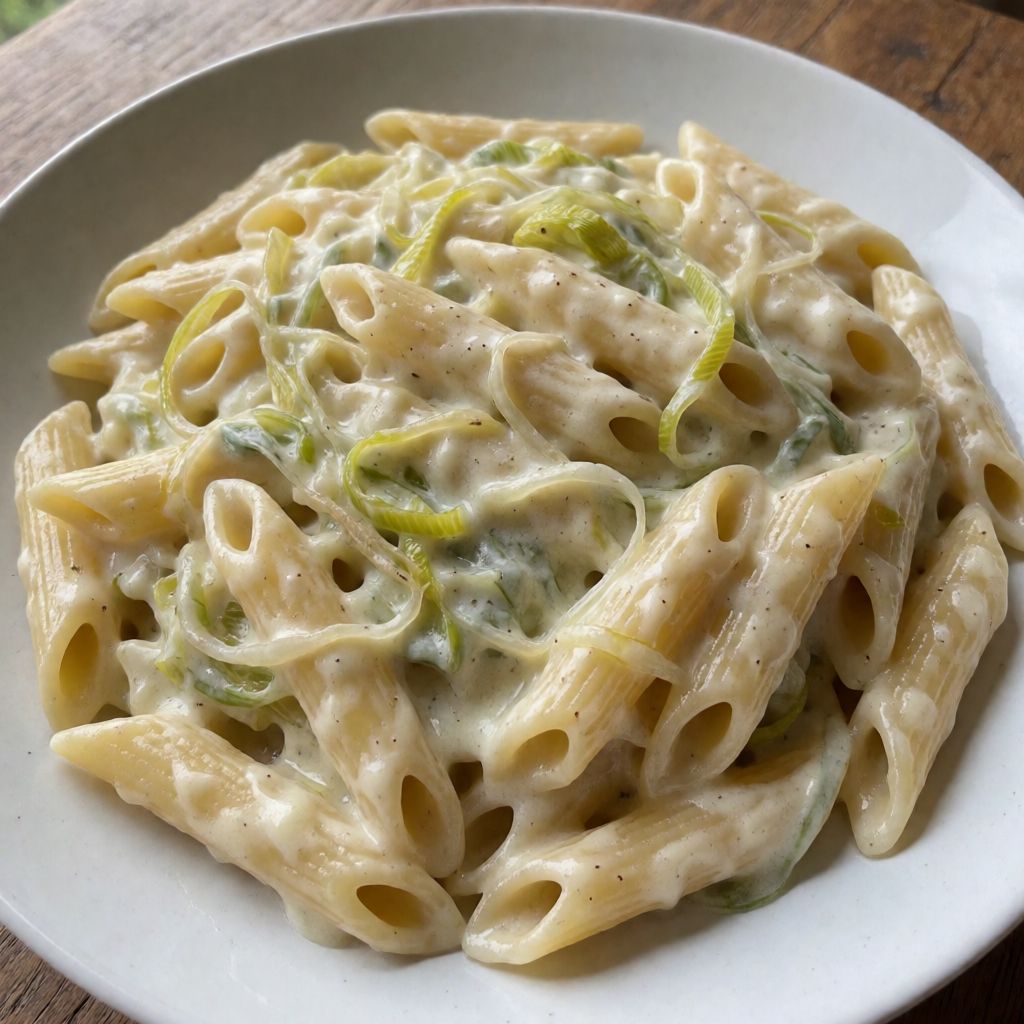
 AI photo
Penne with Gorgonzola
A creamy pasta with gorgonzola, leek and a hint of nutmeg.
Labels are worked out automatically from the ingredients and can be wrong. Check the packaging if it matters to you.
Ingredients
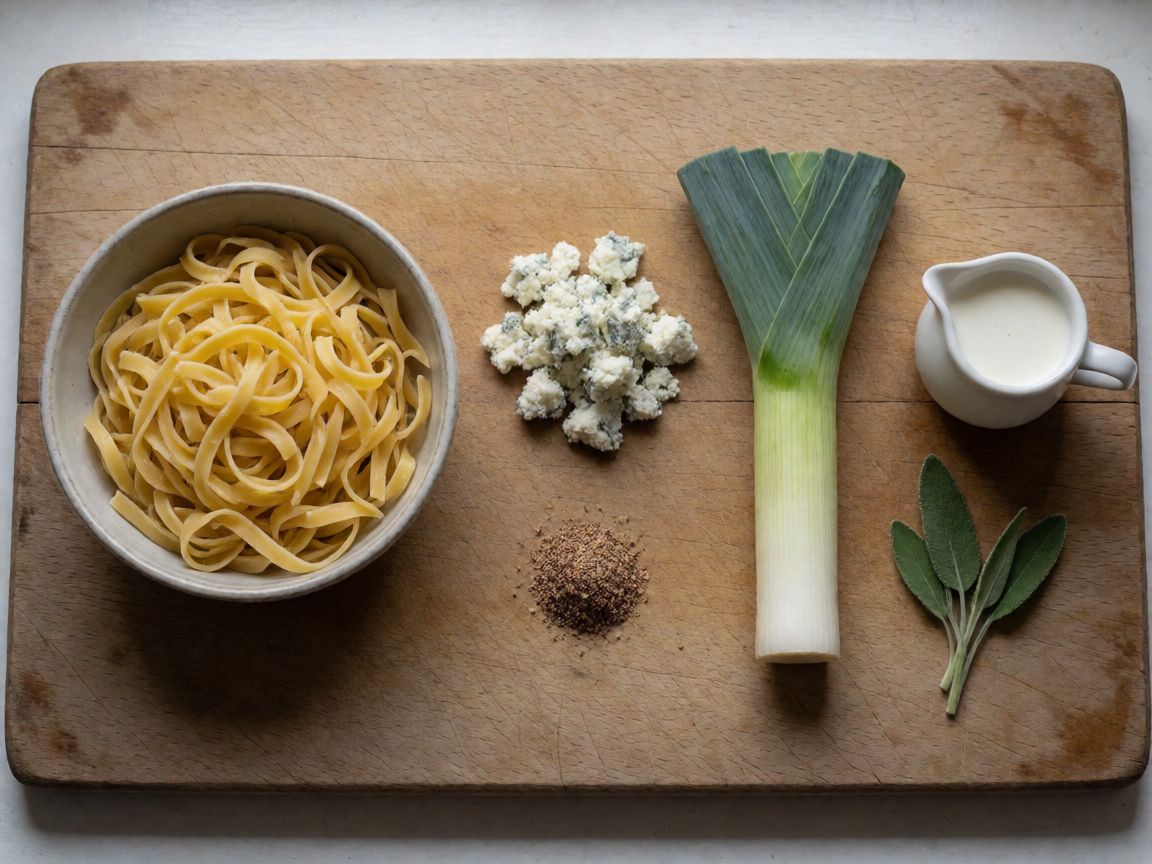
- 320 g Penne pasta
- 150 g Gorgonzola dolce
- 1 pcs Leek
- 50 ml Double cream
- Nutmeg to taste
- Olive oil to taste
- Salt to taste
- Black pepper to taste
- 3 pcs Sage leaves








Steps
Heat the olive oil in a pan and fry the sliced leek until golden.
Add the gorgonzola dolce, rind removed and cut into large pieces, and melt it, stirring.
10 minPour in the double cream, season with salt and stir.
Cook for about 15 minutes, adding black pepper and nutmeg, covered, over a low heat.
15 minBring a large pot of water to the boil separately.
Drop the penne into the boiling water and cook according to the packet instructions.
Drain the pasta al dente, keeping back half a cup of the cooking water.
Toss the penne into the gorgonzola sauce, mixing in some of the reserved pasta water.
Add the chopped sage, mix well and serve.
This is a cheese sauce with no flour, no roux, nothing to thicken it artificially — the body comes straight from the fat in the gorgonzola, loosened just enough with cream to flow. What decides whether it works isn't the pasta, it's whether that cheese melts smoothly into a sauce, or breaks into oil and grainy curd sitting apart from each other.
The leek goes in first and needs its own time at a heat low enough that it softens and turns translucent rather than catching colour at the edges. That quiet sweetness is the backbone under the salt of the cheese — skip the patience here and you've just got melted cheese dumped on pasta, no structure to it.
Some say any blue cheese does the job the same way — no, because gorgonzola dolce is made soft and wet on purpose, for exactly this kind of melting. A drier, sharper blue — gorgonzola piccante, a strong Stilton — clumps instead of flowing, fights the cream, and you end up adding more and more of it just to get a texture, while the taste tips from rounded to harsh.
The spoonful of pasta water at the end isn't decoration, it's the fix for a sauce that's cooled and tightened in the few minutes it took the pasta to drain. Starchy water stretches it back out so it coats instead of clumping on top.
Gorgonzola dolce: buy it pre-cut if you can, because the rind isn't just inedible here, it melts unevenly and leaves bitter streaks through a sauce that should be uniform. Cut the pieces fairly large going into the pan — they melt fast once the cream and warmth hit them, and smaller pieces just mean more risk of scorching before the leek's even ready. If dolce isn't on the shelf, a soft, young blue — a mild Danish blue, a young Cambozola — behaves closer to it than anything labelled "strong" or "mature".
Double cream in the UK runs around 48% fat, and that's the whole point of using it here: enough fat to bind with the cheese's own fat without the cream's water fighting it or curdling under heat. Whipping cream (around 35%) is thinner and asks more patience to reduce; single cream (18%) will split if you're not careful, because there's too much water and not enough fat to hold the emulsion together. If cream's out of reach, mascarpone loosened with a splash of milk gets you closer than any "light cream" substitute will.
The leek is there for sweetness without the bite of onion — cheaper historically in parts of Europe where it grew easily in cooler soil, which is partly why it turns up in so many quiet, cream-based pasta sauces rather than the sharper tomato ones. Use the white and pale green, sliced thin, and give it a proper stretch of low heat — a domestic ring turned right down, not what people loosely call "medium" — so the sugars come out slowly instead of the outside browning while the inside stays raw and crunchy.
Covering the pan for those fifteen minutes matters more than it looks. You've got no kazan here, no heavy lid that traps steam evenly — a plate over the pan does the same job on a thinner domestic one: it stops the sauce reducing too hard and too fast, which is exactly what turns a silky melt into something grainy and split. If it does split — oil pooling, cheese clumping — that's the heat having been too fierce at some point, not the cheese being wrong.
Nutmeg and sage aren't throat-clearing additions. Nutmeg is the standard cut against richness in almost any cream sauce in this kitchen tradition, grated fresh if you can, because the pre-ground stuff loses its oil fast and tastes mostly of cardboard within a few months of opening the jar. Sage brings a resin note that stops the dish being just fat and salt — use it fresh, chopped in at the end, since dried sage is a different, duller herb entirely, closer to hay.
Salt wants a light hand here — the cheese is already salty, and it's easier to taste and adjust at the very end, once the sauce and the reserved pasta water have come together, than to correct an oversalted sauce after the fact. Olive oil just needs to be something without a flavour loud enough to argue with the cheese — a neutral, everyday one, not your good finishing oil, which would be wasted under all that gorgonzola anyway.