
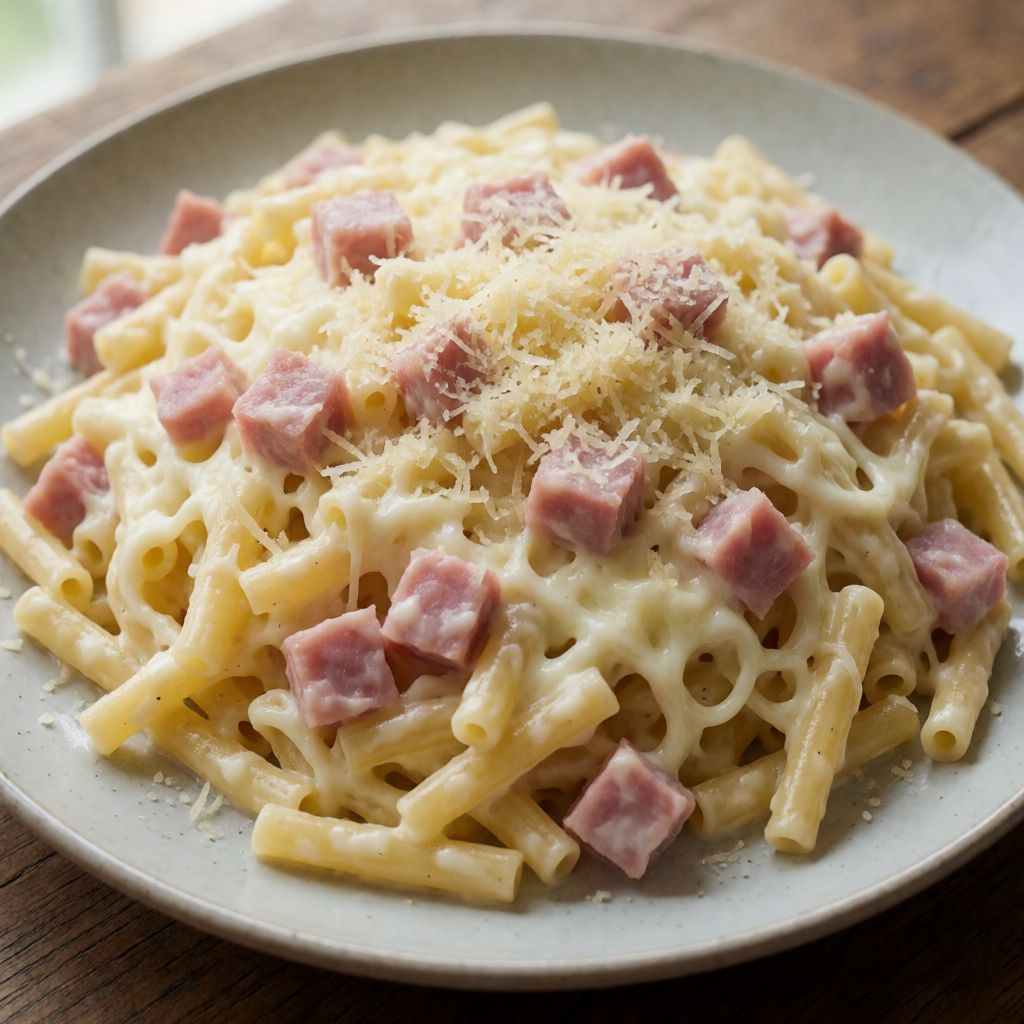
 AI photo
Pasta with Ham and Mozzarella
A quick pasta dish with ham, mozzarella and parmesan, finished with a knob of butter.
Labels are worked out automatically from the ingredients and can be wrong. Check the packaging if it matters to you.
Ingredients
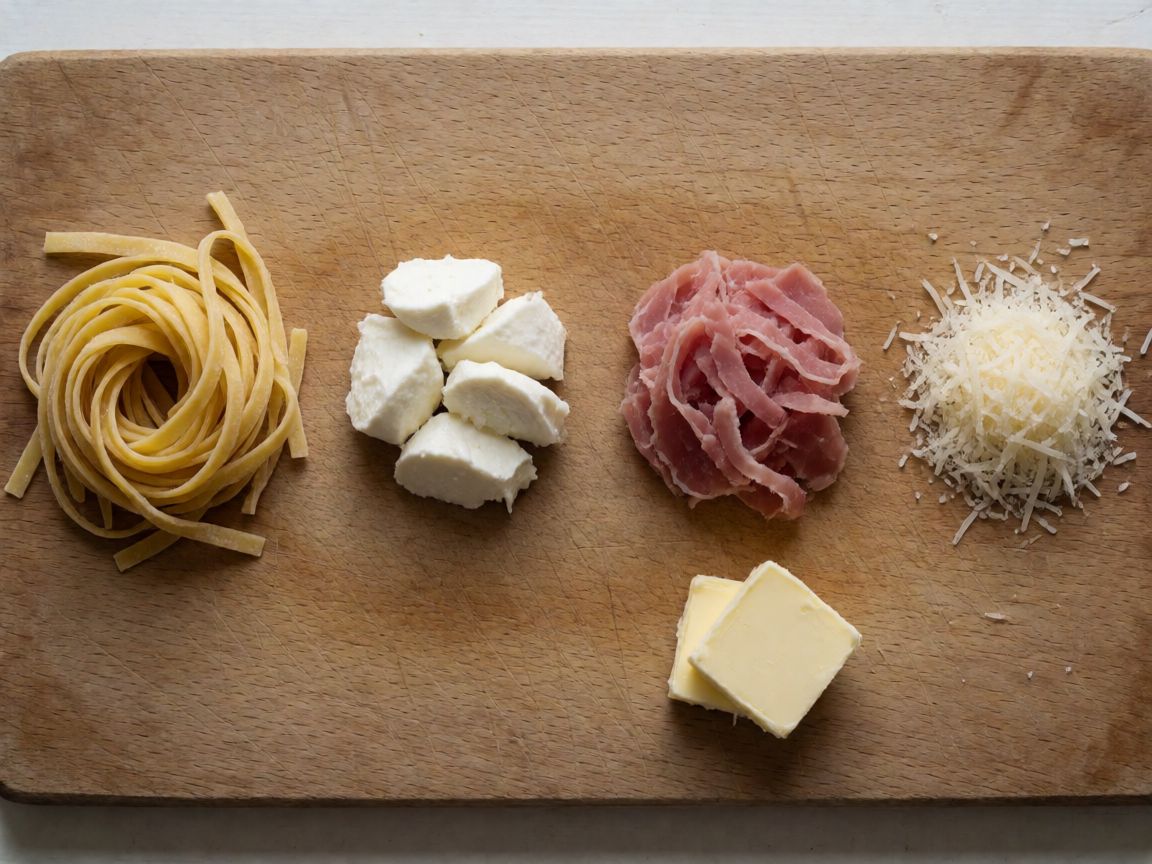
- 350 g Pasta fresh
- 120 g Mozzarella
- 80 g Ham
- 40 g Parmesan
- 40 g Butter
- Salt to taste
- Black Pepper to taste







Steps
Bring a large pot of water to the boil, season it with salt, and cook the fresh egg tagliatelle according to the pack instructions.
Dice the ham and cut the mozzarella into small pieces. Place them in a large bowl, add the parmesan and sprinkle with black pepper.
Once the pasta is ready, drain it and transfer it to the bowl of ham and cheese.
Add the butter in pieces and gently mix, so as not to break up the tagliatelle.
Serve the ham and mozzarella pasta immediately, while still hot.
This is not a sauce dish — it's an assembly dish. Nothing in that bowl gets cooked except the pasta itself. The ham, the mozzarella, the parmesan, the butter — they all sit there raw and cold, waiting for one single burst of heat to do all the work: the heat carried out of the pot by the pasta itself. That's the whole mechanism, and once you see it, you stop treating this like a sauce you forgot to make and start treating it like what it actually is — a race against a falling thermometer.
Which means the thing that decides whether this works isn't a technique, it's a clock you can't see: how fast you move the pasta from pot to bowl, and how fast you toss it once it's there. Mozzarella melts at a temperature your fresh pasta barely holds onto for a minute after draining. Wait, chat, answer the phone — and you get warm cheese cubes sitting in a cold puddle of butter, not a dish. There's no reheating that fixes it, because reheating just breaks the fresh tagliatelle you were trying to protect in the first place.
Some say you need to make a proper cheese sauce on the stove first — a bit of butter, flour, milk, the works — no, because that defeats the point of a dish built for a Tuesday, not a Sunday. The entire appeal here is that the stove does nothing but boil water. Everything else happens because hot pasta is, for about ninety seconds, its own little pan.
Start with the pasta, because it sets the pace for everything else. Fresh egg tagliatelle, not dried — the two aren't interchangeable here. Fresh pasta cooks in a couple of minutes and comes out of the water genuinely hot, almost steaming-hot, with enough residual heat to melt the cheese on contact. Dried pasta, even cooked al dente, loses heat faster because it's denser and spent longer in the water losing moisture to it. If dried is all you have, work faster than you think you need to — drain it, don't rinse it, and get it into the bowl while the steam is still rising off it.
Doneness for the pasta isn't a minute count on a packet, though the packet gives you a floor. Fresh tagliatelle is done when it stops tasting of raw flour and goes from stiff ribbon to something that drapes over a fork without resistance — bite one, don't guess.
The mozzarella is where most people go wrong without realising it. Some say fresh buffalo mozzarella, the wet kind sitting in its own whey, is always the better choice — no, because here it works against you. That ball is built to be eaten cold, in a salad, releasing its milky liquid as you bite it. Drop it hot and diced into pasta and that same liquid turns your dish watery right when you want it rich. What you want is the firmer, drier block mozzarella — the kind sold vacuum-packed for pizza or grating — because it melts into strings and coats instead of leaking.
Ham here means cooked, sliced ham — gammon off the Sunday joint works well if you have leftovers, which is really the quiet logic of this whole dish: it's built to absorb bits sitting in the fridge, cheese ends and cold meat, the way a lot of Italian family cooking is really just thrift dressed up as a recipe. Smoked ham will push a different flavour into it; that's not a fault, just know you're choosing it.
Parmesan should come off a wedge, grated just before it goes in the bowl. Pre-grated parmesan from a tub has usually dried out and clumped with anti-caking starch, so instead of melting into the dish it sits there as grit. Any hard aged cheese with a similar dry, crumbly texture — grana padano, pecorino if you want more bite — will do the same job; what you're buying isn't a brand, it's a texture that breaks down into fine dust and disappears into the heat.
The butter wants to be unsalted if you can get it, because you're already salting the pasta water and adding parmesan, which is salty on its own — stack three salted ingredients and you lose the ability to correct it at the end. Cut it into pieces rather than one block for the same reason you hurry everything else: smaller pieces lose their shape faster, coating the strands instead of sitting there as a cold yellow lump in the bottom of the bowl. There isn't a real substitute for butter's job here — oil won't give you that short, silky coating — but if you must, use one with no smell of its own, so at least it doesn't fight the ham and cheese.
On quantity: 350g of fresh pasta for four people sounds light next to dried pasta portions, but fresh egg pasta is denser and richer, so you eat less of it comfortably — don't be tempted to stretch it to six just because the packet looks generous. And once it's plated, eat it. This dish has a shelf life measured in minutes before the cheese sets again and the whole mechanism runs in reverse.