
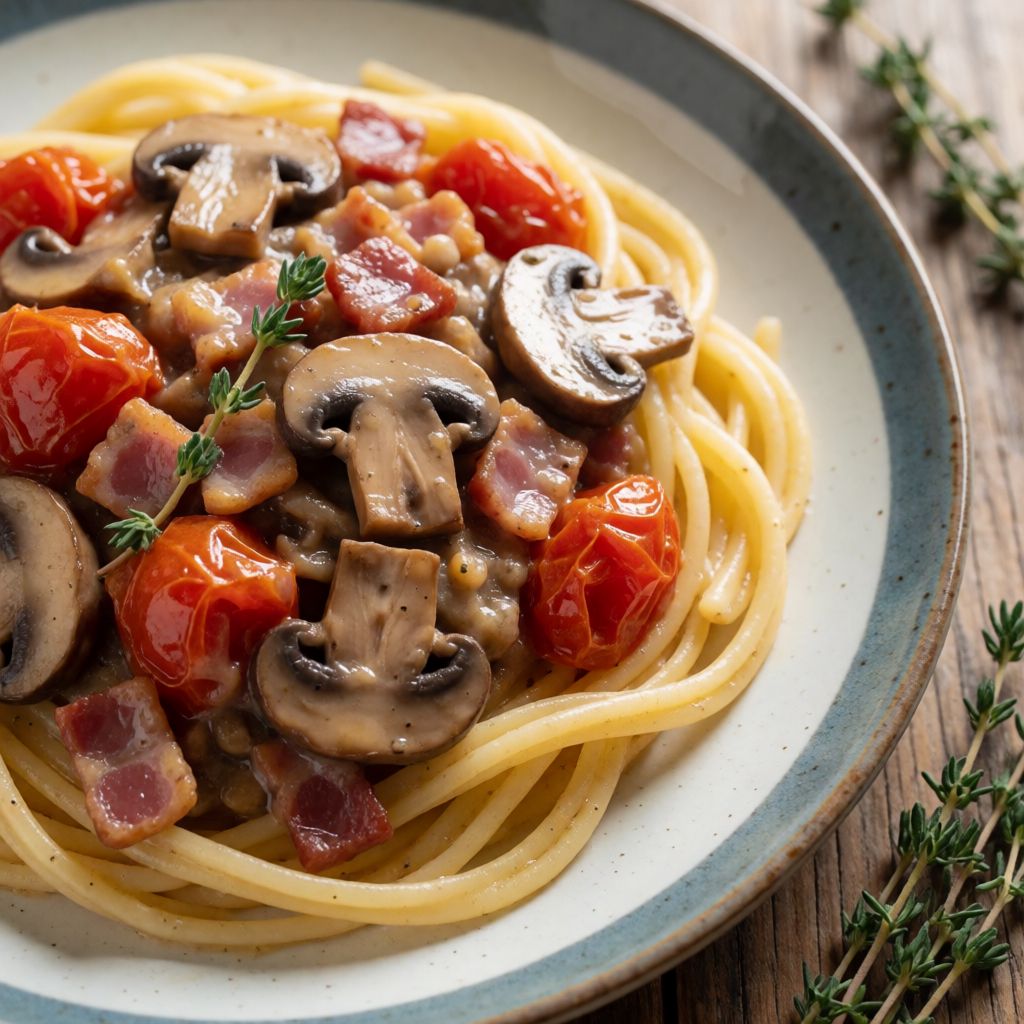
 AI photo
Pasta with Mushrooms, Bacon and Tomatoes
A quick pasta dish with mushrooms, crispy bacon and tomatoes in a light cream sauce.
Labels are worked out automatically from the ingredients and can be wrong. Check the packaging if it matters to you.
Ingredients
- 400 g Pasta
- 250 g Mushrooms quartered
- 100 g Bacon diced
- 1 tsp Butter
- 50 ml Whipping cream
- 1 pcs Thyme leaves picked from the sprig
- 50 g Parmesan freshly grated
- 15 pcs Tomatoes halved
- Salt to taste
- Black pepper freshly ground, to taste









Steps
Cook the pasta until al dente in a pot of salted boiling water.
10 minFry the mushrooms and bacon over high heat in a pan with a little butter.
5 minReduce the heat, add the cream, the halved tomatoes, and finally the hot pasta.
3 minSeason with salt and freshly ground pepper to taste.
1 minServe with thyme, a pinch of freshly ground black pepper and parmesan.
This is a fifteen-minute pan sauce built on three different heats, not one. You boil the pasta on its own clock, you hit the mushrooms and bacon hard and fast in another pan, then you drop the heat right down to let cream, tomato and pasta meet without anyone getting hurt. Four people, one wide pan — your domestic hob is actually built for this, no kazan needed, because you're sautéing fast here, not braising slow.
What decides whether it works is almost entirely the mushroom stage. Mushrooms are mostly water held inside a loose sponge of cell walls. Put them in gently, in a crowded pan, on timid heat, and that water leaks out before the surface ever gets hot enough to brown — you get grey, slippery discs stewing in their own puddle. Go in hot, give them room, and the water flashes off as steam before it can pool, so the edges actually sear, turning the colour of good strong tea instead of staying pale and wet. The bacon alongside does two jobs: its fat — not the teaspoon of butter, which is only there to stop the first mushrooms catching before the bacon fat starts running — carries flavour and tolerates heat that butter alone would scorch at.
Some say rinse your mushrooms thoroughly before cooking — no, because they drink water like a sponge, and that water has to boil back out before browning can start, which means by the time any colour shows they've already overcooked and shrunk to nothing. Wipe them, or rinse and dry at once. Quartered, not sliced thin, because thin slices have too much surface for their mass and collapse before the thick ones have even started to brown. Any firm, white-fleshed mushroom does this job — button, chestnut, a few torn chunks of portobello — the test is whether it holds its shape when you press a thumbnail into it.
Bacon: streaky, diced small, because small pieces render fat quickly and crisp at the edges, where a few slow lardons would still be raw in the middle by the time the mushrooms are done. Back bacon works too, just with less fat released, so lean a little harder on the butter to make up for it. No bacon in the fridge — any smoked, cured pork off-cut does the same job, because what you actually want is rendered smoky fat, not the specific cut.
Cream: whipping cream, around a third fat, chosen because fat content is what keeps the emulsion stable near heat — the proteins are less likely to clump when there's enough fat coating them. Go thinner, or use milk, and it splits faster and gives you a thinner sauce besides; if that's what's in the fridge, pull the pan further off the heat before it goes in, and don't let it come back to a boil. No cream at all — a little more butter and a splash of the pasta water holds things together, just looser and less rich.
Thyme goes on raw, at the end, never into the hot pan — its aromatic oils are the entire reason you're using it, and they cook off long before the dish is finished. The same logic covers the pepper: grind it over the plate, not out of a jar ground months ago, because pepper loses its bite to the air within weeks of grinding.
Parmesan: grate it yourself, right before serving. The pre-grated bagged kind carries anti-caking starch so it won't clump in the bag, and that same starch stops it melting cleanly into a hot dish — you get grit instead of a coating. Any firm, well-aged hard cheese with a similar bite will stand in if parmesan isn't to hand.
Fifteen small tomatoes, halved, is the kind of detail that only makes sense once you've cooked this a few times — too few and there's no acidity to cut the cream, too many and you're back to stewing them into sauce. Patience here isn't about long cooking; the whole dish is really three short, specific windows of heat stacked one after another, and rushing the mushroom stage or crowding the cream stage is the only way to ruin something this quick.