
 AI photo
Radish Pasta
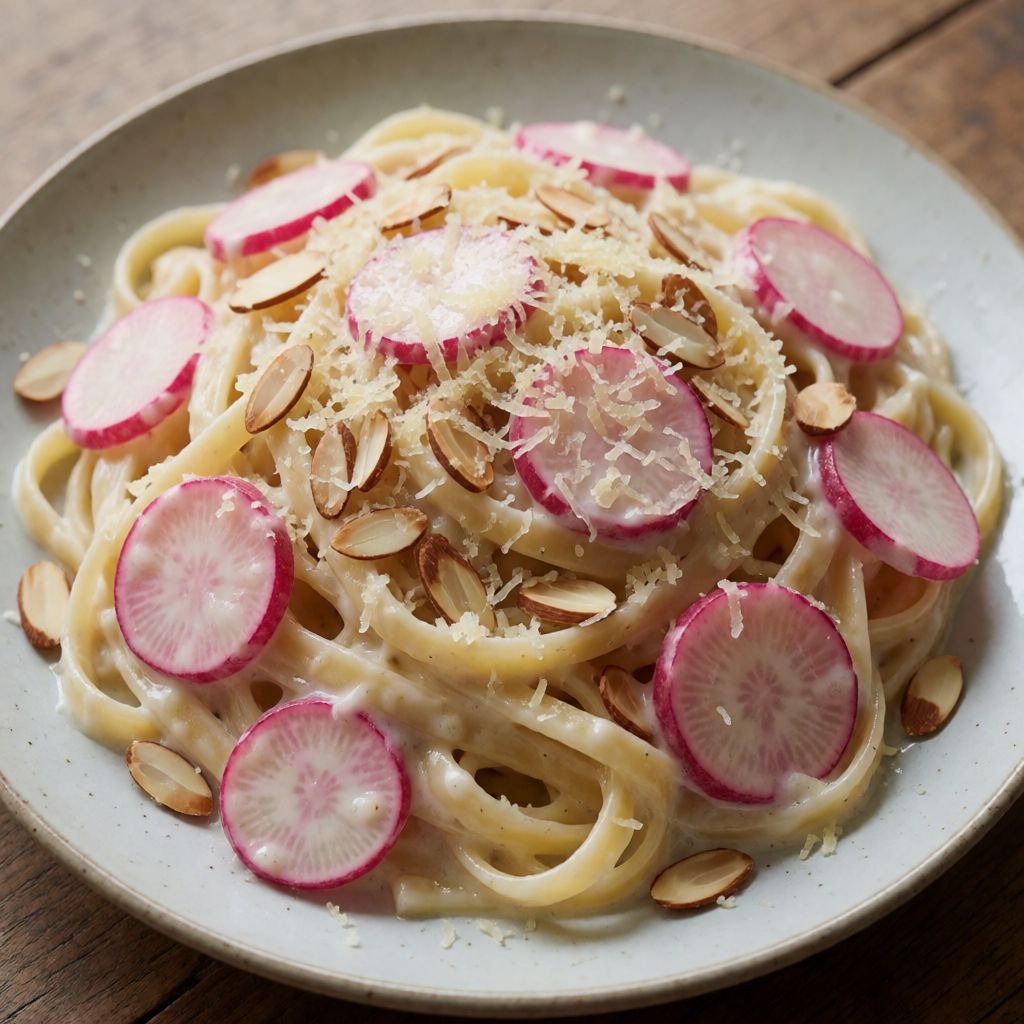
A pasta dish with a creamy radish-top sauce, almonds and Parmesan, finished with fresh radish slices.
Labels are worked out automatically from the ingredients and can be wrong. Check the packaging if it matters to you.
Ingredients
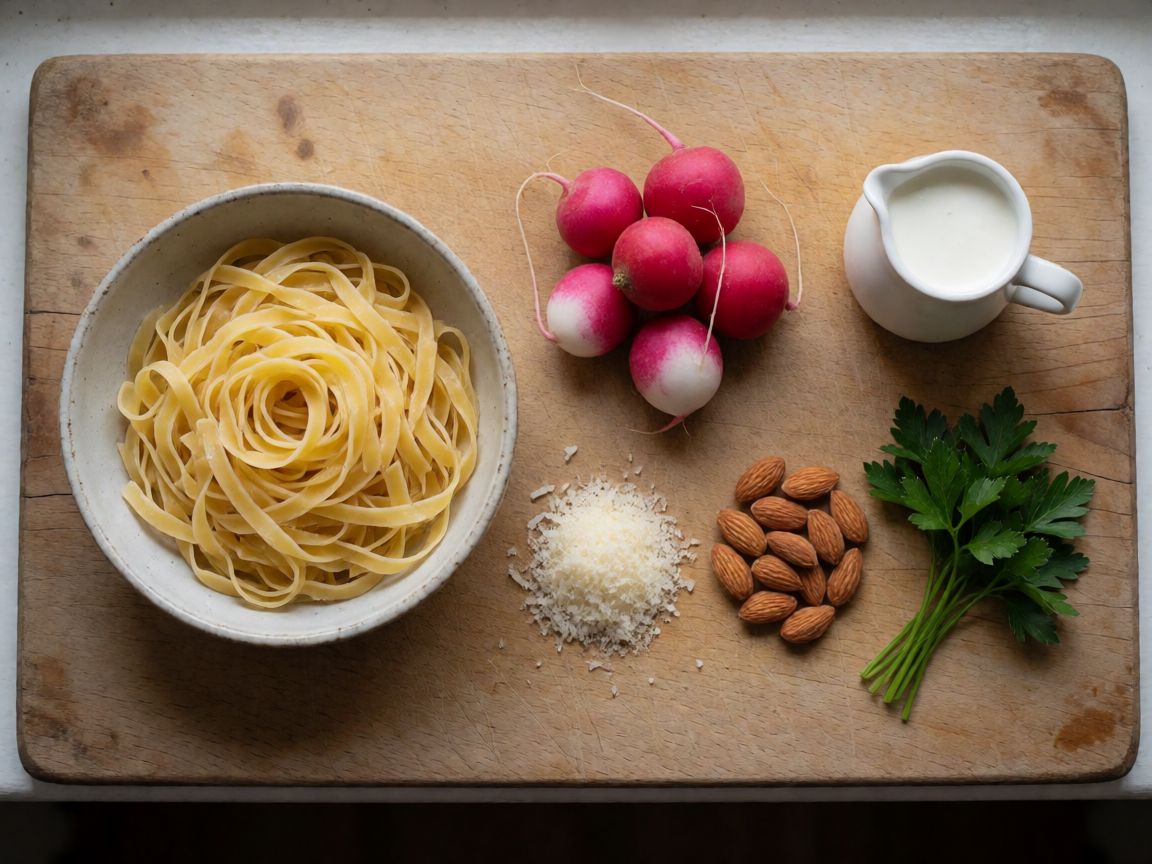
- 320 g Pasta
- 150 g Radishes
- 70 g Double cream
- 50 g Parmesan
- 40 g Almonds
- 1 bunch Parsley
- 20 g Olive oil
- Salt to taste
- Black pepper to taste








Steps
Trim the leafy tops from the radishes and wash both well. Put the tops in a blender with the cream, Parmesan, almonds and olive oil, and blitz until smooth.
Bring a large pot of water to the boil, season generously with salt, then add the pasta.
Slice the radishes into thin rounds, about 2mm thick.
Cook the pasta according to the timing on the packet.
Tip the sauce into a frying pan, stir in a ladleful of the pasta cooking water, add the chopped parsley and warm gently over a low heat for a few minutes.
Drain the pasta, add it to the pan and toss it through the sauce for a couple of minutes to coat.
Drizzle with olive oil, toss well, plate up and finish with the reserved radish rounds and a pinch of black pepper.
This is pasta dressed not in a tomato or butter sauce, but in a green paste built from a part of the radish you were taught to bin — the leafy tops. Blitz them raw with cream, Parmesan, almonds and oil, and you get a pesto in spirit if not in name: pesto just means "pounded," and basil never had a patent on the method. The dish rides on one idea — nothing here goes to waste, and nothing here is cooked more than it has to be.
What decides whether it works is restraint with heat and trust in texture. The sauce goes into the pan to warm, not to cook — you're not making a custard, you're loosening a raw emulsion of fat, cheese and starchy pasta water so it clings to the pasta instead of pooling at the bottom of the bowl. Push the heat past a bare simmer and the cream splits, the Parmesan seizes into rubbery threads, and you've got grainy green water instead of a sauce. The few minutes you spend coaxing it gently is patience doing real work, not just waiting around.
The other half of the dish is contrast: the radish bulb goes in raw, sliced thin, right at the end. Cooked radish loses the thing that makes it radish — that clean, peppery bite — so here it stays uncooked and crisp, laid on top rather than tossed through, so every forkful carries both the soft green sauce and a cold, sharp crunch against it.
Pasta — 320g for four is a normal ratio, about 80g a head, enough to carry a sauce this concentrated without drowning in it. Shape matters more than you'd think: something with ridges or a hollow — penne, casarecce, fusilli — grabs a loose cream sauce better than a flat ribbon, which it'll slide off. Spaghetti's fine too, just toss it harder and longer so the strands pick up the coating. The packet's time is a floor, not a verdict — fish a piece out near the end and bite it; when the chalky white core's gone and there's still a little resistance, that's done, not when the pack says so.
Radishes — buy them with the tops still on and green, not yellow or wilting; that's your freshness test, more honest than any date on the bag. The bulb should feel heavy and taut for its size — a soft, spongy one has gone woody inside and slices into rounds that bend instead of staying crisp. Fifteen radishes with tops, roughly, gets you to 150g of bulb and enough leaf for the sauce.
Double cream carries the fat that turns a blitzed green paste into something that coats a strand of pasta instead of beading off it. No double cream? Crème fraîche, or a lighter cream with a knob of butter melted in, does the same job — the point isn't the brand of dairy, it's giving the sauce enough fat to hold the cheese and the pasta water together without curdling. Parmesan does double duty: salt and savouriness, but also body, its proteins thickening the sauce slightly as it warms. Any hard, aged grating cheese works on the same principle — pecorino pushes the whole dish sharper and saltier, so taste before you reach for more salt.
Almonds give the sauce its structure — without a nut, this is a thin green cream, not a pesto. The rule for substitution isn't "almonds or nothing," it's any mild, oily nut that blitzes to a rough paste rather than a liquid butter: walnuts, cashews, pine nuts if you're feeling flush, even hazelnuts with the skins rubbed off. Run the blender too long and the nuts release their oil and turn slick and separate — stop as soon as the mixture looks like a thick sauce, not when it looks glassy-smooth.
Parsley goes in at the pan stage, not the blender, because a few minutes of gentle heat is all the cooking it needs — any longer and it goes dull and loses its grassy lift. Olive oil appears twice, in the blitzed sauce and as a finishing drizzle, and both times the brief is the same: use oil with a flavour you actually like, because here it's tasted, not just there to stop things sticking. Want it to stay in the background instead? Any oil with no smell of its own will carry the sauce just as well — you'll just lose that last peppery note on top.
Salt has two jobs here, and people often only do one. The pasta water needs to taste properly of the sea, because that's the only seasoning that gets into the pasta itself — salt added afterwards just sits on the surface. Season the sauce separately, then taste again once the pasta's tossed through, because Parmesan brings its own salt and it's easy to double up without meaning to.