
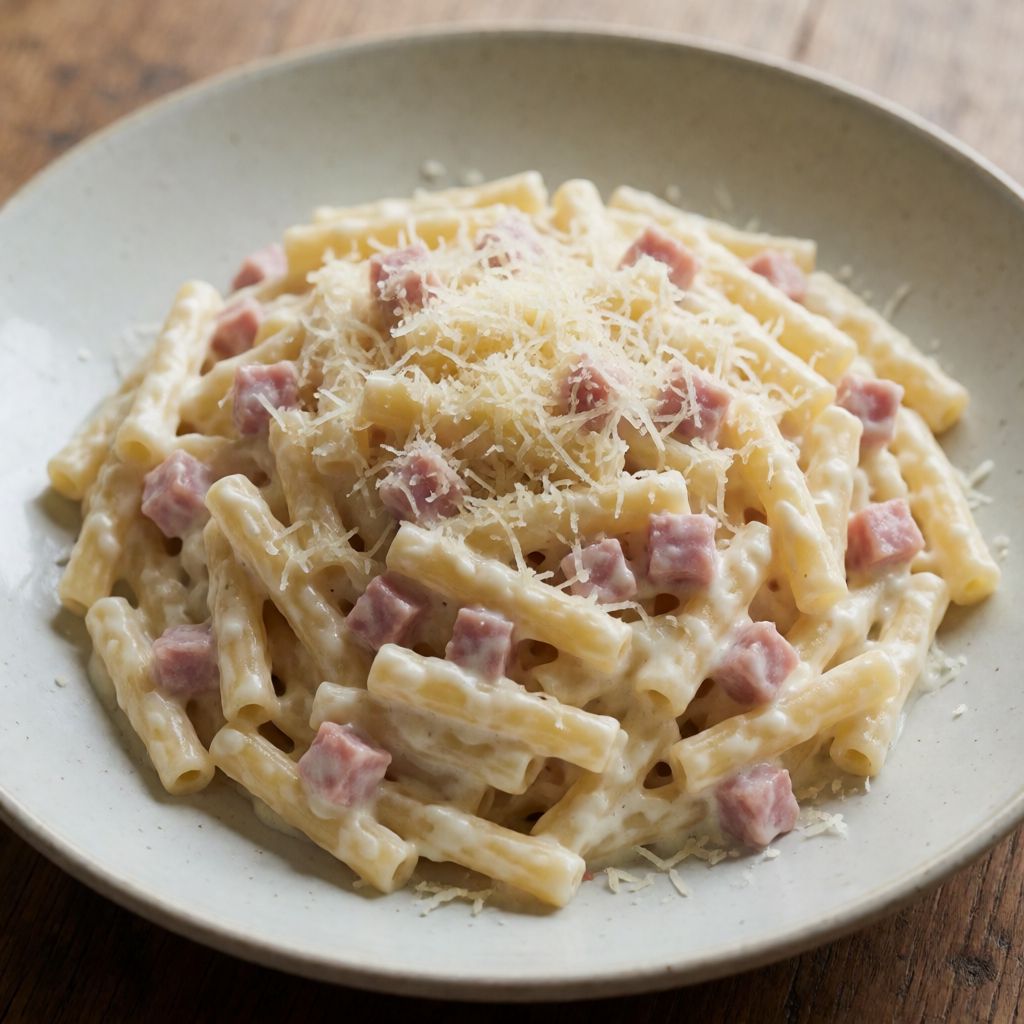
 AI photo
Pasta with Ricotta and Ham
A creamy pasta dish with ricotta, ham, egg yolks and parmesan, tossed together for a quick, comforting meal.
Labels are worked out automatically from the ingredients and can be wrong. Check the packaging if it matters to you.
Ingredients
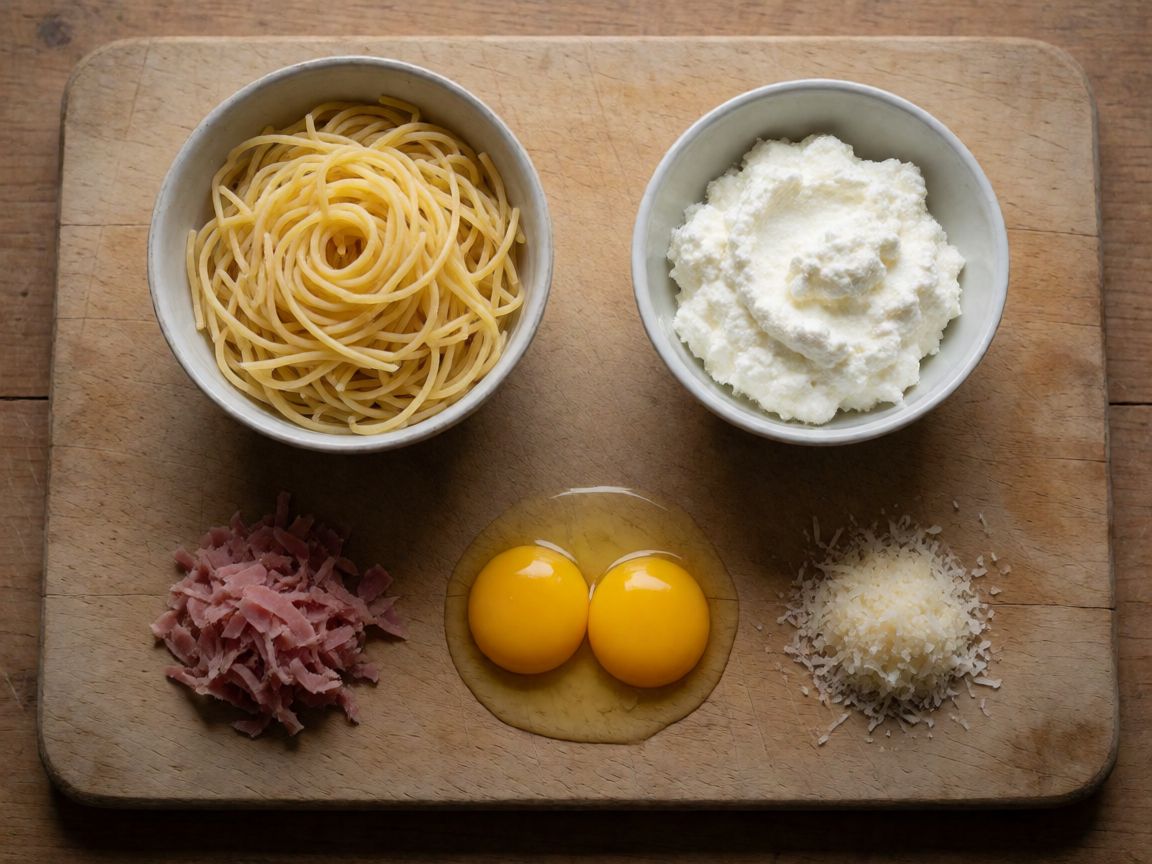







Steps
Fill a large pot with water and bring it to the boil.
Add a spoonful of salt and tip in the pasta. Cook until al dente.
Put the ricotta in a bowl and mash it with a fork until smooth.
Add some hot water and stir until the mixture becomes smooth and even.
Cut the ham into small cubes and add it to the ricotta along with the parmesan.
Beat the egg yolks and stir them into the sauce. Mix well, then season with salt and pepper.
Drain the pasta and tip it into the bowl with the sauce. Toss until evenly coated.
Garnish with fresh basil leaves if you like. Serve immediately.
This is a carbonara's cousin, with ricotta standing in for the fat that pecorino and egg alone can't give you, and ham standing in for guanciale. No flame touches the sauce. It's built entirely in the bowl, with the heat of the pasta and its water doing the cooking. That's the whole trick, and it's also where people go wrong.
What decides whether this works is temperature, not time. Egg yolk turns from raw to silky in a narrow band — too cool and it stays thin and tastes of nothing but egg, too hot and it seizes into little yellow curds, like a sad omelette hiding in your pasta. The hot water you stir into the ricotta first is not there for texture alone — it's a thermostat. It warms the bowl gradually so that when the pasta lands in it, straight from boiling, the whole mass settles somewhere in the middle: hot enough to cook the yolk, not hot enough to scramble it.
Some say you need a pan and a low flame to make an egg-based sauce properly, the way you'd make a custard. No — because the pasta itself carries enough heat, and a flame under a bowl of raw yolk is exactly how you get scrambled egg instead of sauce. Carbonara figured this out generations ago out of necessity — no spare pan, no spare hob ring in a small Roman kitchen — and the same logic saves you washing up here too.
Ricotta is the canvas here, not a flavour. Buy it fresh and well drained — it should hold its shape loosely on a fork, not weep water into the bowl, because wet ricotta will dilute the sauce and you'll be chasing the balance with more pasta water than you meant to add. If you can't get decent ricotta, cottage cheese pushed through a sieve does the same job, or mascarpone thinned with a splash of milk — anything soft, mild, with no tang of its own, because tang here fights the ham's salt instead of supporting it.
Ham, cut small, is salt and fat delivered in bites rather than spread evenly — that's the point of the cube, not the slice. A British sandwich ham from the Sunday leftovers works fine; pancetta or a cured speck works better because the extra fat renders slightly from the residual heat and helps the sauce cling. What you're really choosing is salt-cured pork in some form — use whatever version of that is in your fridge, and taste before you add more salt separately, because ham already decides a good part of that for you.
Parmesan does double duty: it's salt and savour, but it also has enough protein and fat to help the sauce hold together rather than split into egg and oil. Pecorino is the sharper option if you want more bite. Either way, grate it fine — big shards won't melt into the warmth of the bowl, they'll just sit there being cheese.
The egg yolks are the actual structure of the sauce. Take them out of the fridge before you start, not straight from cold — a cold yolk needs more heat to turn silky, and that's exactly the extra heat that risks curdling it. Beat them loose before they meet anything hot; a yolk poured in whole cooks unevenly, a shell of done egg around a raw centre, same problem as dropping a cold egg into a hot pan.
For the pasta itself, shape matters less than surface — something with ridges or a short tube holds the sauce better than a very smooth long strand, but there's no rule against spaghetti, it just slides more. Salt the water properly, a full spoonful for a pot this size, because pasta only ever gets seasoned once, from the inside, while it cooks — after that you're only seasoning the surface.
This feeds four people as a main, maybe five with bread and something green alongside, and it rewards patience of exactly one short, specific kind: have the sauce bowl warm and ready before you drain, don't let the pasta sit and cool on its way from pot to bowl. That short wait is the only ingredient you can't buy.