
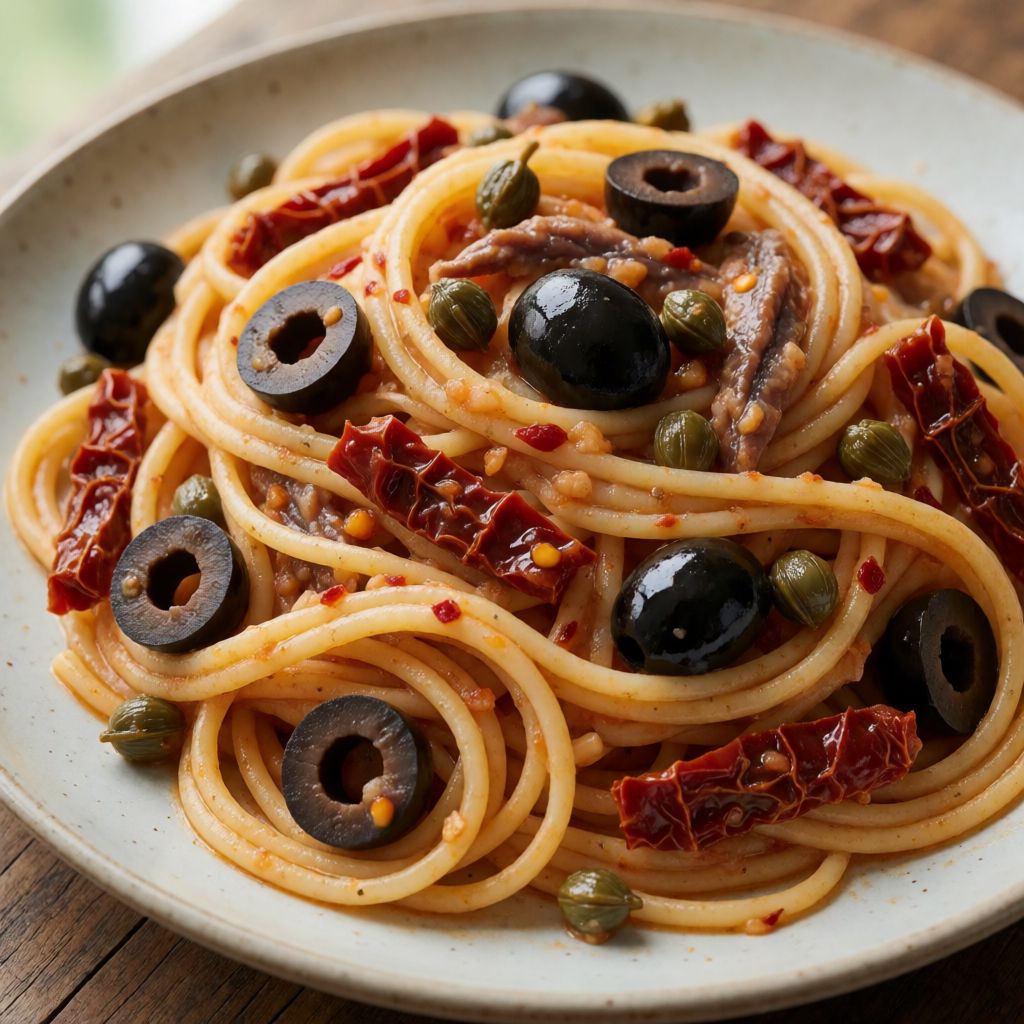
 AI photo
Pasta with Tomatoes, Olives and Capers
A quick pasta tossed with tomatoes, olives, capers and anchovies for a bright, salty sauce.
Labels are worked out automatically from the ingredients and can be wrong. Check the packaging if it matters to you.
Ingredients
- 1 clove Garlic finely chopped
- 0.5 tsp Chilli flakes
- 10 pcs Olives finely chopped
- 2 tbsp Capers finely chopped
- 3 pcs Anchovies finely chopped
- 2 tbsp Sun-dried tomatoes finely chopped
- 0.5 tsp Smoked paprika
- 15 pcs Tomatoes quartered
- 1 tbsp Tomato paste
- 0.5 pcs Lemon zest
- 4 tbsp Olive oil
- Salt to taste
- Black pepper to taste, freshly ground
- 400 g Pasta cooked al dente
- 1 bunch Parsley finely chopped, for sprinkling















Steps
Fry the garlic and chilli flakes in olive oil in a large frying pan over medium heat, stirring constantly.
2 minAdd the olives, capers, anchovies, sun-dried tomatoes and smoked paprika, and fry for a further 5 minutes. Add the tomatoes and tomato paste and heat through well. Season with lemon zest, salt and pepper.
5 minAdd the freshly cooked pasta to the pan, toss to coat well in the sauce, and serve sprinkled with parsley and freshly ground black pepper.
1 min
This is puttanesca's quieter cousin — same salty, briny backbone, but softened with sun-dried tomato and a shrug of smoked paprika instead of a wall of garlic and chilli. The whole dish is built on one idea: you're not cooking a tomato sauce, you're building a seasoning paste from things that are already intensely flavoured, and then letting fresh tomatoes break down into it at the end.
What decides whether it works is restraint with the garlic and chilli at the very start. Olive oil picks up aroma fast but burns bitter just as fast — garlic going from pale gold to brown takes seconds, not minutes, and once it's brown it's not garlicky anymore, it's acrid. So "medium heat, stirring constantly" isn't a nicety, it's the only way to stop a two-minute step turning into a mistake you taste for the rest of the meal.
The second thing that decides it: the capers, olives, anchovies and sun-dried tomato all go in together and fry for five minutes before any fresh tomato appears. That's not padding the ingredient list — it's rendering. Anchovies want gentle heat to dissolve into the oil rather than sit as fish; capers and sun-dried tomato want enough time to lose their raw sharpness and start smelling like themselves cooked, not themselves raw. Skip this and you get a sauce that tastes of separate jars rather than one dish.
Some say anchovies make a dish taste "fishy" — no, because by the time they've melted into hot oil for a few minutes, what you taste is salt and depth, not fish. That's the whole point of them here: they're a seasoning, not a topping.
Fifteen tomatoes sounds like a lot until you see them quartered and realise they're not there to make a sauce from scratch — they're there to add juice and acid to a paste that's already carrying all the salt and savour. Use whatever small, ripe tomato you'd eat raw: cherry or plum, the kind with actual flavour, not the big watery ones bred for looking good in a net bag. If it's winter and the fresh ones are pale and sad, a tin of good plum tomatoes, drained and torn, will do more for you than a sad fresh one will — this is one of the rare cases where tinned beats "fresh" on taste, because tinned tomatoes are picked and canned ripe.
The olives, capers and anchovies are doing the job salt usually does, except with more personality — each brings a different kind of savoury: olives are fruity-bitter, capers are sharp and vinegary, anchovies are deep and almost meaty once they melt. Because they're all salty already, go easy adding salt separately until you've tasted the finished sauce — this is the step people skip and then wonder why the dish is a flat, oversalted mess. If you can't get anchovies, or don't eat fish, a teaspoon of miso or a splash of soy will give you a similar savoury depth, though it won't be the same dish — don't pretend it will be.
Sun-dried tomatoes and tomato paste together are concentrating what the fresh tomatoes will later loosen up — this is the classic trick of layering a cheap, intense ingredient under an expensive, delicate one so the delicate one doesn't have to carry all the flavour alone. If you only have tomato paste and no sun-dried tomatoes, don't double the paste to compensate — paste is cooked-down and sweet-sharp, sun-dried is smoky and chewy, they're not interchangeable in texture even if they overlap in flavour.
Smoked paprika is standing in for the smoke a wood fire would give this kind of dish in places where it's cooked outdoors — in your flat, with an electric or gas hob and no live fire anywhere near it, this is the only route to that flavour, and half a teaspoon is enough; it bruises easily into bitterness if you lean on it.
Lemon zest at the end, not lemon juice — zest gives you the oil from the peel, which smells bright without adding the sourness juice would. Added with the pepper and salt, after the tomatoes have already broken down, it stays fresh instead of cooking off. Any oil without a smell of its own works for the frying — a plain olive oil, not an extra virgin you'd drizzle raw, since you're about to heat it and chase it with chilli and anchovy, not showcase it.
Cook the pasta separately, properly al dente, and bring it to the sauce, not the other way round — the one minute of tossing at the end is there to let starch from the pasta water (if you've kept a splash) bind the oil and tomato into something that coats rather than puddles. Patience here isn't in the cooking time, which is short — it's in not rushing the five minutes where the capers and olives actually render into the oil. That five minutes is the dish; everything after it is assembly.