
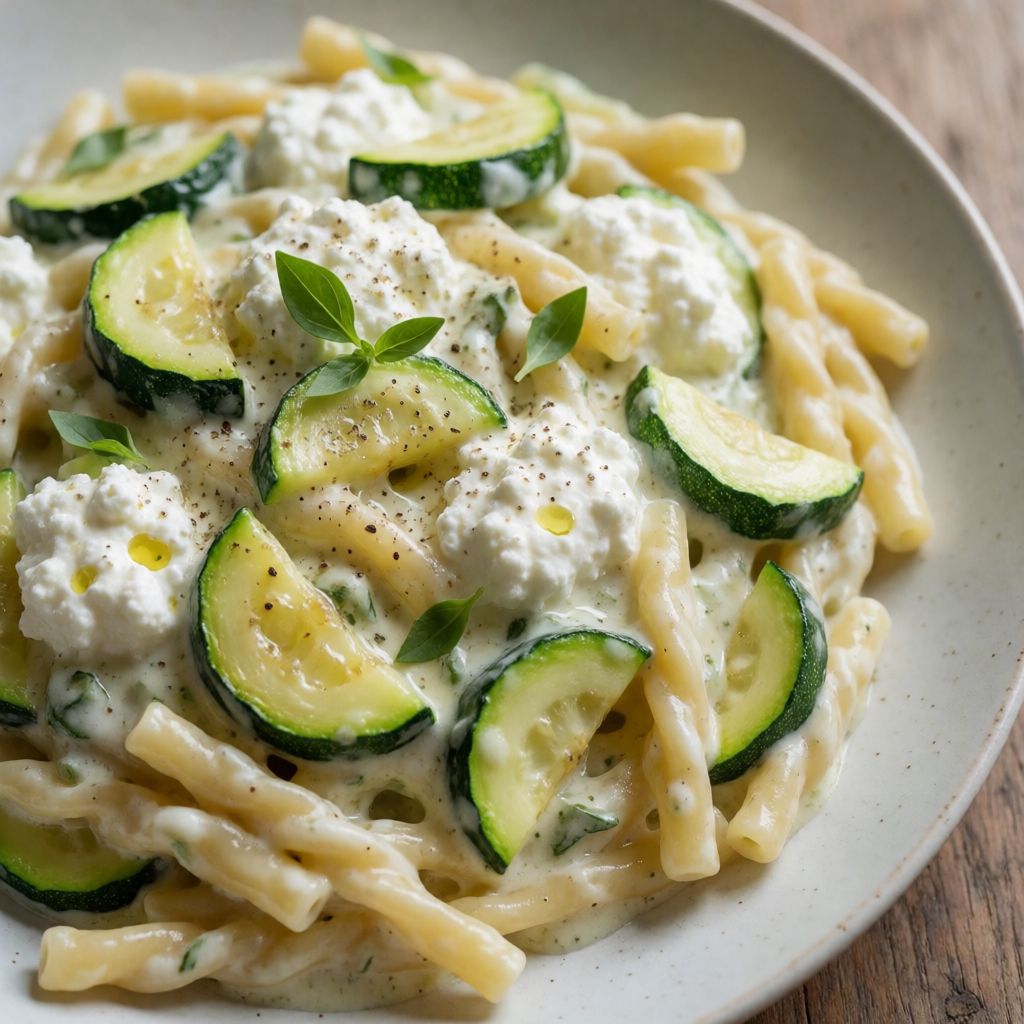
 AI photo
Pasta with Courgette and Ricotta
A creamy pasta with courgette and ricotta, ready in no time for a simple weeknight dinner.
Labels are worked out automatically from the ingredients and can be wrong. Check the packaging if it matters to you.
Ingredients
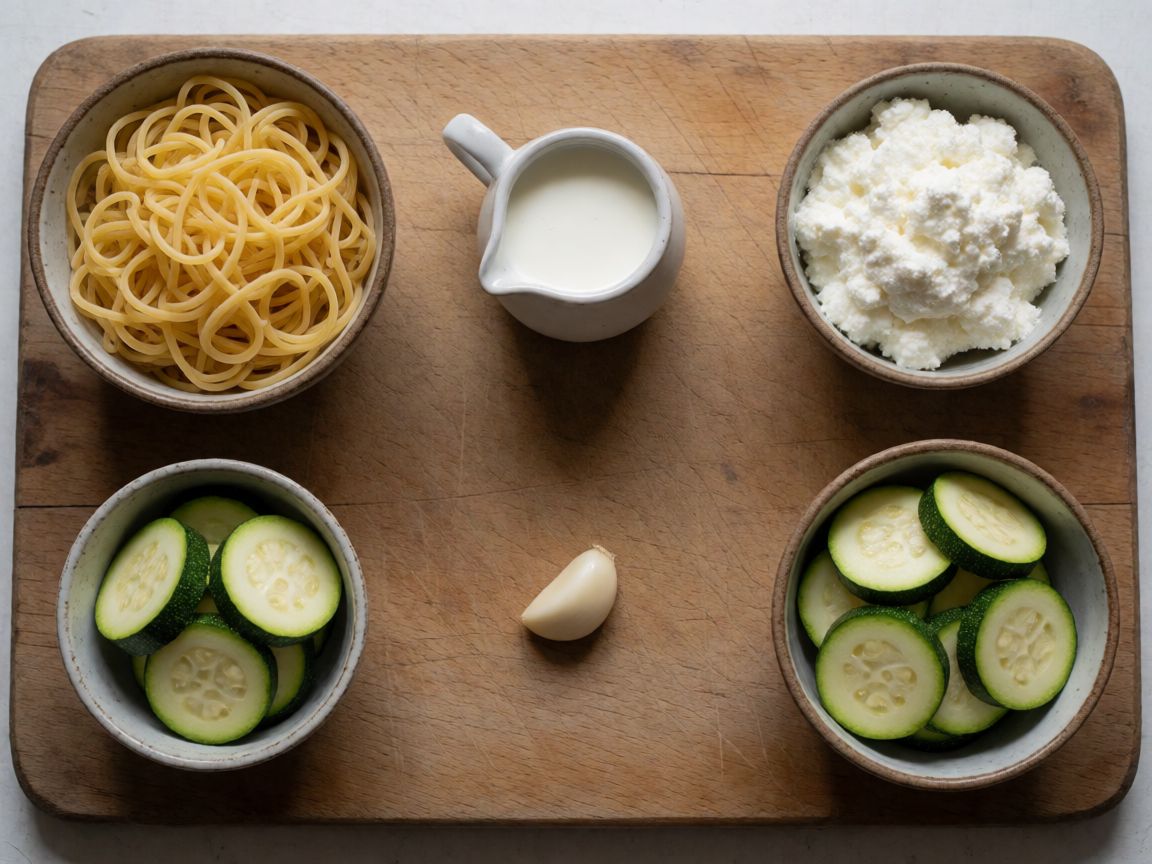
- 360 g Pasta
- 250 g Ricotta
- 50 ml Double cream
- 250 g Courgette
- 1 clove Garlic
- Olive oil to taste
- Salt to taste
- Black pepper to taste








Steps
Wash the courgettes thoroughly, trim the ends, cut into cubes and set aside.
Peel the garlic clove, remove the central sprout and chop finely.
Put the garlic in a non-stick pan, add a little olive oil and fry over medium heat.
When the garlic turns golden, add the courgettes, stir and season with salt and black pepper.
Fry the courgettes for about 5 minutes, then remove from the heat.
5 minAdd the double cream and ricotta to the courgettes, stirring until you get a smooth, creamy sauce.
Pour water into a pot and bring to the boil.
Salt the water, add the pasta and cook until al dente according to the packet instructions, then drain.
Combine the pasta with the sauce and mix well.
If you like, sprinkle with black pepper and grated cheese, such as Parmesan.
Serve the dish hot.
This is a sauce built on two separate operations happening in the same pan, which is exactly why it works on a Tuesday night and not just for show. You soften courgette until it loses its squeak, then you let ricotta and cream turn that cooked vegetable into something that coats pasta rather than sitting beside it. No reduction, no emulsifying with pasta water, no fuss — the sauce is finished the moment it's mixed, because ricotta thickens on contact with warmth, it doesn't need to cook.
What decides whether this dish works is the courgette's water. Courgette is mostly water held in a loose cell structure, and if you rush the frying, that water stays locked in and leaks out later into your ricotta, turning a cream into a puddle. Give it the few minutes it needs over heat that makes oil shimmer but not smoke, and the water cooks off as steam instead of as sauce-breaker. You're not browning the courgette for flavour here — you're drying it.
Some say garlic should go in with the oil from a cold pan "so the flavour builds slowly." No — garlic has almost no water and a lot of sugar-adjacent compounds, so from a cold start it just sits inert while the oil heats, then it can flip from gold to bitter black in the time it takes to glance at your phone. Put it into oil that's already moving, and pull the pan off heat or add the courgette the second it turns the colour of pale honey, not darker.
Ricotta is a whey cheese, not a curd cheese — it's made by heating the leftover liquid from other cheesemaking until the last proteins clump out of it. That's why it has almost no elasticity and no real "melt": it doesn't stretch like mozzarella, it just loosens when warmed and tightens when cooled or overcooked. Buy the firmer tub kind sold for baking, not the spreadable one meant for toast — the spreadable version already has extra water and stabilisers in it and will make a thinner, less convincing sauce. If ricotta isn't on the shelf, cottage cheese blitzed smooth gets you close; mascarpone alone works but skews rich and loses the faint tang ricotta brings.
Double cream's only job here is to loosen the ricotta into something a fork can pick up without clumping, and to buy you a bit of insurance against the sauce tightening too fast once it meets hot pasta. Any cream with enough fat to not split under gentle heat will do — single cream is thinner and more likely to turn watery rather than silky, so if that's what's in the fridge, use less pasta water for loosening instead and go easier on it.
Courgette (what you'll also see sold as "zucchini" — same vegetable, different import habit) wants cubes, not slices, because cubes give you a shape that holds against the pasta and doesn't disintegrate into mush the way thin half-moons can after five minutes of frying. Choose ones that feel heavy and firm for their size — a light, slightly spongy courgette has already started drying out inside and will behave unpredictably in the pan. There's no real substitute that keeps the same texture, but if courgette's out of season or you only have the marrow-sized ones from an allotment glut, aubergine salted and pressed first will take the sauce almost as well, just with a smokier edge if you brown it harder.
Garlic: one clove, not a show of garlic — this dish uses it as a background note, not a flavour of its own. Taking out the green central sprout, if there is one, isn't fussiness for its own sake; that sprout carries a sharper, more bitter edge that survives cooking better than the rest of the clove and can throw off an otherwise mild sauce.
Olive oil here is doing a job, not announcing a flavour — you want something that won't fight the mildness of ricotta, so "any oil with no strong smell of its own" is the real brief; a light olive oil or a neutral vegetable oil both do the job, save a fruity extra virgin for drizzling at the end if you want that note on top rather than cooked into the base.
On the pasta itself: 360g for four people is a moderate hand, not a heavy one, which fits a sauce that's rich but not thick enough to cling to a huge portion of dry noodles. Use whatever short or medium shape has ridges or a hollow — penne, fusilli, rigatoni — because this sauce doesn't nap over pasta the way a thin tomato sauce does; it sits in texture, and shapes with surface or a tube give it somewhere to hold on. Parmesan at the end is optional, but it's doing something real: its sharp, salty crystals cut through the flatness of cream and ricotta, which on their own can taste pleasant but a little one-note by the second forkful. Don't skip the black pepper for the same reason — it's the contrast, not decoration.