
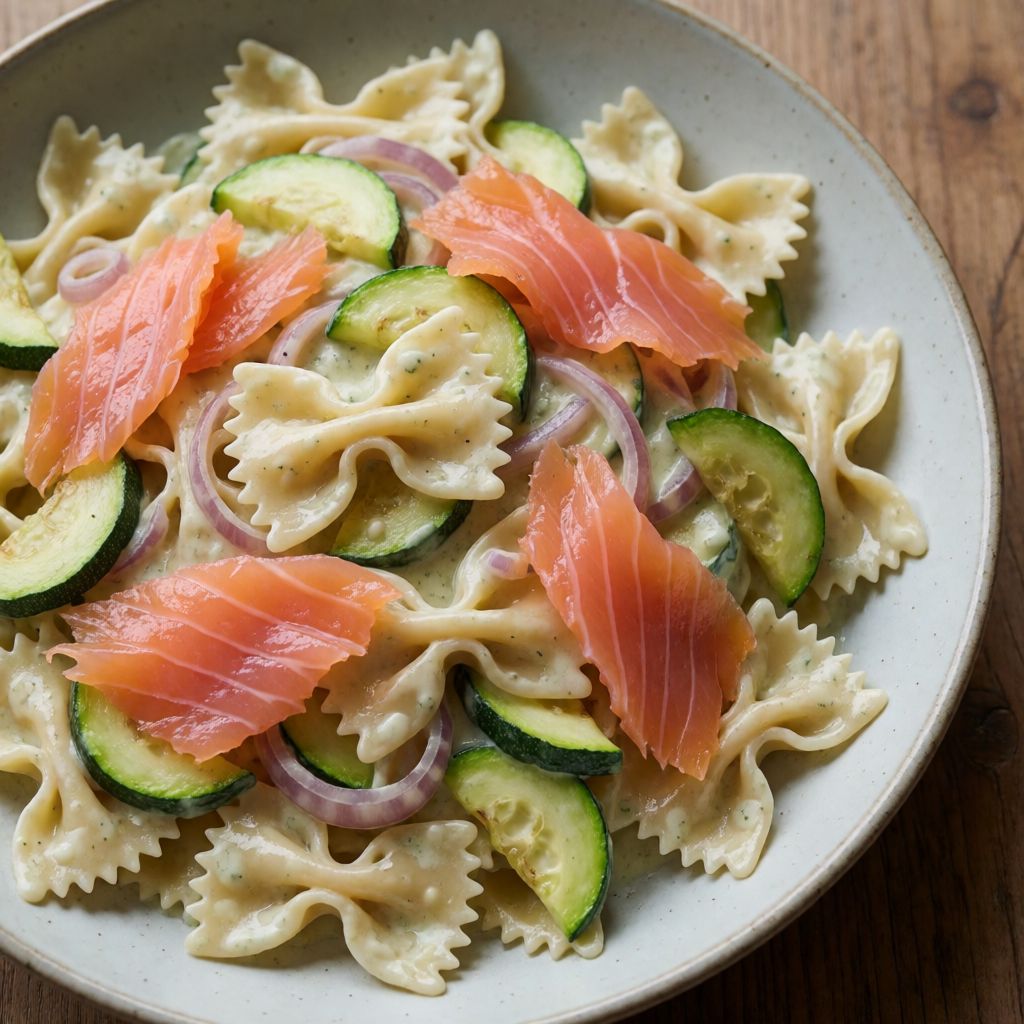
 AI photo
Pasta with Courgette, Smoked Salmon and Soured Cream
A quick pasta of courgette, smoked salmon and soured cream, finished with dill.
Labels are worked out automatically from the ingredients and can be wrong. Check the packaging if it matters to you.
Ingredients
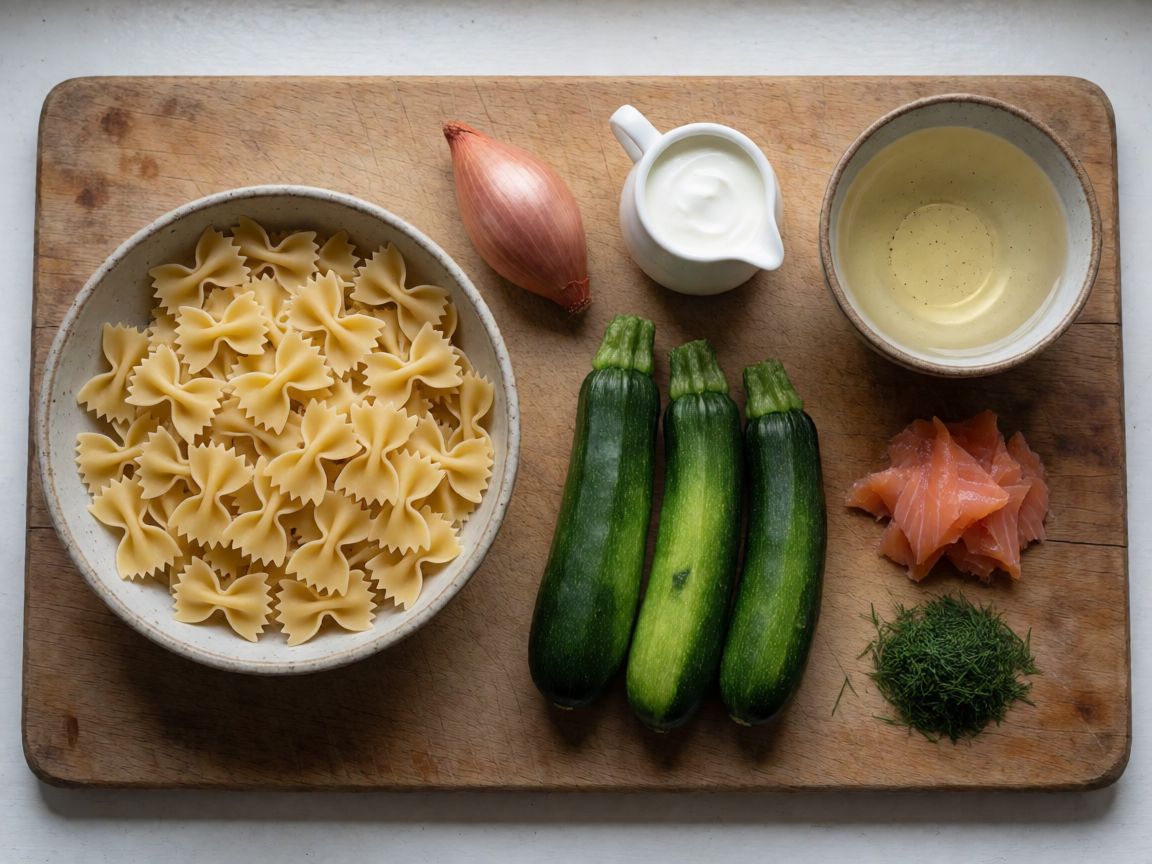
- 400 g Farfalle pasta
- 1 pcs Shallot
- 3 pcs Courgette
- 200 g Smoked salmon
- Salt to taste
- White pepper to taste
- 125 ml White wine
- 1 pcs Soured cream
- Dill to taste
- 2 tbsp Olive oil









Steps
Finely chop the shallot and fry it in a pan with the olive oil.
Add the courgette and cook gently.
10 minAdd the smoked salmon, cut into strips or pieces, and warm through until done.
Pour in the white wine, let it evaporate and cook for a few more minutes.
Add salt and ground white pepper to taste.
Add the soured cream and stir well.
Sprinkle with chopped dill or chopped chives.
Cook the pasta in plenty of salted water until al dente.
Drain the pasta, tip it into the pan, mix well and warm through for a few minutes.
Serve with a generous helping of dill or chives.
This is a quick weeknight sauce dressed up as something more: courgette softened down, smoked salmon warmed rather than cooked, a splash of wine, a spoon of soured cream to pull it together. It feeds four without drama, and it lives or dies on one decision — how much heat you give the salmon.
Smoked salmon is already cooked, in the sense that matters: it's cured, sometimes also hot-smoked, and what you're doing in the pan is not cooking it but raising its temperature until the fat starts to soften and the smoke smell lifts into the air. Go past that point — real simmering, more than a minute or two — and the texture turns from silk to rubber, because the proteins that were set gently by salt and smoke tighten hard under direct heat the same way an overdone egg does. So "warm through until done" here means something narrow: pink, glossy, barely firmer than when it went in.
The courgette carries the bulk of the dish and the risk of wateriness. Courgette is almost entirely water held in a loose cell structure, and once you cut it, salt or heat both start pulling that water out. Cook it gently and uncovered in the open fat so the water can steam off as it leaves the vegetable — the classic failure is a lid, which traps the steam and gives you grey courgette swimming in its own run-off instead of courgette that's gone translucent and soft at the edge while keeping some bite. You'll know it's ready by looking, not by the clock: it goes from squeaky pale green to a duller, slightly see-through green, bends instead of resists under a spoon.
Farfalle is the right shape less for romance and more for mechanics: the bows have a flat open face that catches cream sauce and a thick knotted centre that gives you something to bite into alongside the soft courgette and salmon. Any short pasta with a broad surface works on the same logic — penne, fusilli — but a thin strand like spaghetti will just slide through a sauce this chunky rather than carrying it. Cook it in plenty of well-salted water; the pasta needs room to move so the starch it sheds doesn't turn the water to glue, and the salt seasons it from the inside in a way sauce poured on afterwards can't.
The shallot is there to build a sweet, mild base under everything else, cooked gently in the oil until it softens and turns translucent rather than browning — push it to colour and it turns bitter and fights the delicate salmon. If you haven't got shallot, a small amount of finely chopped onion does the same job, just with a sharper edge; cook it a little longer and a little gentler to compensate.
Smoked salmon: buy it as trimmings or offcuts if you can, since you're cutting it into strips anyway and the perfect unbroken slices sold for a breakfast plate cost more for a result you're about to chop up. Cold-smoked (the usual silky sliced kind) and hot-smoked (firmer, more like cooked fish, sold in chunks) both work here, but hot-smoked is more forgiving — it's already been through real heat once and tolerates the pan better, so if you're nervous about overcooking it, start there.
The white wine isn't decoration. Letting it "evaporate" means boiling off the alcohol and the raw, sharp edge that comes with it, leaving behind acidity and the flavour compounds the wine picked up from grape and barrel — without that minute or two of real bubbling, the sauce tastes thin and slightly harsh instead of rounded. Any dry white you'd actually drink is fine; a splash of dry vermouth or even a squeeze of lemon with a little water does a rough version of the same acidic lift if you've no wine open.
Soured cream labelled as "1 pcs" just means one tub — in the UK that's usually a 300ml pot, and you won't need all of it; start with half and loosen the sauce to taste, since too much turns the dish heavy and masks the salmon rather than supporting it. If you can't find soured cream, crème fraîche is the closer substitute in behaviour — it has similar acidity and similar heat tolerance — while plain yoghurt is thinner and splits more readily, so stir it in off the heat entirely and don't expect it to coat the same way.
Dill is the traditional partner to smoked salmon for a real reason, not just habit: its anise-like oils cut through the fat and smoke the same way mint cuts through lamb, refreshing the palate between mouthfuls instead of adding more richness. Chives, suggested as the alternative, trade that brightness for a milder onion note — fine, but it's a different dish in a small way, not a straight swap. Either way, add it at the end and raw; cooked dill turns flat and loses the thing you added it for.
Patience here isn't about long cooking — this is a thirty-minute dish — it's about not rushing the courgette's water off with high heat and not rushing the salmon or cream past the point of no return. Low and unhurried for those two things buys you the texture the whole plate depends on.