
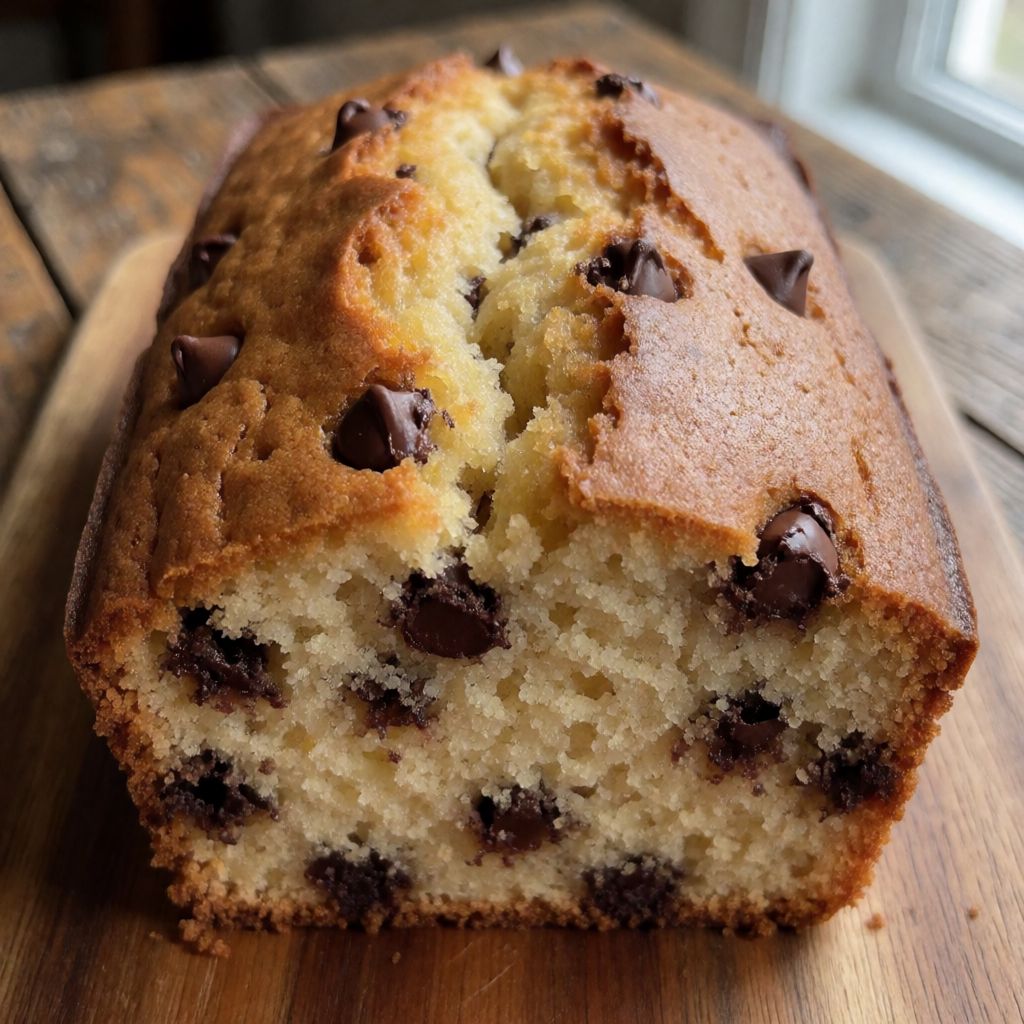
 AI photo
Pear, Yoghurt and Chocolate Loaf Cake
A moist loaf cake with soft pears, soya yoghurt and dark chocolate chips.
Labels are worked out automatically from the ingredients and can be wrong. Check the packaging if it matters to you.
Ingredients
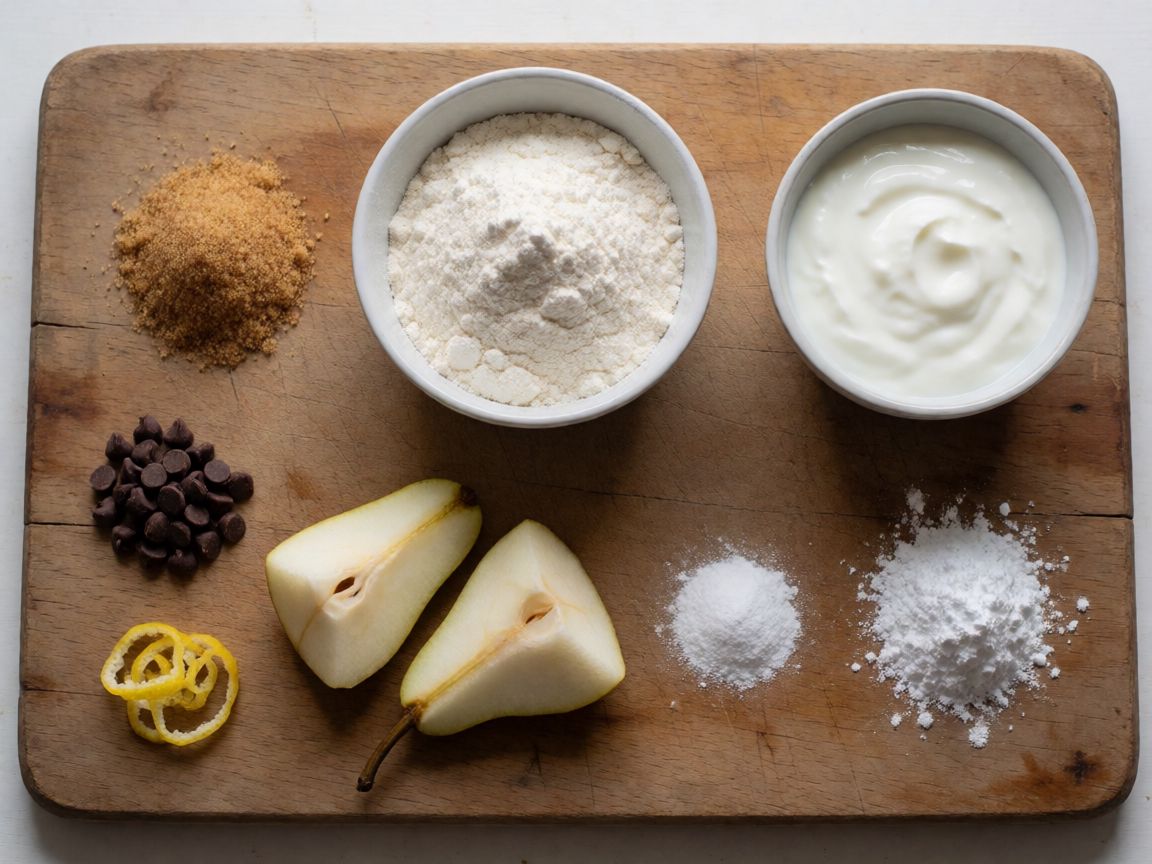
- 150 g soft brown sugar
- 350 g plain flour sifted
- 125 g soya yoghurt
- 100 g dark chocolate chips
- 130 g vegetable oil
- 2 pcs pears cut into chunks
- 1 pcs lemon zest yellow part only, finely grated
- 16 g baking powder
- icing sugar to taste, for dusting







Steps
In a bowl, beat the yoghurt and sugar together with a mixer until you get a sweet, creamy mixture.
Add the oil and lemon zest, scraping off only the yellow part of the lemon peel.
Mix in the sifted plain flour, gradually combining it with the main mixture until smooth.
Add the baking powder, the chopped pears and the dark chocolate chips, and mix thoroughly.
Grease and flour a loaf tin, or line it with baking paper.
Pour the batter into the tin and bake in an oven preheated to 160°C for about 45 minutes.
45 minServe the cake dusted with icing sugar on top.
This is a loaf cake built without butter and without eggs — oil carries the fat, yoghurt carries the moisture and the acid, baking powder does all the lifting on its own. That's the whole character of it: a dairy-light, egg-free teacake that still rises and still stays moist for days, because the structure a cake usually gets from eggs is replaced here by starch, acid and gas working together.
What decides whether it comes out right is two things: how long the batter sits once the baking powder goes in, and how firm your pears are. Baking powder starts reacting the moment it meets the yoghurt's acid — mix it in, get the tin in the oven, don't let it stand about on the worktop admiring itself. And pears that are too ripe turn to jam inside the crumb and leak water that keeps that patch of cake gluey and underbaked, however long you leave it in after that.
Some people cream yoghurt and sugar the way you'd cream butter and sugar, beating for a long pale fluffy five minutes. No — because butter traps air in its fat crystals when you beat it; yoghurt has no fat crystals to speak of, it's mostly water and milk solids. Beating it with sugar just dissolves the sugar and loosens the yoghurt — useful, but it isn't whipping air into anything. Don't waste your arm on it.
Flour: 350g plain, sifted — sifting isn't ceremony, it breaks lumps so the flour meets the wet mixture evenly and you don't end up kneading pockets of dry flour into submission, overworking the gluten right where you didn't need it. Plain flour, not self-raising, because you want full control over the lift — this cake carries 16g of baking powder for 350g of flour, a bigger ratio than you'd use with eggs in the mix, precisely because there are no eggs here to help trap the gas. Eggs act like a net; without them the structure depends entirely on gluten and starch setting fast enough to hold the bubbles before they escape. That's also why the batter should go in the oven promptly once it's all together.
Soya yoghurt — stand in for whatever yoghurt you have, dairy or not, as long as it's plain and has some acidity to it: that's the real criterion, not the brand on the tub. The acid reacts with the baking powder to make the rise more immediate and even; the fat and protein in it keep the crumb from drying into something sandy. If you're using dairy yoghurt, go full-fat — a cake with no butter and no eggs can't afford to lose fat anywhere else.
Vegetable oil — any oil with no smell of its own: sunflower, rapeseed, a light groundnut oil. Not olive oil, not anything that tastes of where it came from, because at 130g it's nearly as present as the flour and you'll taste it in every slice. Oil does a job butter can't here: it stays liquid, so the cake stays moist for the second and third day rather than hardening the way a butter cake does once it cools. That's actually the quiet economic logic behind oil-based teacakes generally — built for a tin on the side that lasts the week, not for one Sunday sitting.
Lemon zest — only the yellow. Some say scrape right down to the white for more flavour — no, because the white pith is where the bitter compounds sit, and all you get for your trouble is a cake that tastes faintly of soap. A fine grater, just the colour, nothing underneath.
Pears — cut into chunks big enough to still be pear when the cake comes out, not purée. Choose a pear ripe enough to smell sweet but still giving some resistance when you press it; a pear so soft it dents under your thumb will dissolve into the crumb during 45 minutes in a hot tin and leave a soggy seam. No pears to hand, apples that hold their shape when cooked do the same job — the criterion is firmness under heat, not the fruit itself.
Dark chocolate chips — baking chips if you can get them, formulated to keep some shape at oven temperature rather than melting flat into a streak. Chopped bar chocolate works too, just expect it to marble a bit more into the batter around each piece — not a fault, a different look. And the tin: grease and flour it, or line it, because sugar in the batter wants to caramelise onto bare metal wherever it touches, and that's what tears the bottom off a cake when you try to turn it out. In an ordinary flat, with no kazan and no proving drawer, a loaf tin and an oven that actually holds 160°C is all you need. Look for the cake pulling slightly away from the tin's sides and a skewer coming out with a few moist crumbs, not wet batter — 45 minutes is where to start looking, not where to stop and take it out blind. Dust the icing sugar only once the cake is properly cool; on a warm cake it melts straight into the surface and you're left wondering where it went. Patience here costs nothing and buys you a cake that actually looks dusted, not merely damp.