
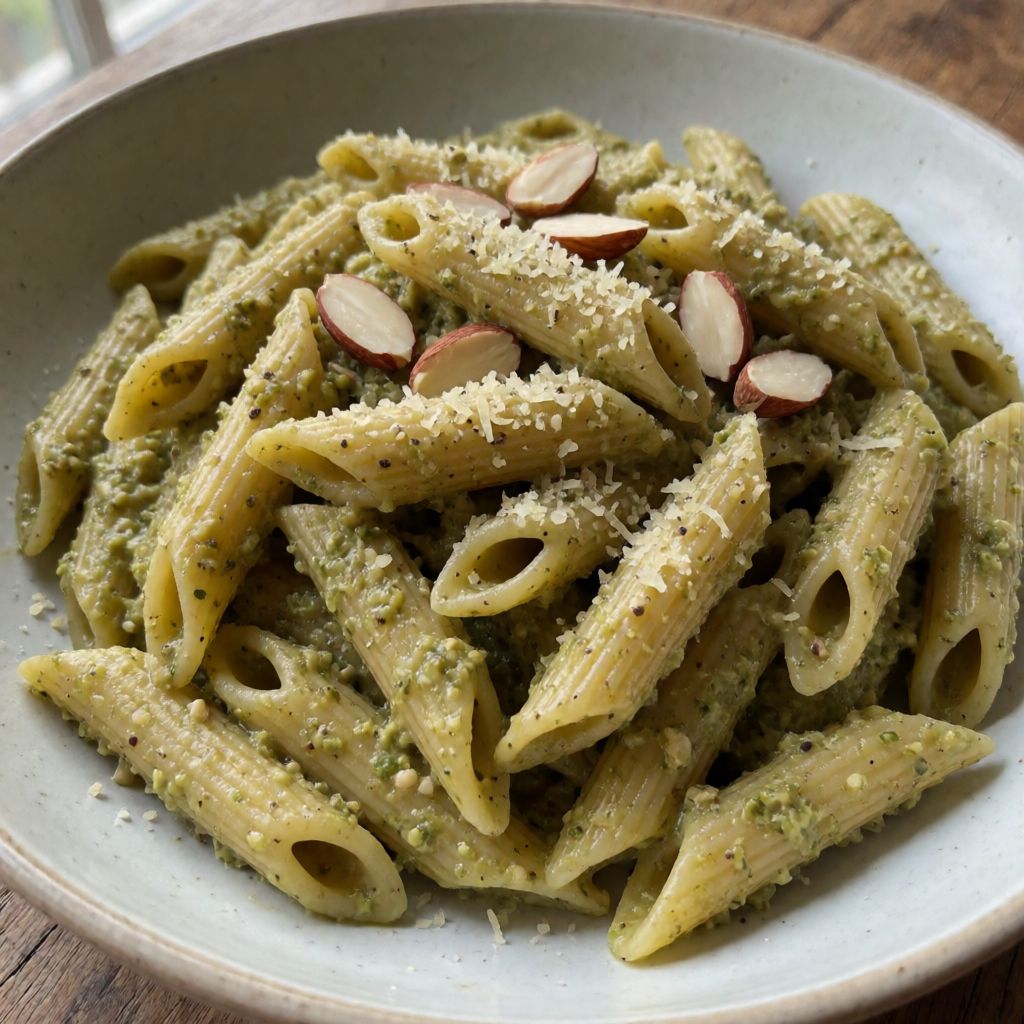
 AI photo
Penne with Marjoram and Almond Pesto
A simple pasta dish tossed with a fragrant marjoram and almond pesto.
Labels are worked out automatically from the ingredients and can be wrong. Check the packaging if it matters to you.
Ingredients
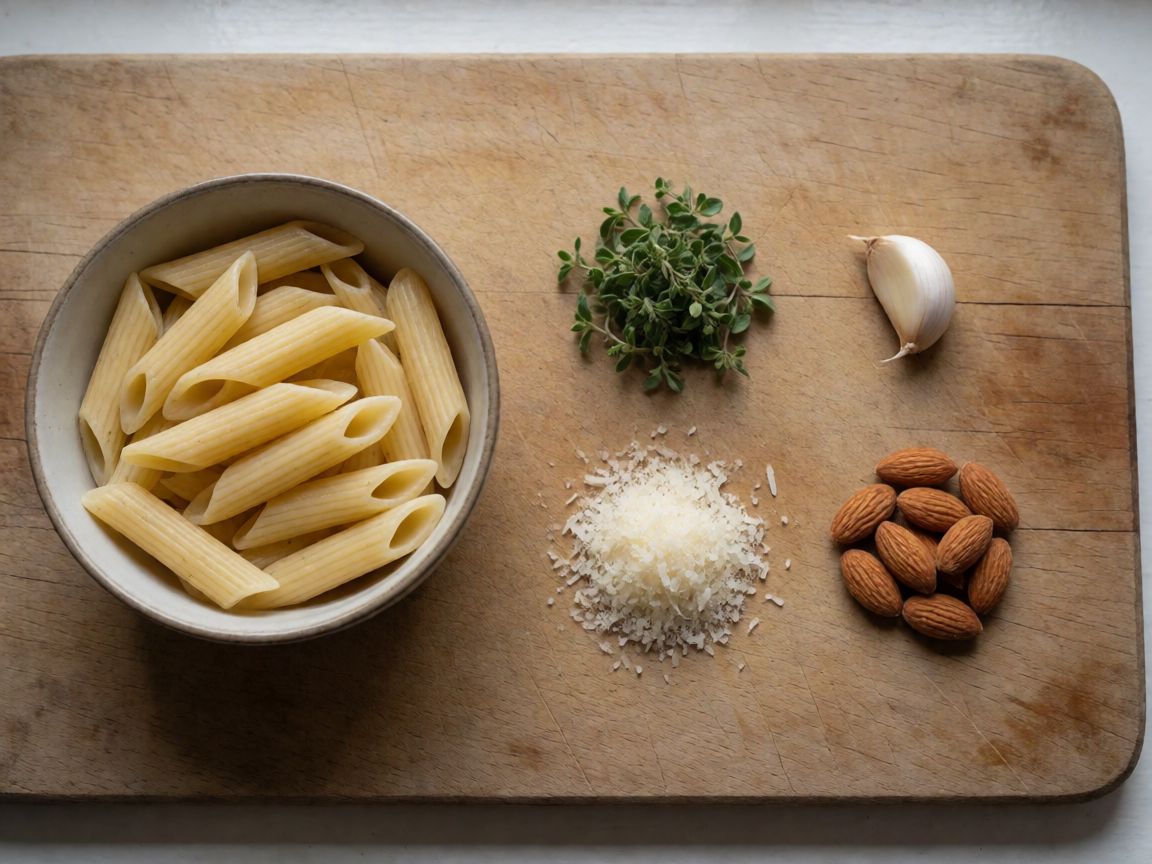








Steps
Bring a large pot of salted water to the boil and cook the penne.
In a blender, combine the marjoram, garlic, almonds, a pinch of salt and the Parmesan.
With the blender running, slowly drizzle in the olive oil and blend until you have a smooth, creamy pesto.
Season with freshly ground black pepper to taste.
Drain the penne once cooked al dente, then toss it with the pesto.
If needed, stir in a spoonful of the pasta cooking water to help the sauce coat the pasta evenly.
This is not a cooked sauce. It's a raw paste bound together by oil, and that single fact decides everything that follows. The word "pesto" just means "pounded" — it names a method, not a fixed guest list of basil and pine nuts. Genoa has a trademark on its version, not a monopoly on the idea. Sicilians make one from almonds and tomatoes because pine nuts never grew cheap there; here, marjoram and almonds do the same job with what's actually to hand. So don't go hunting for "proper" pesto ingredients — ask what each one is doing.
What makes or breaks this dish is the emulsion: oil has to bind with the ground almond, the cheese fat and the crushed herb into something that coats a spoon, not something that separates into green flecks sitting in a puddle of oil. That's why the oil goes in slowly, with the blade already running — you're not mixing, you're persuading two things that don't naturally want to join to hold hands.
The other risk lives in the blender itself. A domestic blade spins fast and gets hot, and heat is the enemy of a herb paste — it dulls the marjoram's scent and can turn the oil slightly bitter before you've even noticed. Short bursts, not one long grind. If the bowl feels warm to the touch, you've gone too far.
Marjoram is the reason this isn't just "pesto, but different." It's sweeter and more resinous than basil, closer to oregano's family but gentler — oregano is basically marjoram's drier, sharper cousin, and you can use it if marjoram's not on the shelf, just less of it, since dried herbs concentrate as they lose water. Fresh marjoram bruises easily, which is exactly what you want from it in a blender: the bruising releases the aromatic oils sitting in the leaf, which is the only reason it has a smell at all.
Almonds give the paste body and a neutral, milky fat that carries flavour without shouting over it — that's their whole job here, not crunch. Pine nuts do the same thing in the Genoese version, but pine nuts are expensive and always were; almonds, cashews, even walnuts will do the same work, provided they're raw and blended fine enough to disappear into the sauce rather than sit in it as grit.
Parmesan brings salt, savoury depth, and a bit of its own fat to help the emulsion hold. The criterion for a substitute isn't "Italian cheese" — it's any hard, aged cheese with a dry, crystalline texture and real salt in it. Pecorino works, and if you want something vegetarian in the rennet sense, there are hard cheeses made without animal rennet that grate the same way.
Garlic is there for pungency, not sweetness — one clove, raw, blended in with everything else rather than pre-crushed and left to sit, because garlic left exposed to air starts to turn sharp and faintly metallic within minutes. Go in once, with the blade, and you avoid that.
Olive oil is the one place where quality actually matters for taste, not just for cooking function. Some say you need the most expensive bottle in the shop for everything — no, because once oil hits a hot pan its own flavour mostly cooks off anyway. Here there's no heat, so whatever character the oil has ends up in your mouth undiluted. Use one with a flavour you'd happily taste on its own. If you've only got a flavourless oil in the cupboard, the dish will still work — it'll just taste quieter.
Salt and pepper are seasoning, not garnish — taste the pesto before it meets the pasta, because the Parmesan and the pasta water both bring their own salt, and you want to add the rest, not the whole amount, up front. And the pasta water you stir back in at the end isn't a trick, it's starch and salt doing the final bit of binding that the oil alone can't manage — without it the sauce tends to sit on top of the pasta rather than cling to it.