
 AI photo
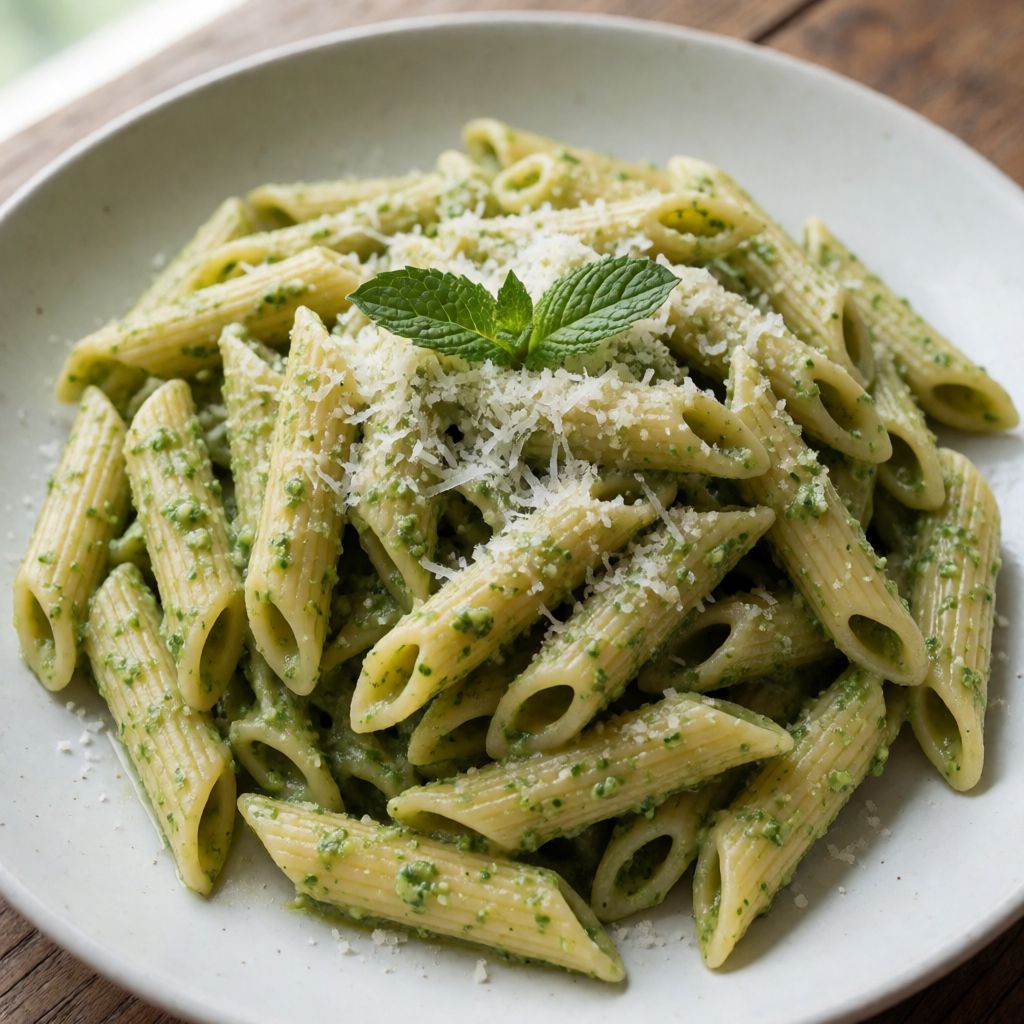
Penne with Mint Pesto
A fresh pasta dish with a vibrant mint and pecorino pesto, finished with walnuts and cream cheese.
Labels are worked out automatically from the ingredients and can be wrong. Check the packaging if it matters to you.
Ingredients
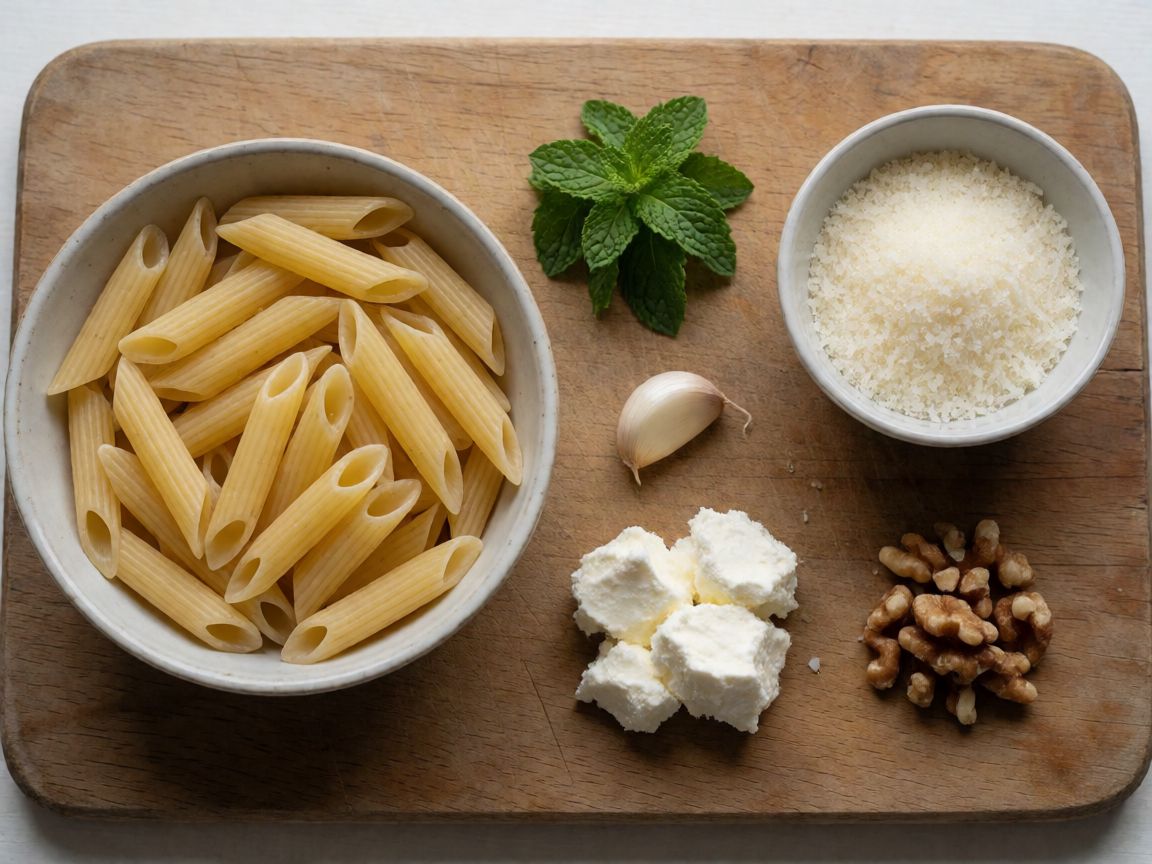
- 350 g Penne
- 40 g Mint
- 50 g Pecorino Romano
- 1 clove Garlic
- Olive oil to taste
- Salt to taste
- Black pepper to taste
- 30 g Cream cheese or 1 tbsp plant-based cream
- 40 g Walnuts or almonds









Steps
While the pasta cooks in a large pot of salted water, put the mint, pecorino, garlic, cream cheese and walnuts in a blender, add the olive oil and blend until you have a smooth, creamy pesto.
Cook the pasta until al dente, drain, and toss with the pesto, adding a splash of pasta water if needed to loosen it.
25 minServe straight away, finished with a sprinkle of grated pecorino if you like.
Forget that "pesto" means basil and a mortar. The word just means pounded, crushed — that's it. Genoa pounds basil because that's what grows on the hillside there. This one pounds mint, because mint is what grows wild over every fence in an English garden, cheap and endless from spring to the first frost. You already trust mint with lamb on a Sunday — this is the same logic pushed one step further, onto pasta instead of a joint.
The whole thing is a cold sauce. Nothing here gets fried, browned or reduced, so the usual worries about heat don't apply — but a new one shows up in their place. A blender blade spins fast enough to warm what it's chopping, and warm bruised mint oxidises: the bright green goes khaki, the taste turns bitter and flat. So you blend in short bursts, not one long grind, and you stop while the colour is still loud. That's the whole skill of this recipe, really — knowing when to stop the machine.
The second thing that decides whether it works is the pasta water. People reach for butter to make a sauce glossy — some say you need it here too. No, because the water the penne cooked in is already thick with starch, and that starch is the glue: a splash of it stirred into the pesto when you toss the pasta is what makes the sauce cling to every piece instead of sitting in a puddle at the bottom of the bowl. Butter would only add fat you don't need.
Mint — use leaves, not stems; the stems are fibrous and faintly bitter, and nobody wants to be chewing a stick in their penne. Mint's smell comes from volatile oils that start fading the second you chop it, which is the real reason this is a last-minute sauce and not a make-ahead one: a jar of mint pesto left in the fridge overnight will still taste fine, but it won't taste like the garden anymore.
Pecorino Romano — a hard, salty sheep's cheese, and that saltiness is doing real work: it's what tames the raw garlic without needing heat to mellow it. If you only have parmesan, use it, but taste before you add extra salt to the pot — parmesan is gentler, pecorino bites back.
Garlic, one clove, raw — raw garlic is far more aggressive than fried garlic, which is exactly why one clove is the right amount for four people here. Double it and you'll be tasting nothing else by Tuesday.
Cream cheese, or a spoon of plant-based cream — its job isn't flavour, it's structure. Oil and the water clinging to hot pasta don't naturally want to mix; the fat and protein in the cheese act as the thing that holds them together so the sauce stays creamy instead of splitting into a greasy puddle with bits floating in it. Any mild, full-fat soft cheese does the same job — mascarpone, or ricotta loosened with a little milk.
Walnuts, or almonds — their fat is what gives the pesto body, standing in for the pine nuts of the original. Walnut skin carries a slight bitterness; classic technique blanches and peels them for exactly that reason, but for a ten-minute weeknight blend, most people — me included, when I'm not showing off — skip it and don't miss it.
Olive oil, to taste — the criterion is simple: use an oil with no loud opinion of its own, because mint and raw garlic already have plenty to say. A mild olive oil works; a heavily peppery, grassy extra virgin will fight the mint instead of carrying it. A plain, flavourless vegetable oil is a fair stand-in if that's what's in the cupboard.
Salt goes into the pasta water, not just the pesto — on a normal UK hob, a full pot at a proper rolling boil, salted generously before the pasta goes in. This seasons the penne from the inside, which matters because the pesto only coats the outside; a well-salted pasta and an under-salted one taste like two different dishes even under the same spoonful of sauce. And once it's all tossed together — don't let it sit admiring itself on the hob. Patience here isn't about waiting; it's about not wasting the ten minutes you already spent getting the pesto bright.