
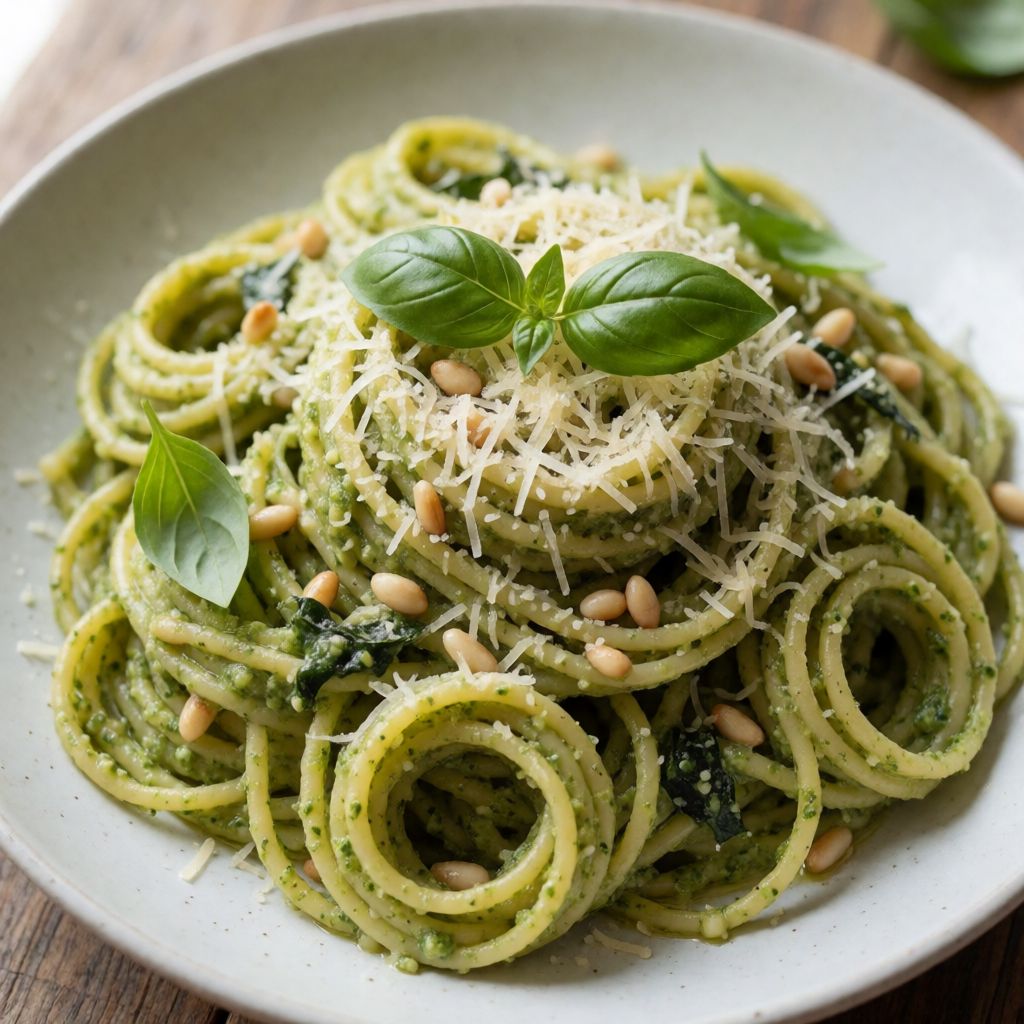
 AI photo
Pesto Pasta
A creamy spinach and basil pesto tossed through pasta, finished with toasted pine nuts and parmesan.
Labels are worked out automatically from the ingredients and can be wrong. Check the packaging if it matters to you.
Ingredients
- 500 g Pasta
- 150 g Spinach fresh
- 1 bunch Basil fresh
- 75 g Parmesan freshly grated
- 30 g Pine nuts toasted
- 2 clove Garlic
- 50 ml Olive oil
- 0.5 pcs Lemon organic, finely grated zest plus a little juice
- Salt to taste
- Black pepper freshly ground, to taste
- 25 g Parmesan freshly grated, for serving
- 20 g Pine nuts toasted, for serving










Steps
Cook the pasta until al dente according to the packet instructions.
10 minPut the spinach, basil, parmesan, toasted pine nuts, garlic and olive oil into a blender and blitz to a smooth, vibrant green pesto. Season with lemon zest, salt, freshly ground black pepper and a little lemon juice, to taste.
2 minReserve 200 ml of the pasta cooking water, then drain the rest. Return the pasta to the pot and stir in the pesto over a low heat. Adjust the consistency with the reserved pasta water until creamy and glossy.
Season again with salt, pepper and lemon, to taste.
1 minServe on plates, generously topped with freshly grated parmesan, toasted pine nuts and a few basil leaves.
Pesto is the one pasta sauce that never sees heat on its own — it's not cooked, it's crushed. Basil, spinach, cheese, nuts, oil, garlic, all broken down together until they become one green thing, and only then does warmth touch it, briefly, to glue it to the pasta. Everything that can go wrong with this dish comes from forgetting that rule.
What decides whether it works is restraint with the blender. Run the motor too long and the blade itself gets hot — friction heat, not stove heat, but heat all the same — and warm basil starts to oxidise and turn from bright green to that flat khaki you see in jarred supermarket pesto. So you pulse, you stop, you scrape down, you pulse again. Short bursts, cold blade, bright colour.
The other hinge is the pasta water. Pour pesto straight onto drained pasta and the oil just sits there, sliding off in a puddle at the bottom of the bowl — oil and water-based pasta don't want to mix on their own. The starchy water you saved is the go-between: it carries a little starch that binds oil and cheese into something that actually coats each strand instead of pooling. This is the same trick behind every good carbonara or aglio e olio — the pasta water isn't an afterthought, it's doing the work the sauce can't do by itself.
Basil bruises and browns the moment it's cut — the essential oils that give it that peppery, anise-ish lift are volatile, they escape with time and with warmth. That's why this isn't a sauce you make ahead and reheat for Tuesday; make it close to when you'll eat it, and eat it soon after.
The spinach is the part that would raise an eyebrow in Liguria, and it's there for a plain economic reason: a bunch of fresh basil in a British supermarket is small and not cheap, and basil alone in that quantity would give you a fierce, one-note sauce. Spinach bulks the pesto out, softens basil's sharper edge, and makes the colour more vivid for less money. It's not a betrayal of anything — pesto across Italy was always made with whatever green was to hand and whatever nut was affordable; the Genovese version with pure basil and pine nuts is one regional answer, not the only one.
Pine nuts need toasting because raw, their oil carries a faint resinous, almost turpentine note that reads as bitter next to basil. Toasting until they go from pale to pale gold — watch them, don't walk away, their high oil content means they go from fine to burnt in the time it takes to answer the phone — turns that raw edge into something sweet and buttery. If pine nuts aren't to hand or the price makes you wince, the only criterion that matters is a mild fat with no loud flavour of its own: walnuts, cashews, even sunflower seeds will bind into a pesto just as well, and plenty of Italian regions outside Liguria never used pine nuts at all.
Parmesan has to be grated fresh off the block, not bought pre-grated in a bag — the bagged kind is dusted with anti-caking starch and dried out, so it won't melt into the sauce, it just sits as grit. Fresh-grated carries enough moisture and fat to actually bind. Any hard, aged, salty cheese will stand in for it: Grana Padano is the gentle swap, pecorino the sharper one — it's sheep's milk, saltier and more assertive, so use a little less than the recipe asks.
The lemon does two separate jobs and that's worth knowing, because people often use only the juice. The zest carries citrus aroma without sourness — it's perfume, not acid, so a little goes a long way and too much brings bitterness from the white pith underneath. The juice is the acid, and its job is to cut through the richness of oil and cheese so the sauce doesn't sit heavy on the tongue; without it, pesto tastes flat no matter how good the basil was.
For the pasta itself, shape matters more than brand — you want something with ridges, twists or a rough surface that a thick sauce can grip, rather than something smooth that it slides off. Fusilli or casarecce from the box will hold pesto better than a plain penne. And when you warm the pesto through with the pasta at the end, keep it low and slow and watch rather than time it — you're looking for glossy and loose, not bubbling. Bubbling means you've crossed from warming into cooking, and cooked pesto is the flat, dull one you were trying to avoid in the first place.