
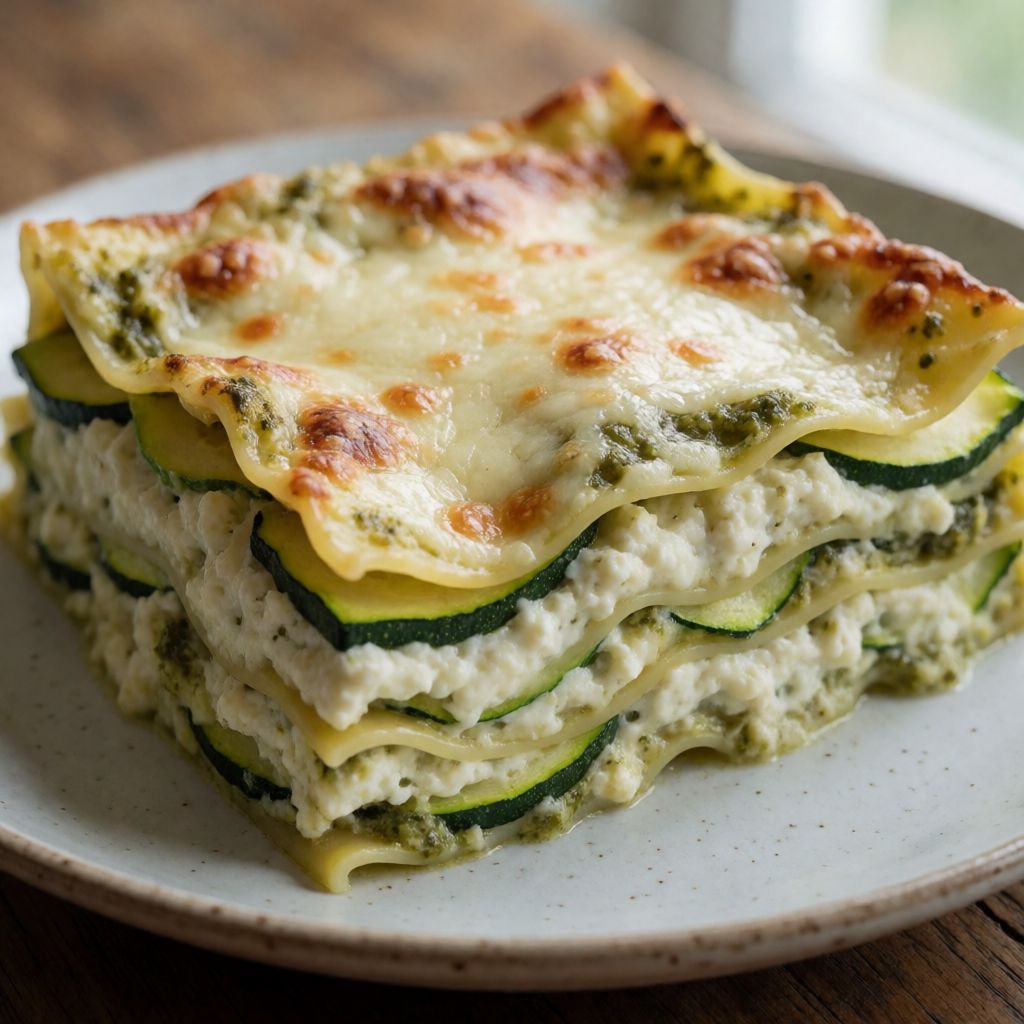
 AI photo
Pesto and Courgette Lasagne
Layers of lasagne sheets with courgette, ricotta, mozzarella and a pesto béchamel, finished with Parmesan.
Labels are worked out automatically from the ingredients and can be wrong. Check the packaging if it matters to you.
Ingredients
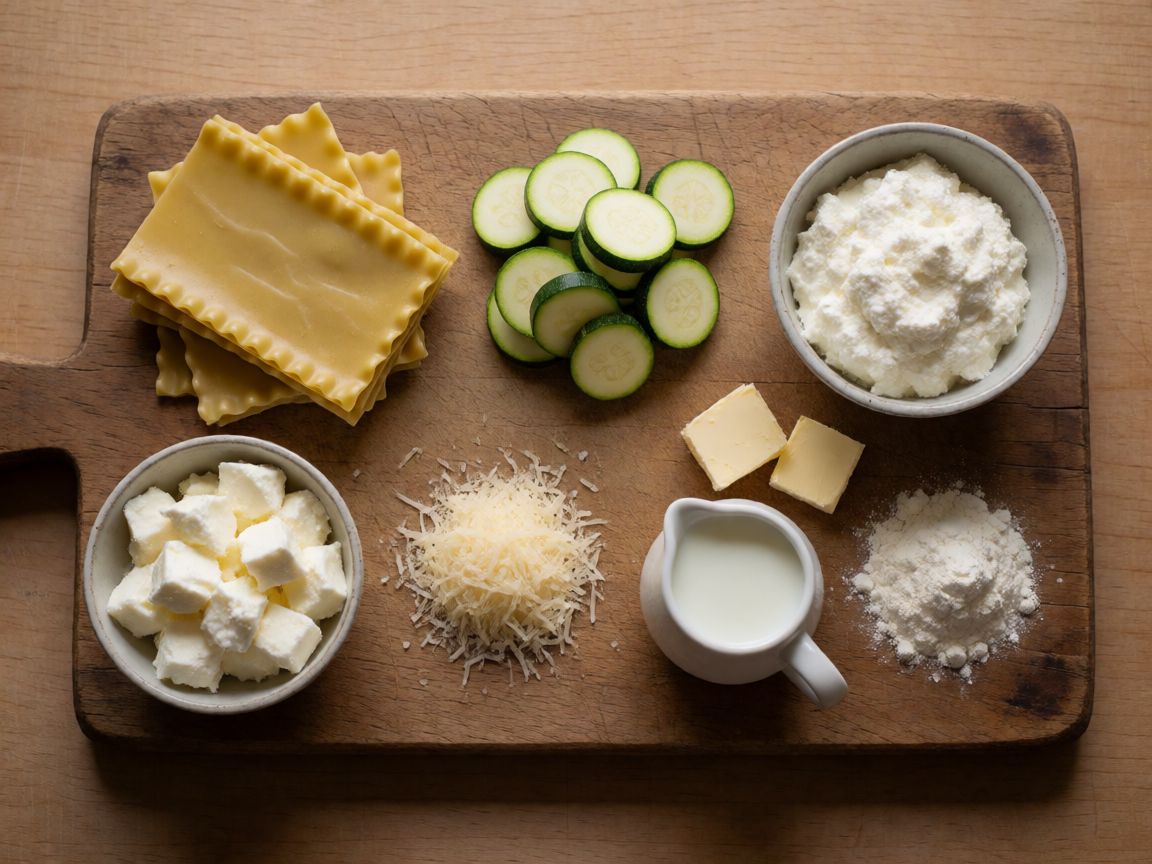
- 250 g Lasagne Sheets
- 300 g Courgette
- 250 g Ricotta
- 200 g Mozzarella
- 50 g Parmesan
- 1 l Milk
- 100 g Butter
- 100 g Plain Flour
- 150 g Pesto
- Salt to taste
- Black Pepper to taste
- Nutmeg to taste
- Vegetable Oil for frying, to taste













Steps
Wash the courgettes under running water and cut into thin rounds or strips.
Heat a large frying pan with a little oil and add the courgettes.
Fry the courgettes for about 8-9 minutes so they stay crisp.
8 minPut the milk on to boil, and in another pan melt the butter over a low heat.
Add the flour and cook, stirring, until thickened.
2 minPour the mixture into the boiled milk.
Add the pesto, salt, black pepper and nutmeg to taste, and stir.
Remove the béchamel from the heat.
Mix the fried courgettes with the ricotta, seasoning with salt and black pepper.
Grease an ovenproof dish with oil and spread the first layer of pesto béchamel.
Add a layer of lasagne sheets.
Add the ricotta and courgette mixture and cubes of mozzarella.
Repeat the layers until all the ingredients are used.
Sprinkle the last layer with Parmesan.
Bake the lasagne in an oven preheated to 200°C.
27 minLet the lasagne rest before serving.
5 min
This isn't a red-sauce lasagne wearing green. Pesto lasagne works because the béchamel itself carries the basil, garlic and pine nut hit, so every layer is seasoned, not just the top. Swap in a jar of ragù here and you'd lose the point entirely — the whole dish is built around a white sauce that's doing double duty as glue and as flavour.
What decides whether it works is the courgette. Fry it hard and fast, in a pan hot enough that the slices hiss rather than stew, and you get crisp-edged rounds that still have body after half an hour in the oven. Fry it low and slow, or crowd the pan, and the courgette weeps its water into the dish — you end up with a lasagne that's wet in the middle and sliding apart on the plate, no matter how carefully you layered it. Some say courgette is "just a watery filler" and you should salt and drain it like you would for a Greek dish. No — here you want some of that structure left, because the béchamel already brings plenty of liquid; what you're frying out is excess, not all of it.
The second thing that decides it is patience with the béchamel itself. You're making a roux — butter and flour cooked together until it loses its raw, pasty smell — then loosening it with hot milk so it doesn't seize into lumps. Pour cold milk into a hot roux and you get a sauce with bits in it that no amount of stirring un-does. Pour it in gradually, off a boil, and it comes together glossy. The pesto goes in at the end, off the heat, because basil cooked hard turns bitter and grey — you want its smell, not its ghost.
Lasagne sheets, dried, are the honest choice here — no need to hunt down fresh pasta for a weeknight bake. Dried sheets need the béchamel to be generous and slightly looser than you'd think, because they're drinking moisture from the sauce as they cook rather than being tender from the start. If your sheets don't say "no pre-cook", soften them briefly in hot water first — skip that and you risk a dry, chalky layer in the middle where the sauce never reached.
Courgette: pick ones that feel heavy and firm for their size, skin taut, no give when you press. A soft, floppy courgette has already started breaking down and will only make the water problem worse. If courgette's out of season or you can't be bothered, thin strips of aubergine fried the same way work on the same logic — something with mild flesh and a lot of water that needs driving off in a hot pan before it goes anywhere near the dish.
Ricotta and mozzarella aren't interchangeable, even though both are mild. Ricotta's job is to bind the courgette into something spoonable, a bit like what béchamel does for the pasta — if your ricotta's watery (check the tub, some brands sit in a pool of whey), tip that liquid off first or you've reintroduced the moisture problem you just fixed with the courgette. Mozzarella's job is purely textural: it melts and stretches and gives you that pull when you cut in. Cubed, not grated — grated mozzarella in a dish this wet just disappears into the sauce rather than holding its own pocket of melt. If you're out of mozzarella, a mild cheddar won't stretch the same way but will still melt and bind the layers — just don't expect the cheese-pull.
Parmesan goes only on top, and that's not decoration — it's there to brown. Under the broiler-hot top of a 200°C oven, Parmesan's proteins and sugars catch and go nutty-brown in a way the rest of the dish, buried under sauce, never gets the chance to. A pre-grated "parmesan-style" hard cheese will melt fine but won't give you that same savoury crust — the real thing has the moisture content and salt balance to crisp rather than just go gluey.
Pesto: a jar is fine, nobody's checking, but taste it first — jarred pesto varies wildly in salt and garlic strength, and since it's going into a sauce that's also getting salt, pepper and nutmeg, you want to season the béchamel last, after the pesto's in, so you're not doubling up blind. Nutmeg is traditional in béchamel for a reason beyond flavour — it was one of the few spices that masked the faint "off" smell of milk before refrigeration was reliable, and it's stuck around because a few scrapes genuinely round out a dairy sauce. You don't need much; it should be a background hum, not something you can name on the tongue.
On an ordinary UK hob, the two things to watch: your "frying pan" courgette step needs real heat and room, so do it in batches rather than one crowded panful if your widest pan isn't very wide — crowding is the single most common reason people end up with stewed courgette instead of fried. And your oven's 200°C may run hotter or cooler than the dial says, especially in an older flat — the tell isn't the clock, it's the top layer: you're looking for Parmesan gone deep gold with dark spots, sauce visibly bubbling at the edges of the dish. If that's happened before your time's up, it's done; if it hasn't, give it longer rather than trusting the number. Let it sit the five minutes after it comes out — the béchamel is still setting as it cools slightly, and a slice cut too early just slumps.