
 AI photo
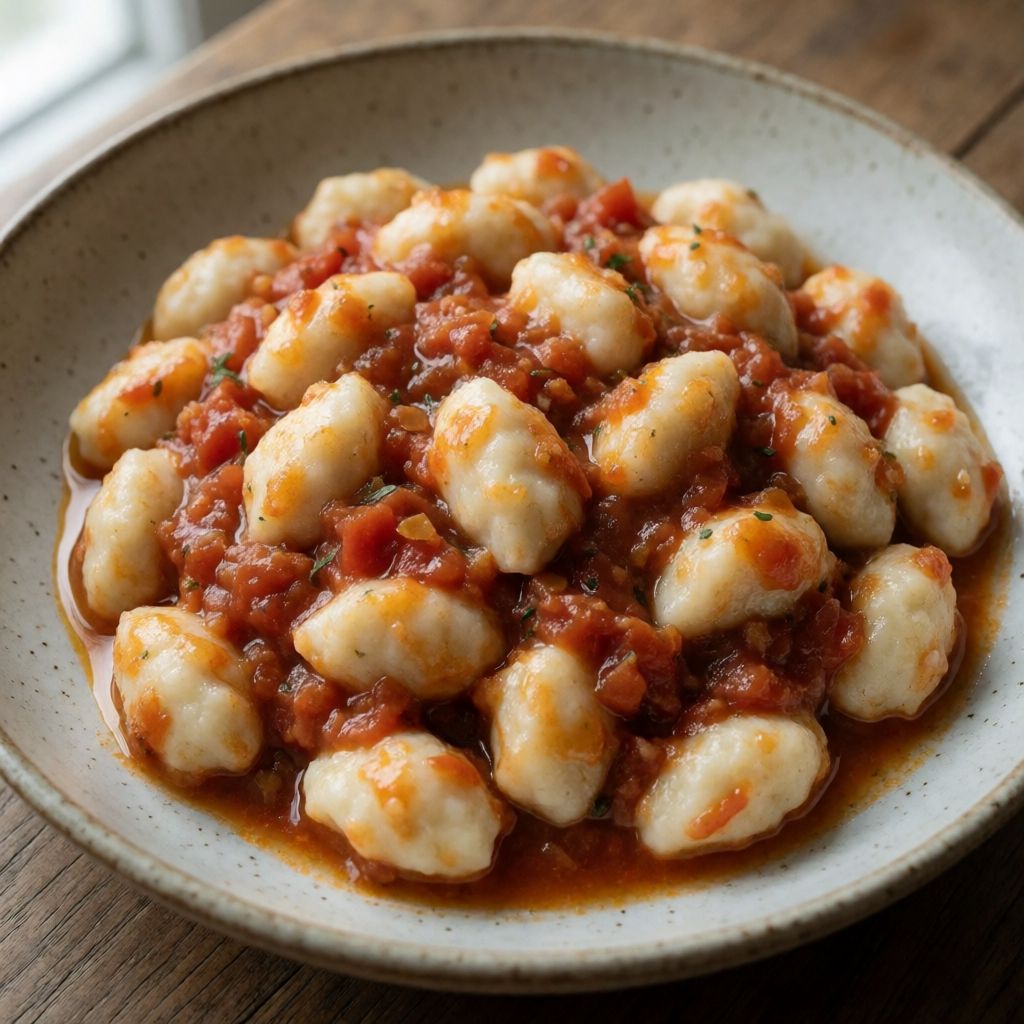
Pisarei from Piacenza
A rustic bread-dumpling dish from Piacenza, served with a smoky pancetta, tomato and borlotti bean sauce finished with cream and Parmesan.
Labels are worked out automatically from the ingredients and can be wrong. Check the packaging if it matters to you.
Ingredients
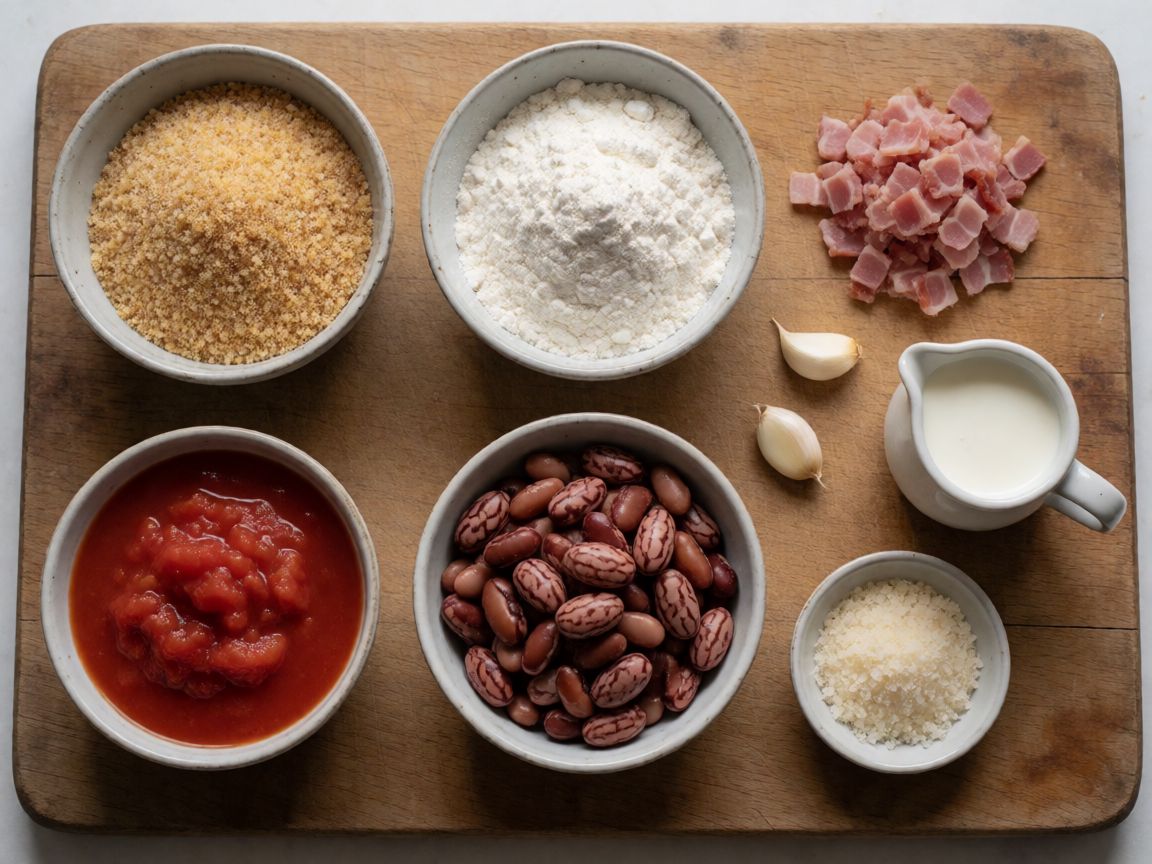
- 220 g Breadcrumbs dried
- 120 g Plain flour
- 100 g Smoked pancetta
- 1 clove Garlic
- 2 tbsp Olive oil
- 1 can Tinned chopped tomatoes
- 1 can Borlotti beans
- 1 pcs Double cream
- Parmesan to taste
- 1 pinch Salt to taste









Steps
Mix the breadcrumbs with hot salted water, add the flour and combine well into a smooth dough.
Shape into small gnocchi.
Fry the smoked pancetta with the garlic in olive oil until it reaches an internal temperature of 70°C.
Add the tinned chopped tomatoes and the borlotti beans.
Season to taste with a stock cube or salt.
Boil the gnocchi in salted water.
Toss with the cream and Parmesan to finish.
This is pisarei e fasò, out of the hills behind Piacenza — bread dumplings sitting in a bean and tomato stew with cured pork for backbone. Not glamorous. It's a poor valley's answer to "what do we do with stale bread and a sack of flour and whatever beans are in the larder." The card says one serving; ignore that, 220g of breadcrumbs and a full tin of beans feeds two with proper appetites, three if there's bread on the table too.
Some say a gnocco has to be potato and egg — no, because "gnocco" just means a lump, a dumpling, nothing more specific than that. This valley didn't always have potatoes to spare. It had hard bread and flour, and that's a perfectly good gnocco too, it just plays by different rules.
The dough's whole trick is getting water into the middle of every crumb, not just wetting the surface. Hot water does that fast and evenly; cold water leaves a gritty, unhydrated core that no amount of kneading rescues afterwards. Flour isn't for flavour here — it's the gluten net that keeps the dumpling in one piece once it hits a rolling boil. And doneness isn't a minute count: the dumplings sink, then rise, and need a short stretch more at the boil once they've surfaced before the centre sets. Bite one. Don't trust the clock.
The sauce is a question of time, not heat. Pancetta renders, tomato and beans go in, and it only turns into something worth eating once the liquid pulls back and thickens around the beans instead of floating them loose. Rush it and you've got bacon-flecked tomato soup — pleasant enough, but not this.
Breadcrumbs here are standing in for pane raffermo — bread gone properly hard, grated by hand because nothing got thrown out in a kitchen like this. If you've got stale bread sitting around, grate it yourself instead of buying a bag; same mechanism, cheaper, and closer to what the dish actually is. If you're buying crumbs, get the dry kind sold for stuffing, not the soft fresh ones meant for coating fish — those already carry moisture and will throw off how much water the dough needs.
Plain flour is fine, no need for anything stronger. This dough isn't being developed into sheets, it just has to hold a small rolled shape for a couple of minutes in boiling water, so a little gluten goes a long way.
Pancetta, garlic, oil: the pancetta carries fat and salt through the whole dish, and the garlic flavours the fat it fries in rather than the meat itself. About frying pancetta to an internal temperature of 70°C — forget the thermometer, you're rendering diced pork fat in a pan, not roasting a joint. The cue you actually want is the fat turning translucent and the edges of the meat going a shade darker and catching a little crisp. Any smoked streaky bacon does the same job — supermarket lardons render exactly the same way, unsmoked if you'd rather the beans taste of bean and not of a bonfire.
Tinned tomatoes and tinned beans are where a British larder and an Italian one agree completely — both there because peeling tomatoes and soaking beans overnight used to eat a whole Sunday, and tins buy that time back. Dried borlotti work too, but then you've signed up for an overnight soak and a long simmer until a bean yields to a gentle press of the spoon rather than biting back. Tinned beans already sit at exactly that point, which is the whole point of reaching for a tin.
Cream and parmesan at the finish are worth being honest about: the valley's own version has neither, just the tomato and bean liquor and a grating of hard cheese. Some say a bean sauce needs cream to feel finished — no, because the original gets its silkiness from tomato and bean starch and patience, not dairy. Cream smooths it and takes the edge off the tomato's acidity, which is a fair reason to want it on a cold day, just don't mistake it for tradition. For the parmesan, get a block and grate it yourself — the ready-grated bags are dusted with starch to stop clumping, and that's exactly what stops the cheese melting into a hot sauce instead of sitting on top in dry little threads.
A wide frying pan on an ordinary hob does the sauce better than a deep saucepan, because more surface area means the tomato and bean liquid can actually reduce instead of simmering under its own steam indefinitely. And patience belongs on the ingredients list whether it's written there or not — a few quiet minutes for the dough to finish drinking in its water before you shape it, and real time for the sauce to turn from beans-in-tomato-water into something with its own character. It takes the time it takes, not the time you're hoping it'll settle for.