
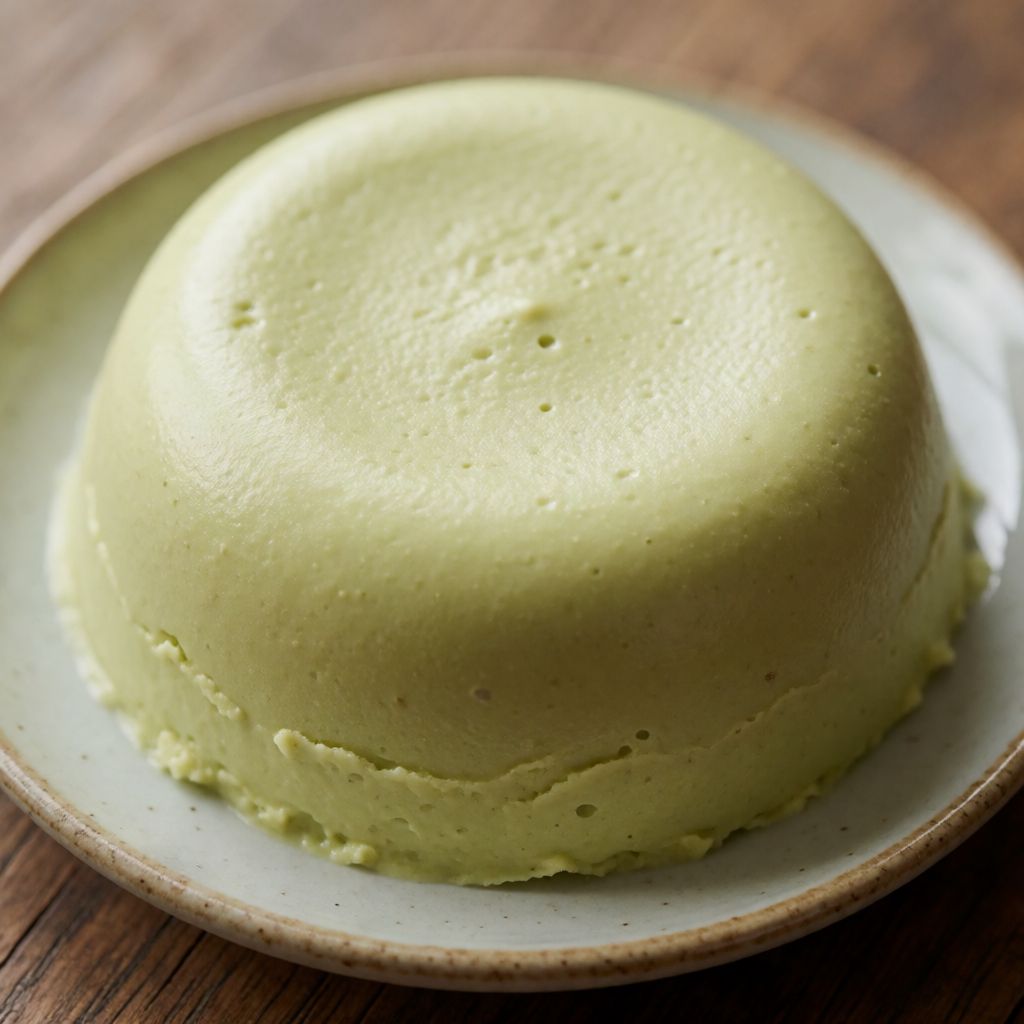
 AI photo
Pistachio Bavarian Cream
A silky chilled pistachio custard cream, lightened with whipped cream and set until firm.
Labels are worked out automatically from the ingredients and can be wrong. Check the packaging if it matters to you.
Ingredients
- 250 ml Milk
- 4 pcs Egg yolks
- 175 g Sugar
- 300 ml Double cream
- 12 g Gelatine
- 80 g Pistachios
- 80 g Pistachio paste
- 1 pcs Lemon zest half a lemon's zest







Steps
Scald the shelled pistachios in boiling water, drain, dry and grind to a fine powder.
Soak the gelatine in a bowl of cold water until softened.
Combine the sugar and egg yolks and whisk with an electric mixer or by hand.
Add the pistachio paste and keep whisking.
Add the ground pistachios and mix all the ingredients together well.
Pour in the milk, add the lemon zest and stir thoroughly until smooth.
Transfer the mixture to a saucepan and heat gently until it just reaches boiling point, but do not let it boil.
Remove from the heat, add the well-squeezed gelatine and stir in. Leave the mixture to cool.
Whip the double cream separately to stiff peaks and fold it into the cooled mixture. Mix well.
Pour the Bavarian cream into a mould of your choice and chill in the fridge for at least 2 hours.
120 min
Bavarian cream — bavarois — is a custard that learned to stand up. It's not a mousse (no air whipped into the base) and not a panna cotta (there's egg yolk doing real work here). You make an egg-and-milk custard, set it with gelatine, then fold in whipped cream once it's cold. The pistachio version just swaps vanilla for pistachio paste and ground nuts, which is less a flavour choice than a colour and texture one — pistachio paste gives you that pale green you can't get from the nuts alone, because raw ground pistachio turns a muddy khaki once it's cooked into custard.
What decides whether this works is temperature control at the custard stage, twice. First: egg yolk and sugar whisked together before anything hot touches them, because sugar grains sitting raw against yolk will start "cooking" it chemically — drawing out moisture, leaving little hard granules you can't undo. Second, and this is where most people lose it: the milk mixture must "just reach boiling point" and no further. Egg yolks scramble around 70°C. You have no thermometer that matters here more than your eyes — you're watching for the custard to thicken slightly and coat the back of a spoon, a texture change, not a time. If you see a bubble break the surface, you've gone too far; you'll get flecks of cooked egg in your cream, and no amount of whipped cream folded in afterwards will hide them.
On the gelatine: 12g here, soaked in cold water until it goes soft and flexible — that's the "bloom," and it matters because gelatine dropped straight into hot liquid clumps instead of dissolving evenly, giving you rubbery lumps in an otherwise silky cream. Squeeze it dry before it goes into the warm custard, because the water clinging to bloomed gelatine, if added wholesale, dilutes your set and you end up with a bavarois that won't hold its shape out of the mould. If you're using leaf gelatine rather than powder (both work, powder is just more common on UK shelves), the method's identical — soak, squeeze, stir in off the heat.
The egg yolks are the custard's backbone, not just a thickener. They're what makes this bavarois taste rich rather than merely sweet-and-set, the way a crème anglaise differs from a jelly. Four yolks to 250ml milk is a generous ratio — don't be tempted to cut it down for "lightness," the lightness is supposed to come later, from the whipped cream.
Pistachio paste is the one ingredient worth sourcing properly rather than substituting freely. It's pistachios blended to a thick, oily paste, sometimes with a touch of sugar or almond — look for one that's mostly nut, not mostly sugar, or your custard turns cloying. If you genuinely can't find it, you can grind extra pistachios with a neutral oil in a food processor until it pastes, though you'll lose some of the deep roasted-nut flavour commercial paste gets from the nuts being lightly toasted first. Don't reach for pistachio flavouring or green food colouring as a shortcut — that's a different dessert wearing this one's name.
Double cream, whipped to stiff peaks: in the UK this is the easy part, it's what's on every supermarket shelf and it holds air better than single cream or whipping cream because of its higher fat content — you need that structure to survive being folded into custard without collapsing. Fold gently with a spatula, cutting and turning rather than stirring, to keep the air you just beat in.
The lemon zest is doing quiet work — it's not there to taste "lemony," it's there to lift the pistachio's slight waxiness and stop the whole thing tasting flat. Half a lemon's zest, finely grated, no white pith, which is bitter.
As for the mould: a kazan this is not, and doesn't need to be — any domestic mould with smooth sides works, though a metal one chills and unmoulds more easily than ceramic, since you can run it briefly under warm water to loosen the set without melting the inside. Patience is the real ingredient in the final two hours — rushing the chill with the freezer "to speed it up" risks ice crystals forming at the edges, which ruins the smooth set you worked for in the custard stage.