
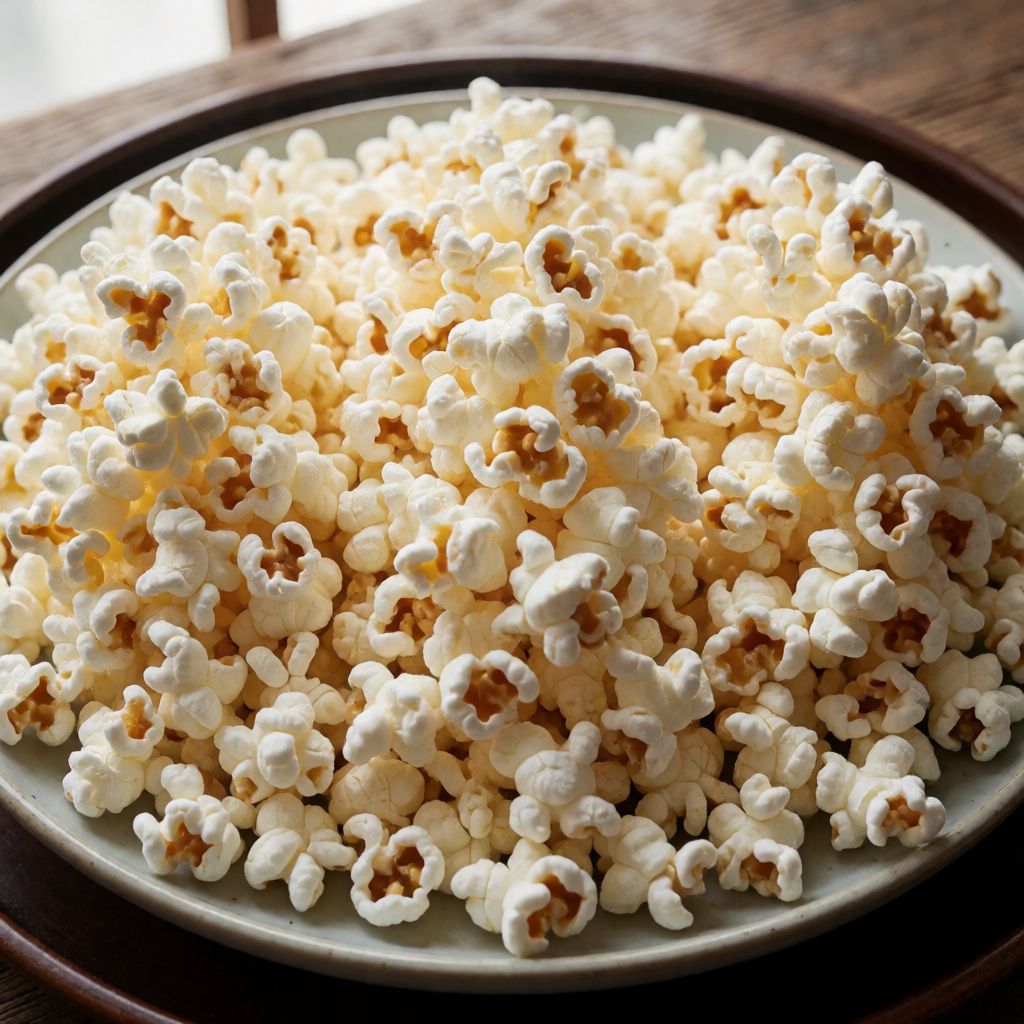
 AI photo
Popcorn: 3 Tasty Variations
Three ways to flavour homemade popcorn: lemon and thyme, chilli and cheddar, or rosemary and garlic.
Labels are worked out automatically from the ingredients and can be wrong. Check the packaging if it matters to you.
Ingredients
Lemon and Thyme Variation
- 85 g Popcorn kernels
- 44.5 ml Sunflower oil or flavourless coconut oil
- 1 tbsp Butter
- 1 tbsp Salt
- 1 pcs Lemon organic, zested
- 2 tbsp Thyme fresh, finely chopped
- 2 tbsp Parmesan finely grated



Chilli and Cheddar Variation
- 85 g Popcorn kernels
- 44.5 ml Sunflower oil or flavourless coconut oil
- 1 tbsp Butter
- 1 tbsp Salt
- 1 tbsp Chilli flakes flakes or fresh, finely chopped, to taste
- 3 tbsp Mature cheddar or finely grated Parmesan
Rosemary and Garlic Variation
- 85 g Popcorn kernels
- 44.5 ml Sunflower oil or flavourless coconut oil
- 1 tbsp Butter
- 1 tbsp Salt
- 1 tbsp Rosemary fresh, finely chopped
- 2 tbsp Parmesan finely grated
- 1 tsp Garlic powder

Steps
Put the popcorn kernels into a saucepan with the sunflower or coconut oil. Cover with a lid and set the heat to the 2nd-3rd highest setting.
As soon as the popcorn starts popping, reduce the heat to the 2nd lowest setting. Shake the pan occasionally.
When there are 3-4 seconds between pops, the popcorn is ready — remove the pan from the heat.
Add the butter to the pan and shake it thoroughly with the lid on, using oven gloves.
Divide the popcorn among bowls and toss with the relevant seasonings and salt.
Serve warm, straight away.
Popcorn is a steam explosion with a food licence. Every kernel is a tiny pressure vessel: a hard shell, a core of starch, and a droplet of water sealed inside. Heat the water past boiling and it turns to steam faster than the shell can stretch — the shell fails, the starch inside is still soft and under pressure, and it blows out and sets into foam before it hits the air properly. That's the whole mechanism. Everything else is seasoning.
What decides whether this works in a normal flat kitchen is heat control, not the corn. Too hot too fast and the outside of the kernel scorches before the inside has built up enough pressure — you get burnt, half-popped kernels, the "old maids" at the bottom of the bowl. Too gentle and the water seeps out as vapour before it can flash, so the kernel just dries out and never pops at all. The 2nd-3rd highest setting at the start is there to get the oil and kernels up to popping temperature briskly; dropping down once popping starts is there because by then the pan itself is hot enough to keep the chain reaction going, and extra heat only burns the popped corn sitting on top while the unpopped kernels below are still waiting their turn.
The kernels themselves — 85 g per batch, enough for four people as a snack, not a meal — want to be bought recently and kept somewhere dry and sealed. The water inside each kernel is the whole engine; a bag that's sat open in a cupboard for a year loses moisture through the shell and you end up with sad, chewy, unpopped lumps no matter how well you manage the heat. If a batch is giving you a lot of old maids, suspect the corn's age before you blame your hob.
The oil's job is to carry heat evenly to the kernels and stop them scorching directly on metal — it is not a flavour ingredient, so the rule is any oil with no smell of its own: sunflower, groundnut, a flavourless coconut oil. Olive oil is the wrong choice here, not because of any tradition but because it smokes at a lower temperature than you need for popping and leaves its own taste sitting on top of whatever seasoning you're trying to add. The butter goes in after the popping is done, not before — butter burns at a much lower temperature than a neutral oil, so if it's in the pan from the start it scorches and turns bitter long before the corn is ready. Adding it hot at the end, then shaking the lidded pan, melts it over the popped corn without cooking it further; this is also why you want oven gloves and the lid kept on for that shake — hot popcorn and melted butter flying round an ordinary kitchen is not a mess you want twice.
Salt goes on after popping for the same physical reason sugar does on anything fried: salt sits on a hot, slightly oily surface and sticks, but it doesn't help the popping itself and can even slow moisture loss if it's in with the raw kernels. A flat tablespoon across a full batch tastes heavier than it sounds — taste as you toss rather than tipping it all in at once.
For the toppings, the logic is each one brings either fat, acid, salt or heat, and a good batch has at least two of those working against each other. Parmesan brings salt and a savoury depth that melts slightly into the warm corn; cheddar does something similar but softer and milkier, so it suits sitting next to chilli's heat rather than lemon's sharpness. Lemon zest — organic, because you're eating the skin, and ordinary wax-coated lemons carry that wax straight onto your popcorn — brings acid and a brightness that cuts the fat of the butter; thyme is there for the slightly peppery, resinous note that plain Parmesan and butter don't have on their own. Rosemary and garlic powder together chase that same roast-dinner register mentioned earlier; garlic powder rather than fresh is deliberate, since fresh garlic burns and turns acrid at the temperatures hot popcorn and melted butter sit at, while the powder just dissolves into the fat.
Patience is the ingredient nobody lists. Rushing the heat at the start to "get it over with" is exactly what produces burnt shells round a raw centre; waiting for the gaps between pops to stretch to three or four seconds, rather than going by a clock, is what tells you the batch is actually finished rather than just tired of waiting. A timer gives you a number; your ears give you the truth.