
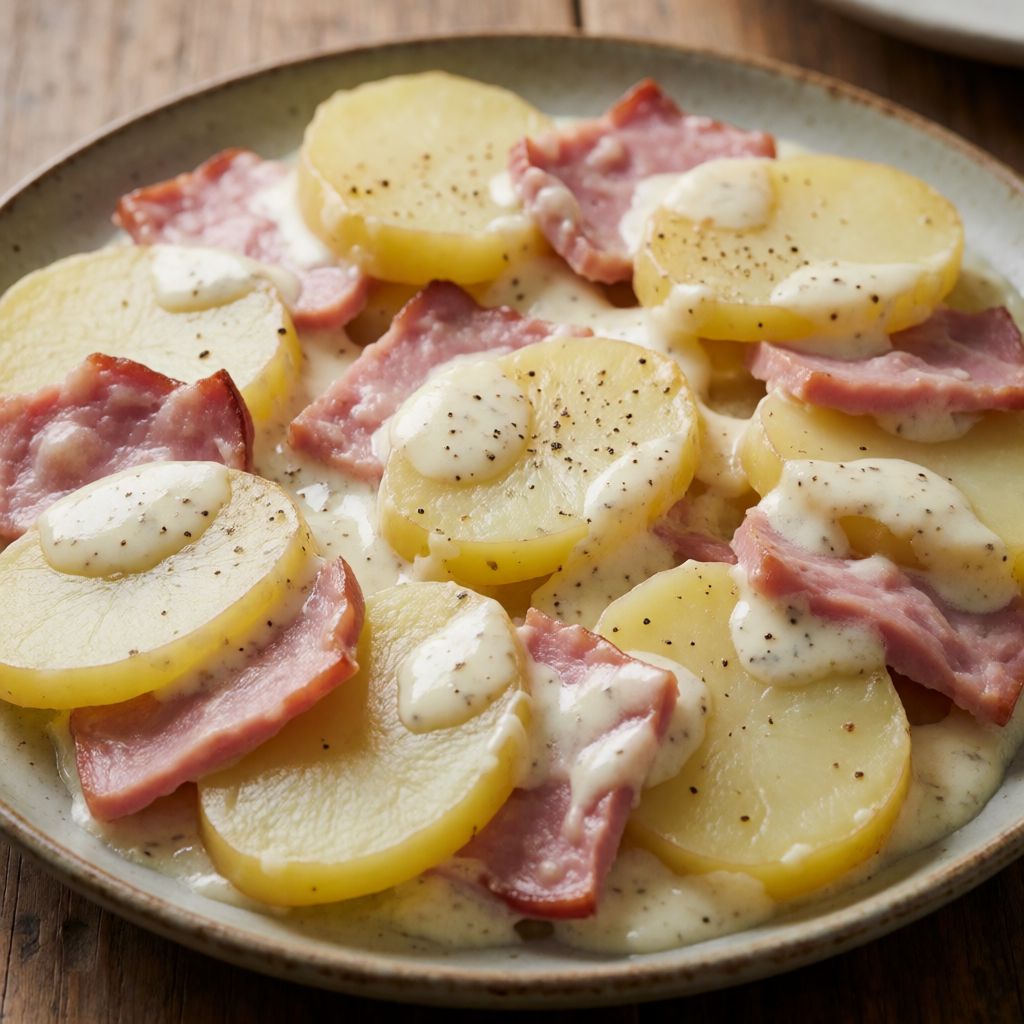
 AI photo
Potato, Ham and Mozzarella Bake
A comforting potato bake layered with ham and mozzarella, finished with a hint of mint.
Labels are worked out automatically from the ingredients and can be wrong. Check the packaging if it matters to you.
Ingredients
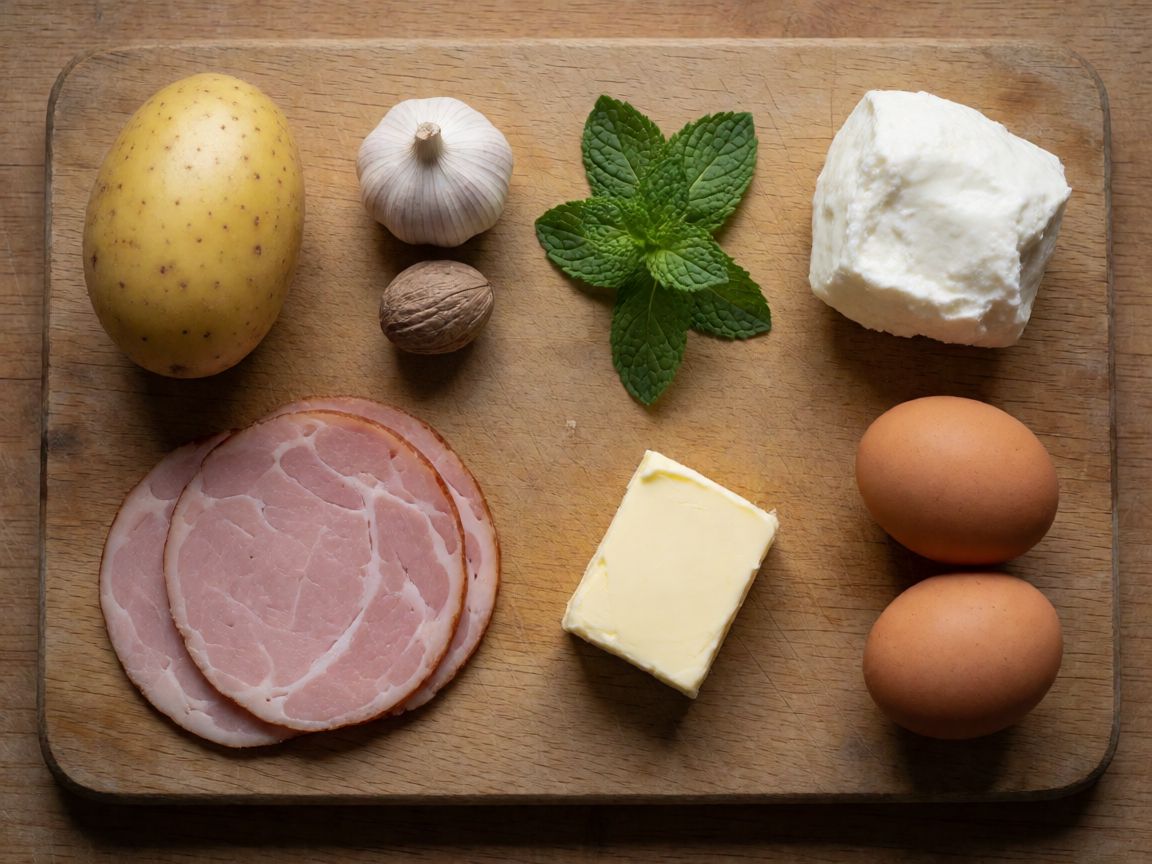










Steps
Wash the potatoes thoroughly under running water, peel them and slice into rounds about 5 millimetres thick.
In a large bowl, mix the potatoes with the peeled and crushed garlic, nutmeg, salt and black pepper to taste.
Line a baking dish with parchment or grease it with butter, then lay an even layer of potato slices on the bottom.
Sprinkle with mint leaves snipped finely with scissors, then layer the ham and mozzarella, cut into pieces, on top.
Cover the filling with another layer of potato to finish the bake, and add a little more mint.
Beat the egg together with the olive oil and a pinch of salt, then pour evenly over the bake.
Bake in an oven preheated to 250°C for about 45 minutes.
45 min
This is a potato gratin that pretends to be simple and isn't, because the whole thing stands or falls on the thickness of the slice. Five millimetres is not a suggestion — it's the number that lets a potato cook through in the time it takes the top to brown and the cheese to pull into strings. Cut it thicker and you'll get a golden lid over a raw, chalky middle; cut it thinner and the potato collapses into mush before the ham and mozzarella have even warmed through. A mandoline or a steady knife and a flat board matter more here than any ingredient on the list.
Think of it as a cousin of the Sunday roast's potato tray, except built for a weeknight: no carving, no gravy-watching, one dish in, one dish out. Ham and mozzarella sit in the middle like a filling in a sandwich, so this is really potato-bread with a savoury stuffing, baked instead of toasted. The egg-and-oil wash poured over the top isn't decoration — it's what seals the surface, stopping the top layer drying into cardboard while the inside steams in its own moisture.
250°C sounds aggressive for potato, and it is — that's the point. At that heat the surface sets and browns fast, before the steam trapped between the layers has a chance to escape and dry the dish out. Some say gratins need a low, slow oven "so the potato cooks gently" — no, because a slow oven here just gives the moisture more time to leave, and you end up basting dry potato instead of baking a moist one. High heat, short time, thin slices: the three only work together.
Potato is the only ingredient with no flexibility: waxy or floury both work, but they behave differently. A floury potato (Maris Piper, King Edward — easy to find in any UK shop) breaks down a little at the edges and binds the layers together, almost like a loose dauphinoise. A waxy one (Charlotte, Jersey Royal in season) holds its shape and gives you a cleaner slice when you serve it, closer to a tray bake you can cut into squares. Choose by what you want on the plate, not by what the recipe "should" be.
Garlic crushed and mixed straight into the potato, rather than rubbed on the dish, means every slice carries a little of it instead of just the ones touching the bottom — a trick worth remembering for any layered bake.
Nutmeg is there because potato and dairy together taste flat without something sharp cutting through the starch; it's the same logic as nutmeg in a béchamel. If you don't have it, a few scrapes of black pepper and a touch more salt will do — not the same note, but it does the same job of waking the dish up.
Ham here is filling, not flavour engine, so use whatever cooked ham you'd put in a sandwich — no need for anything cured or smoked specially. Mozzarella is chosen for how it melts, not how it tastes: it goes stringy and mild rather than greasy. Any mild, low-moisture melting cheese works the same way — a block of mild Cheddar or a ball of fresh cheese will substitute, though a wetter cheese means a slightly wetter bake, so drain it a little first if you go that route.
The egg-and-olive-oil wash is a thin custard, essentially, and its job is to glaze and seal, not to drown. "Any oil with no smell of its own" — a light olive oil or a neutral vegetable oil — beats a heavily flavoured extra-virgin here, because at 250°C a strong oil just turns bitter before the potato's done.
On a domestic hob there's no kazan and no restaurant oven that holds heat evenly corner to corner — so turn the dish round halfway if your oven runs hotter at the back, and don't trust the 45 minutes blindly: push a knife into the centre where the layers are thickest. It should go in without resistance, the way a cooked carrot bends rather than snaps. If it still meets resistance, give it more time before you give it more heat — a hotter oven at this stage just burns the top while the middle stays stubborn.