
 AI photo
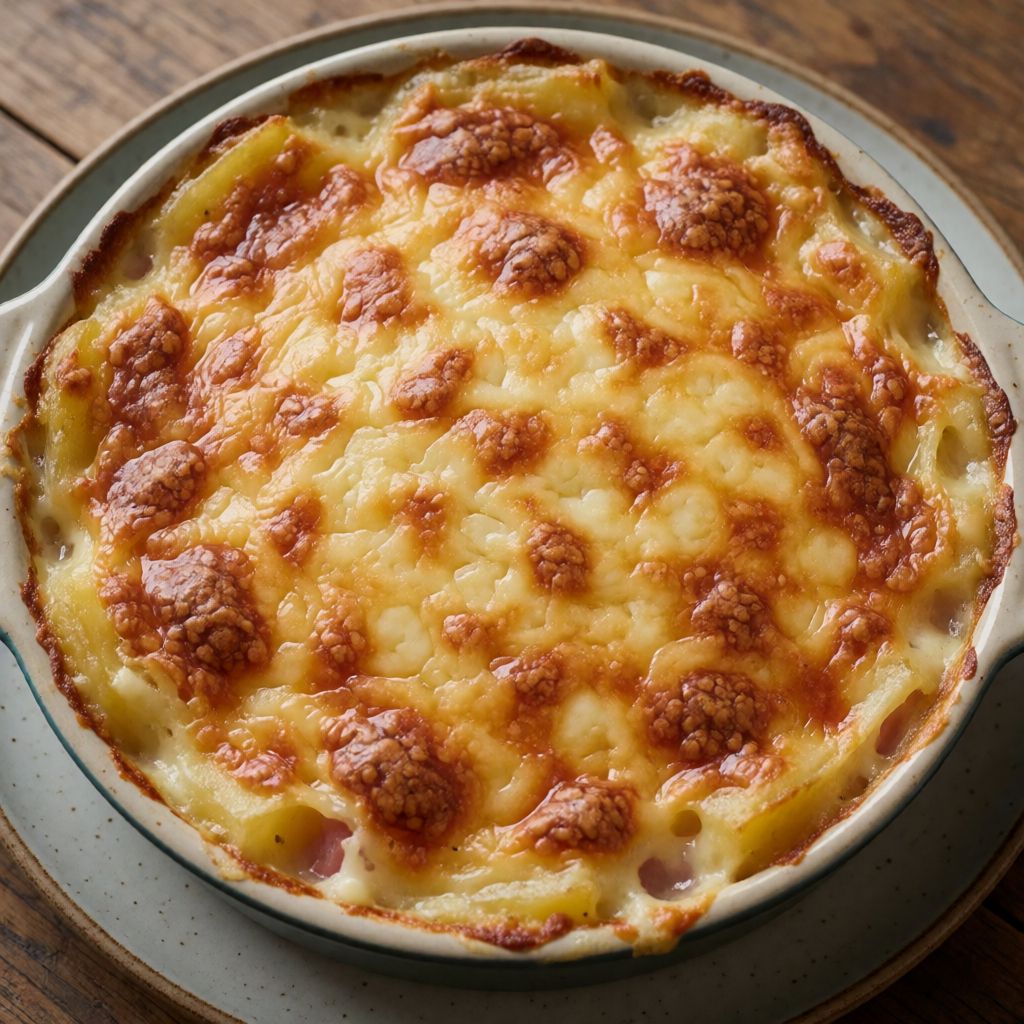
Parmesan Potato Bake with Cheese and Ham
A layered potato bake with melting cheeses, ham and sage, finished with parmesan.
Labels are worked out automatically from the ingredients and can be wrong. Check the packaging if it matters to you.
Ingredients
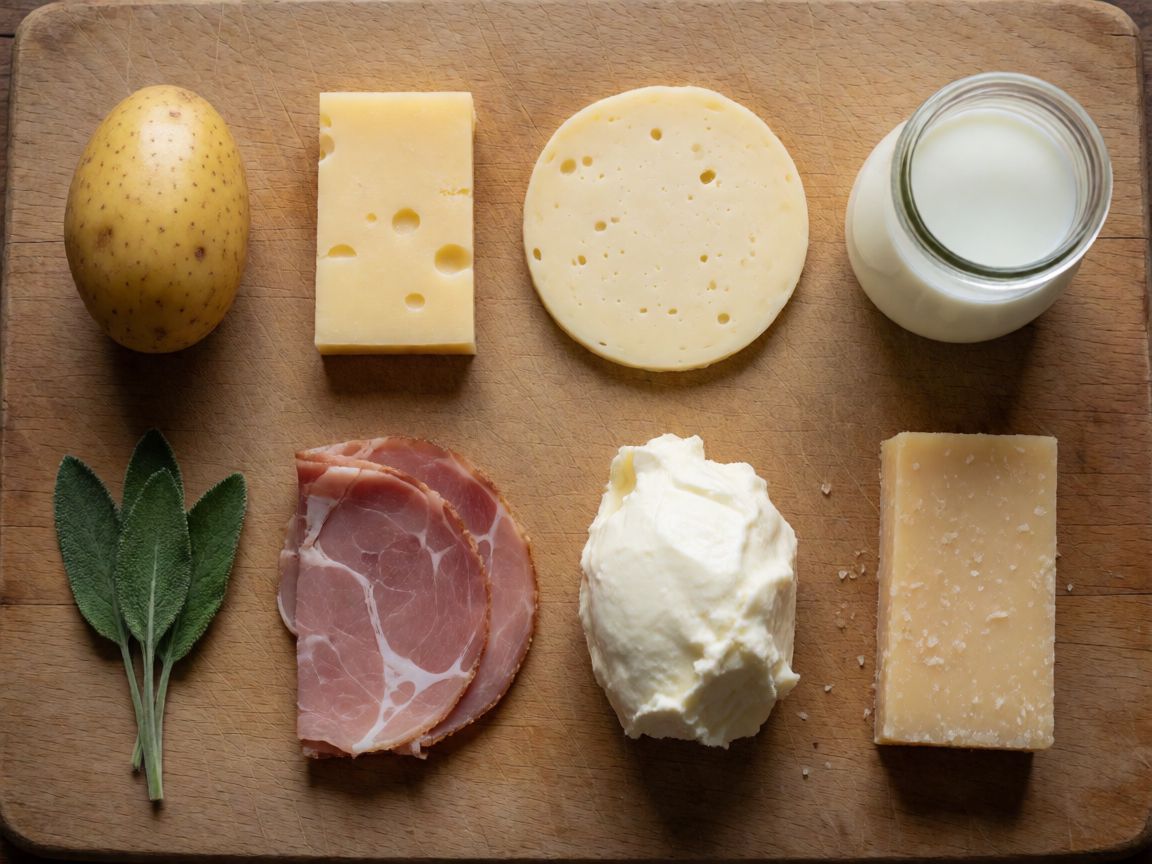
- 1 kg Potatoes
- 250 g Emmental
- 200 g Provolone
- 250 g Mozzarella
- 200 g Ham
- Sage to taste
- Parmesan to taste
- 150 ml Milk
- Olive oil to taste
- Salt to taste
- Black pepper to taste
- Breadcrumbs to taste









Steps
Prepare all the ingredients and dice the Emmental, provolone and mozzarella.
Peel and wash the potatoes, then slice them into thin, even rounds.
Grease the bottom of a baking dish with olive oil and dust with breadcrumbs.
Arrange a first layer of potatoes, then season with salt and pepper.
Add the diced cheeses, sprinkle with parmesan and sage, lay on the ham, then cover with another layer of potatoes.
Repeat the layers, alternating potatoes, cheeses, ham and seasoning, until the dish is full.
Pour over the milk and drizzle with olive oil.
Bake in a preheated oven at 170°C for about 50 minutes.
50 min
This is a potato gratin that got ambitious: instead of cream and one cheese, you build it like a sandwich, layer by layer, with three cheeses and ham packed between the potato slices. The result is closer to a savoury pie that happens to be made of potatoes than to a thin, elegant dauphinoise. What decides whether it works is the slice thickness and whether the middle cooks before the top burns.
Thin and even is not a style choice, it's physics. A kilo of potato cut into thick coins sits in the dish as a wall of starch that heat has to fight its way through — by the time the centre is soft, the top layer of cheese has already turned to leather and the edges have caught. Cut thin — coin-thin, the kind you can near enough see your hand through — and the heat moves through the stack in the time the cheese needs to melt without scorching. A mandoline earns its keep here; a knife works if your wrist is steady and patient.
Some say you need a kazan or a proper terracotta dish for a bake like this — no, you need a dish that holds heat evenly and sides tall enough to stack four or five layers without everything sliding out when you cut it. A regular ceramic or glass baking dish from any kitchen does the job; what matters more is giving the stack room to breathe, not cramming it tight, so steam from the milk can actually get between the layers and not just sit on top.
The potato is the structure, not the flavour — so it earns its place by texture, not taste. Any floury-leaning all-rounder works; in the UK, Maris Piper or King Edward are the honest choice, since they hold a slice without falling apart but still soften through. Avoid waxy salad potatoes here — they'll stay too firm even after 50 minutes, because they're bred to resist breaking down, which is exactly wrong for a bake that needs to go tender.
The three cheeses aren't decoration, they're doing three different jobs. Mozzarella brings the stretch and the moisture — without it the bake is dry and crumbly rather than pulling apart in strings. Provolone brings a sharper, slightly smoky edge so the whole thing isn't just milky blandness. Emmental melts smooth and a little nutty and binds the other two together without fighting them. If you can't find one of these, don't hunt for an exact substitute — just keep the balance: one stretchy melter, one sharper cheese, one that melts clean. A mild cheddar can stand in for the emmental, and any smoked cheese covers for provolone, since smoke does the same job sharpness does here — cuts through the richness.
Parmesan is not there to melt — it's there dry, as seasoning and as a crust-former on top, so grate it rather than dice it like the others. If you haven't got parmesan, a hard, salty grana-style cheese does the same job; pre-grated bags from the supermarket will melt into a grainy paste instead, because they're cut with anti-caking starch that never browns properly.
Ham here is for salt and chew against the soft cheese and potato — thin-sliced cooked ham, the kind from a Sunday roast leftovers tray or a deli counter, works better than a thick-cut gammon steak, which turns leathery under an hour in the oven. Sage is the one herb doing real work: its slight bitterness cuts the fat of three cheeses and a ham, so don't skip it for a milder herb without noticing the dish gets heavier for it.
The milk isn't there to make a sauce — 150ml poured over a dense stack of potato and cheese is too little to be a béchamel and too much to just vanish. Its job is to give the potato starch something to steam in as it cooks, so the inside layers don't dry out while the top browns. Whole milk does this better than skimmed, because the fat slows evaporation; if you're out of milk, a splash of single cream thinned with water does the same.
The breadcrumbs under the base aren't about taste either — they stop the first layer of potato welding itself to the dish via melted cheese and starch, the way rice sticks to the bottom of a pan with no oil. Skip them and you'll be chiselling your first portion out rather than lifting it. And give the finished bake ten minutes to sit before you cut it — cheese straight from the oven is liquid, not sliceable; rest is what turns it back into layers you can actually serve, not a cheese lava flow across the plate.