
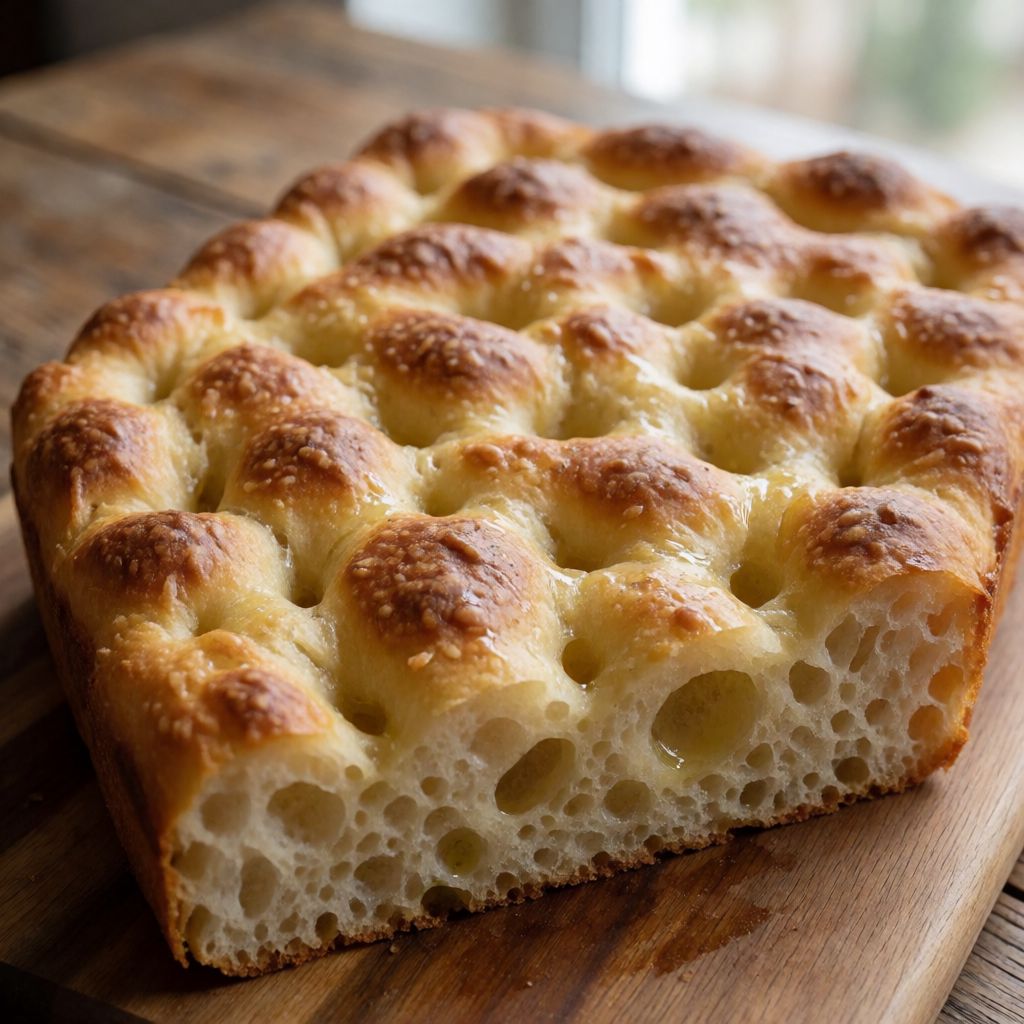
 AI photo
Potato Focaccia
A soft Italian-style flatbread topped with sliced potato and rosemary, baked until golden.
Labels are worked out automatically from the ingredients and can be wrong. Check the packaging if it matters to you.
Ingredients
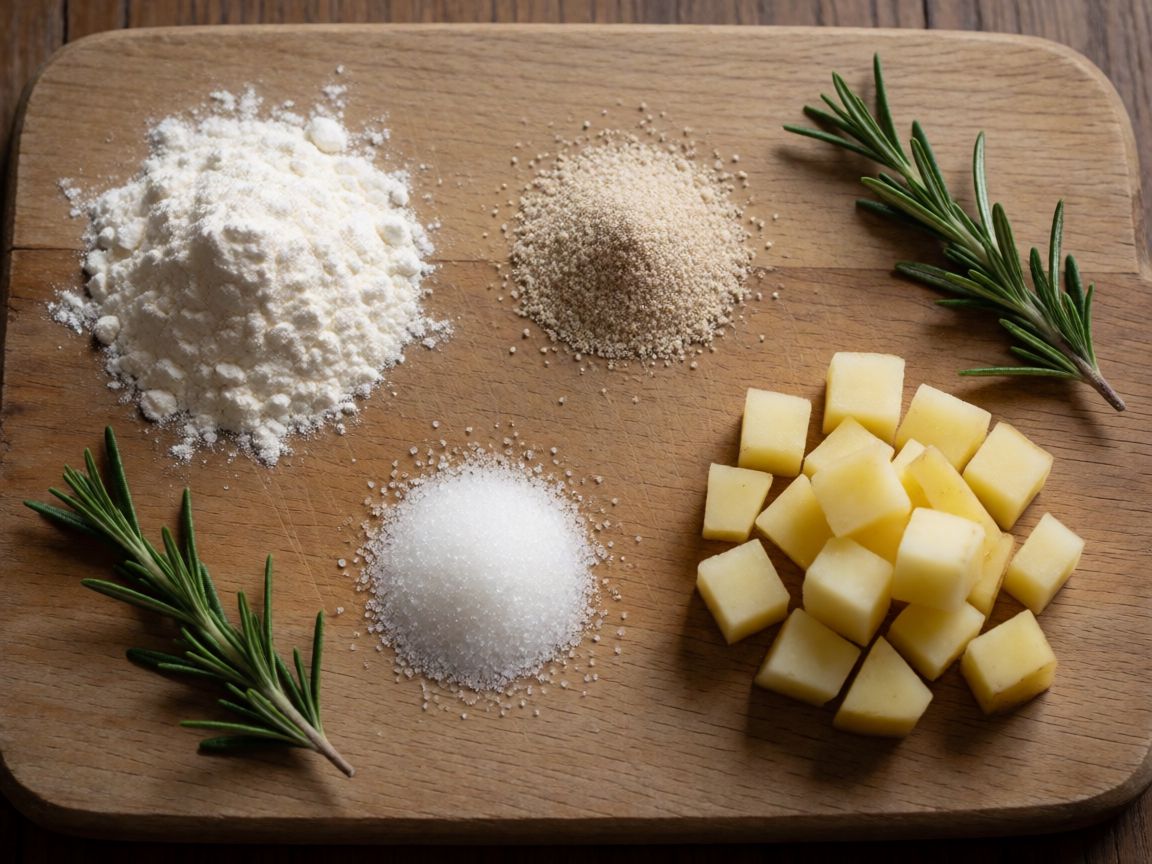
- 550 g Plain flour
- 25 g Fresh yeast ask your baker's counter, or use about 8g fast-action dried yeast instead
- 100 g Olive oil
- 10 g Salt
- 2 tsp Caster sugar
- 350 ml Water
- 450 g Potato
- 2 pcs Rosemary sprigs







Steps
Wash the potatoes, place them in a large pot, cover with water, add a pinch of salt and boil until tender.
Drain the cooked potatoes, peel them and leave to cool.
Warm the water and divide it into two parts: dissolve the salt in one and the yeast in the other.
Sift the flour, add half of it to the bowl with the yeast and knead into a smooth mixture.
Put the rest of the flour into a large bowl, add one potato mashed into a purée, the sugar, olive oil and pour in the salted water.
Combine this mixture with the yeast dough and knead by hand into a smooth, soft and elastic dough.
Dust the dough with flour, cover with a towel and leave to rise for 2 hours.
120 minDust the work surface with flour, turn out the dough and roll it into a rectangular shape.
Line a baking tray with baking paper brushed with olive oil, place the dough on it and prick the surface with a fork.
Slice the remaining potato into rounds, arrange over the dough and sprinkle with rosemary.
Leave to rise in a warm place for 40 minutes.
40 minBake the focaccia in a preheated oven at 200°C for about 25 minutes.
25 min
Focaccia is bread that gave up trying to be delicate. It's wet dough, a lot of oil, and a flat tray — the opposite of the tight, risen loaf you fuss over. Here the trick is that potato goes in twice: once mashed into the dough itself, once sliced raw on top. That's not decoration, that's structure and moisture doing two different jobs.
The mashed potato inside the dough isn't there for flavour, whatever people tell you. Potato starch holds water the way flour gluten can't — it's why mash stays soft long after bread goes stale. Put it in the dough and you get a crumb that stays open and tender a day later instead of turning into a brick by teatime, which is the usual fate of home-baked bread in a British kitchen where nobody eats a whole loaf in one sitting.
What decides whether this works is not the oven, it's the two rises. The first long one — two hours, in a towel-covered bowl, somewhere that isn't cold — builds the air pockets that make focaccia focaccia rather than a potato cake. The second, shorter rise after you've shaped it and laid the raw potato slices on top, is what stops the dough fighting back against those slices and baking flat and dense underneath them. Skip or rush that second rise and you get bread with tile grouting on top.
Some say focaccia needs a stone floor and a wood oven to be right. No — it needs heat that reaches the tray evenly and doesn't dry the top before the inside sets, and a domestic fan oven at 200°C does that perfectly well. What a kazan does for pilaf, a flat metal tray does for focaccia: nothing special, just contact.
Flour: plain, not strong bread flour, is deliberate here — this isn't a chewy artisan crumb, it's soft, almost cake-like under the crust, because the oil and potato starch are already doing the work gluten would otherwise have to do alone. If you only have strong flour, fine, just don't be surprised the dough feels tighter; knead a little longer and it settles.
Yeast: fresh yeast works faster and gives a rounder flavour, but it's a counter-shop item now, not a cupboard one. Fast-action dried yeast at roughly a third the weight does the same chemical job — feeds on the sugar, produces the gas that the two hours of waiting turns into structure. Don't dissolve it in water that's hot enough to feel uncomfortable on your wrist; above about 45°C you start killing the yeast rather than waking it, and then your "two hours" rise never happens and you'll blame the recipe instead of the kettle.
Olive oil: 100g is not a garnish amount, it's load-bearing. Oil coats the gluten strands and stops them binding too tightly, which is why focaccia dough feels slack and almost sticky compared to a baguette dough — that slackness is correct, not a mistake. Use an oil with no strong flavour of its own if you want the rosemary and potato to speak; a cheap, bland olive oil or even a neutral vegetable oil works, a peppery extra-virgin will fight the rosemary rather than support it.
Potato: boil it whole and unpeeled, not already peeled and chunked — chunks take on water and go waterlogged, which gives you a gluey mash that makes the dough heavy rather than tender. Peel after boiling, when the skin slips off with no effort, which is your doneness cue, not a clock. The raw potato on top is a separate decision: thin rounds, because thick ones stay raw-crunchy in the 25 minutes this bread gets, nowhere near the hour a jacket potato needs in the same oven.
Salt and sugar: keep them in separate water as the steps say, because salt dropped straight onto yeast slows it down — not fatally, but enough to throw off your two-hour timing. The sugar's job is small: a little feeds the yeast early, it's not there to sweeten the bread.
Rosemary: two sprigs, stripped and scattered, not whole — whole sprigs char in 200°C heat and taste of ash, not herb. If you've only got dried rosemary, use less; dried is concentrated and bitter if you're generous with it the way you can be with fresh.
On patience: the two-hour rise is not an inconvenience to work around with a quicker oven setting later, it's the ingredient that makes this focaccia and not a flatbread. A kitchen that's cool — most British kitchens outside of actual roast-dinner hours — will slow that rise down. Don't force it hot to compensate; a slow, even rise with big bubbles beats a fast, uneven one every time, and you'll see the difference in the crumb when you cut it, not just taste it.