
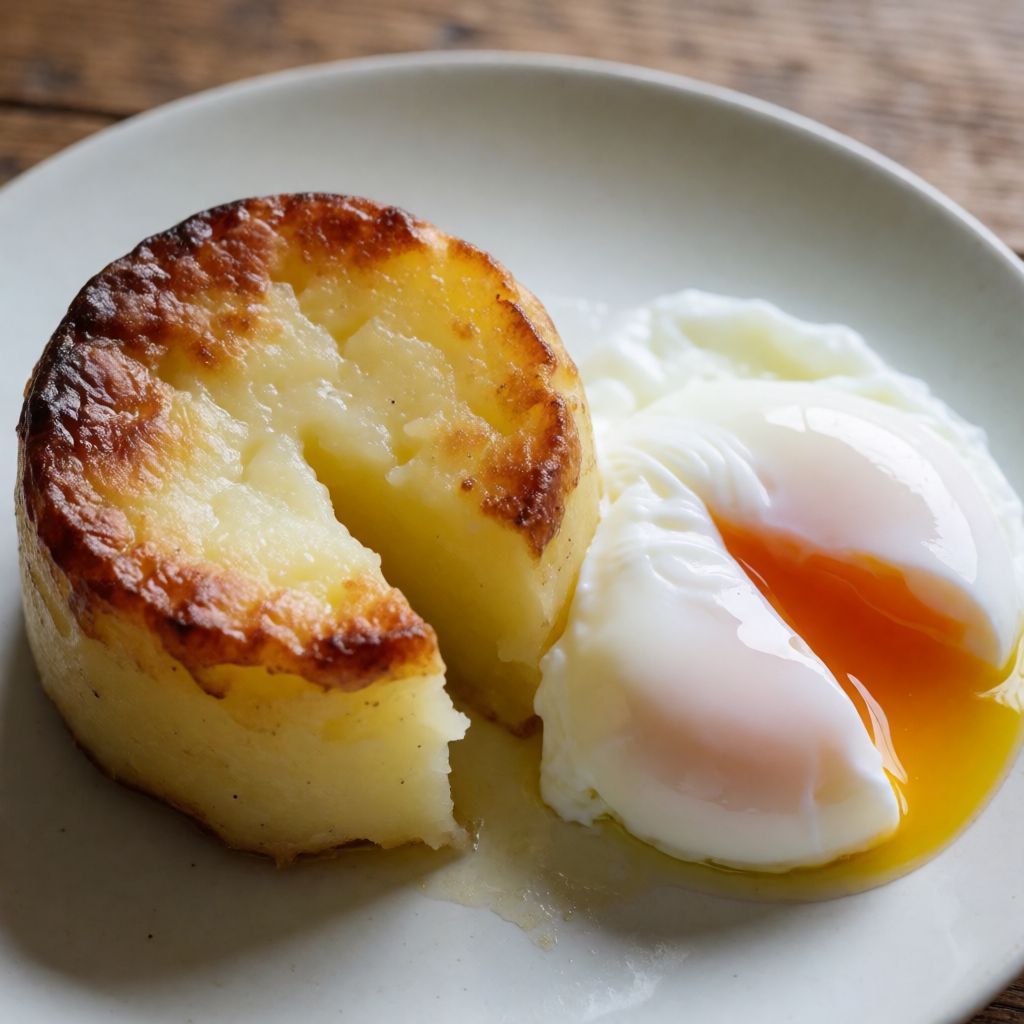
 AI photo
Potato Fondant, Cling-Film Poached Egg and Crispy Leek
A smooth potato fondant topped with a soft-cooked egg, crispy leek and a sweet and sour sauce.
Labels are worked out automatically from the ingredients and can be wrong. Check the packaging if it matters to you.
Ingredients
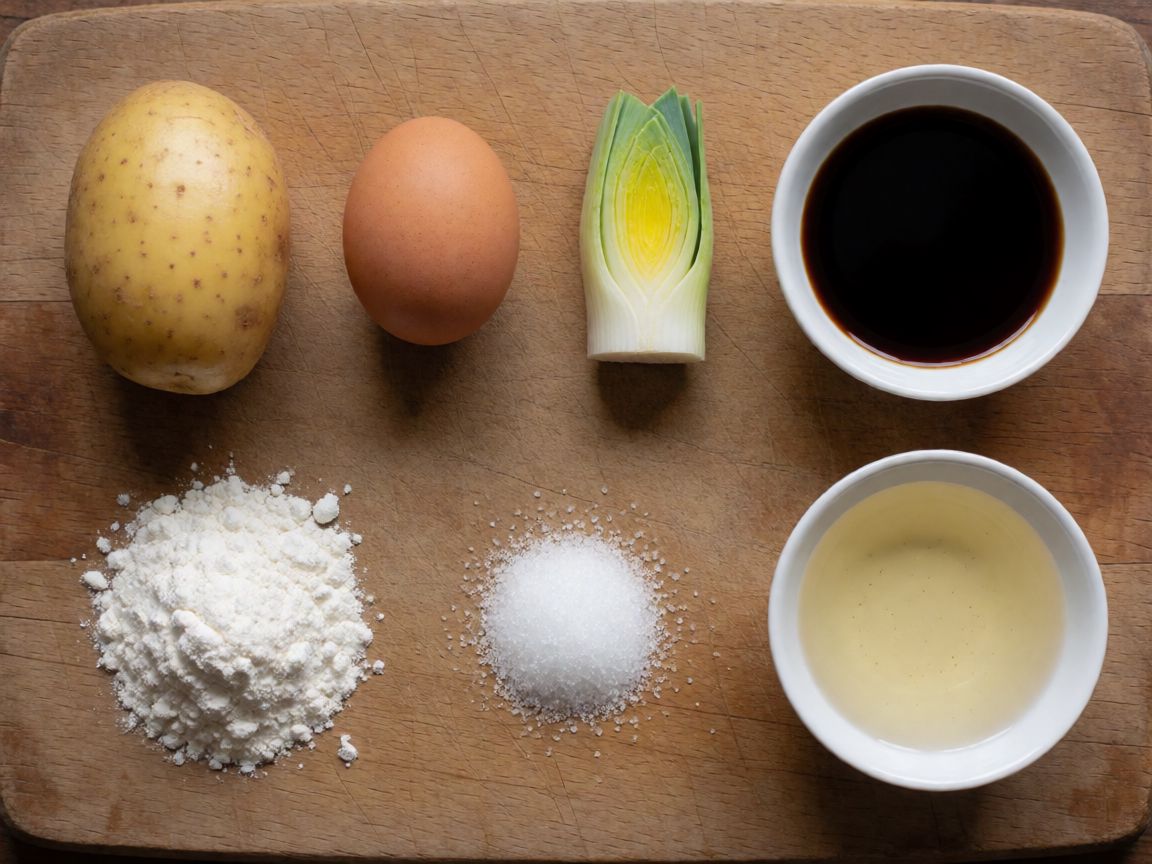
- 1 pcs Potato
- 1 pcs Egg
- 1/2 pcs Leek
- Olive oil to taste
- Salt to taste
- Black pepper to taste
- Plain flour to taste
- Vegetable oil to taste
- 150 ml Soy sauce
- 125 ml White wine
- 3 tbsp Caster sugar










Steps
Peel the potato, slice it thinly and fry gently over low heat with the leek and olive oil.
When the potato starts to lightly brown, cover with water and cook until tender.
Make the sweet and sour sauce: pour in the white wine and soy sauce, add the sugar and simmer until thickened.
Line a small bowl with cling film, brush with oil and crack the egg inside.
Tie the film into a tight knot, pressing out all the air.
Cook the egg in boiling water.
5 minCut the leek into thin strips, coat in flour and fry in vegetable oil until crisp.
Season the cooked potato with salt and pepper and blend with vegetable oil until a smooth purée.
Spoon the potato fondant onto the base of a plate and place the egg, freed from the film, on top.
Drizzle with the sauce and garnish with the crispy leek.
Forget the word "fondant" doing any sacred work here. In French cooking fondant potato means a chunk browned then braised in stock until the inside collapses into itself — that's not what's happening in this recipe. Here potato is sliced thin, softened in water, then blitzed to a purée: it's a mash with a fancy passport. That's fine. The result decides itself on starch and smoothness, not on vocabulary.
What actually decides whether this plate works is three unrelated techniques landing on one plate at the same time, and none of them forgive you for rushing.
The egg is the one that catches people out. Cling film poaching is a trick restaurants use because a proper poached egg in open water is a fight against your own kitchen plumbing — the white trails off into ribbons unless the water's barely moving and the egg is shockingly fresh. Wrap the egg in oiled film, knot out the air, and you've built yourself a tiny, cheap sous-vide bag. The white sets around the yolk instead of escaping into the pot. Five minutes is a lower bound — bigger egg, colder egg, you're adding a minute, not guessing a new number. You'll know it's right because the film gives slightly when pressed, no sloshing left inside.
The potato wants to be a floury one — Maris Piper, King Edward, the usual roasting-potato shelf in a UK supermarket — because floury varieties fall apart into purée willingly, while waxy ones (new potatoes, Charlotte) stay stubbornly separate no matter how long you blend them. You're not after bite here, you're after a smooth fondant-style mash, so fight the potato's structure, don't preserve it. If you only have waxy potatoes, push them through a sieve rather than a blender — a blender will turn waxy potato gluey, because you're releasing starch mechanically that was never meant to come loose that fast.
The leek does two jobs and that's worth noticing. Half goes in with the potato right at the start, cooked gently in olive oil before any water goes in — this is the part some recipes skip, and it's a mistake, because leek browned dry in fat first gets a sweetness that boiling alone never gives it. The other half is floured and fried separately for crunch. Same vegetable, two textures, because one leek cooked one way can only ever give you one result. If leeks aren't to hand, a mild spring onion white works for the purée; it won't crisp the same way fried, so don't expect the garnish to survive the substitution unchanged.
Olive oil for the slow cooking, a flavourless vegetable oil for the frying — that's not fussiness, that's division of labour. Olive oil has a low smoke point and a flavour you want quietly present in a long gentle cook; push it hard in a fryer and it'll scorch and turn bitter before the leek crisps. Any neutral oil — sunflower, rapeseed, groundnut — does the frying job; the criterion is "no smell of its own," because you want the leek's flavour on the plate, not the oil's.
The sauce's three ingredients are doing the job teriyaki-style sauces always do: soy for salt and umami, wine for acid and aroma (not for sweetness — that's the sugar's job), sugar to balance both and to thicken by caramelising slightly as the liquid reduces. Don't swap soy for salt alone — you'll lose the dark, savoury backbone the whole dish leans on. A dry white wine is fine; a splash of rice wine or even a dry sherry will do if that's what's open on the shelf, because what matters is acidity and some aromatic lift, not the label.
One real limitation worth naming honestly: a UK domestic hob rarely gives you kazan-level heat, and that's irrelevant here — this isn't a dish that wants ferocious heat anywhere except the frying oil for the leek crisps. Everywhere else, low and patient is correct, not a compromise. Patience is the actual ingredient holding the three components together; rush the potato and it's grainy, rush the egg and it bursts, rush the sauce and it's thin soy water with sugar floating in it.
This serves one as written, which tells you something about what kind of dish it is — a plated, composed single portion, restaurant-style, not a family pot. Scaling up for more people means cooking the egg and sauce in batches rather than simply multiplying quantities in one pan, because a poached-in-film egg and a reducing sauce both depend on surface area and timing you can watch, not on volume.