
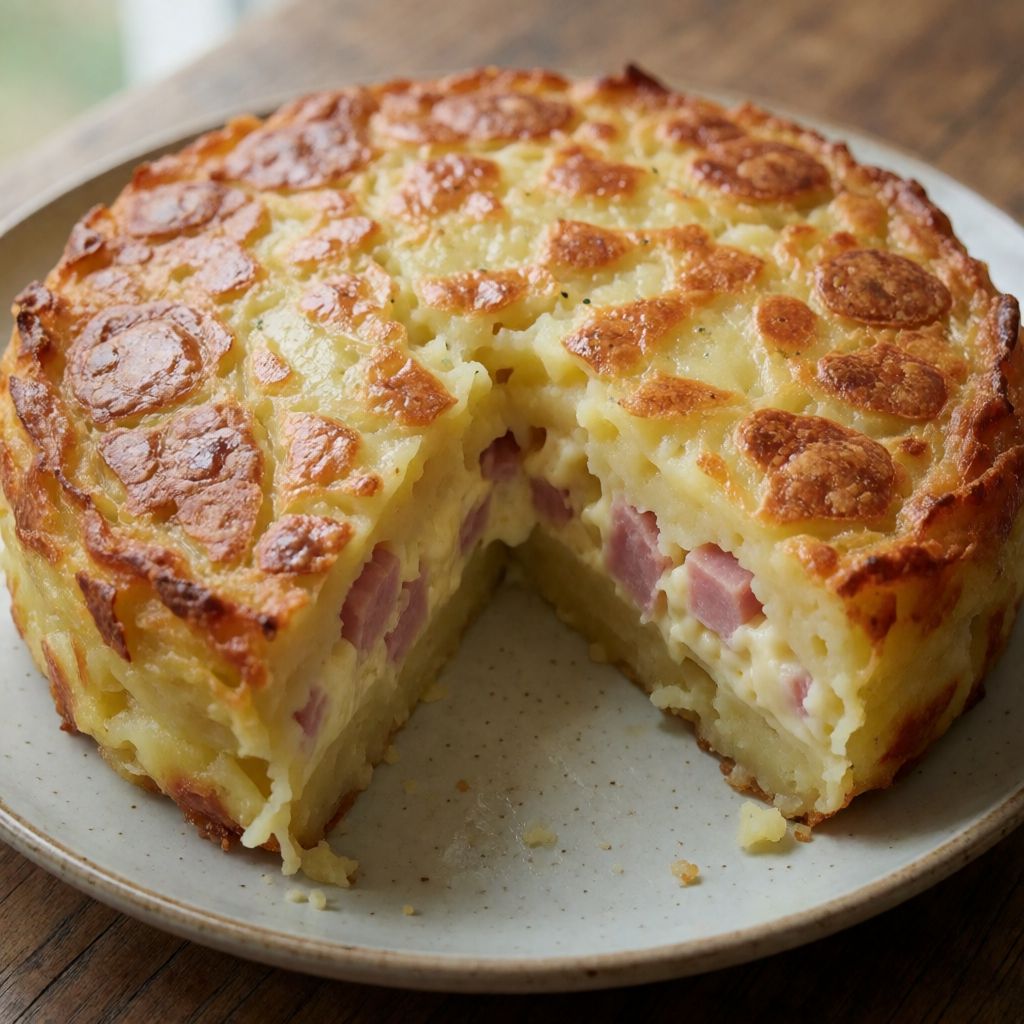
 AI photo
Eggless Potato Gateau
A creamy baked potato gateau layered with provolone, mozzarella, parmesan and ham, with no eggs needed.
Labels are worked out automatically from the ingredients and can be wrong. Check the packaging if it matters to you.
Ingredients
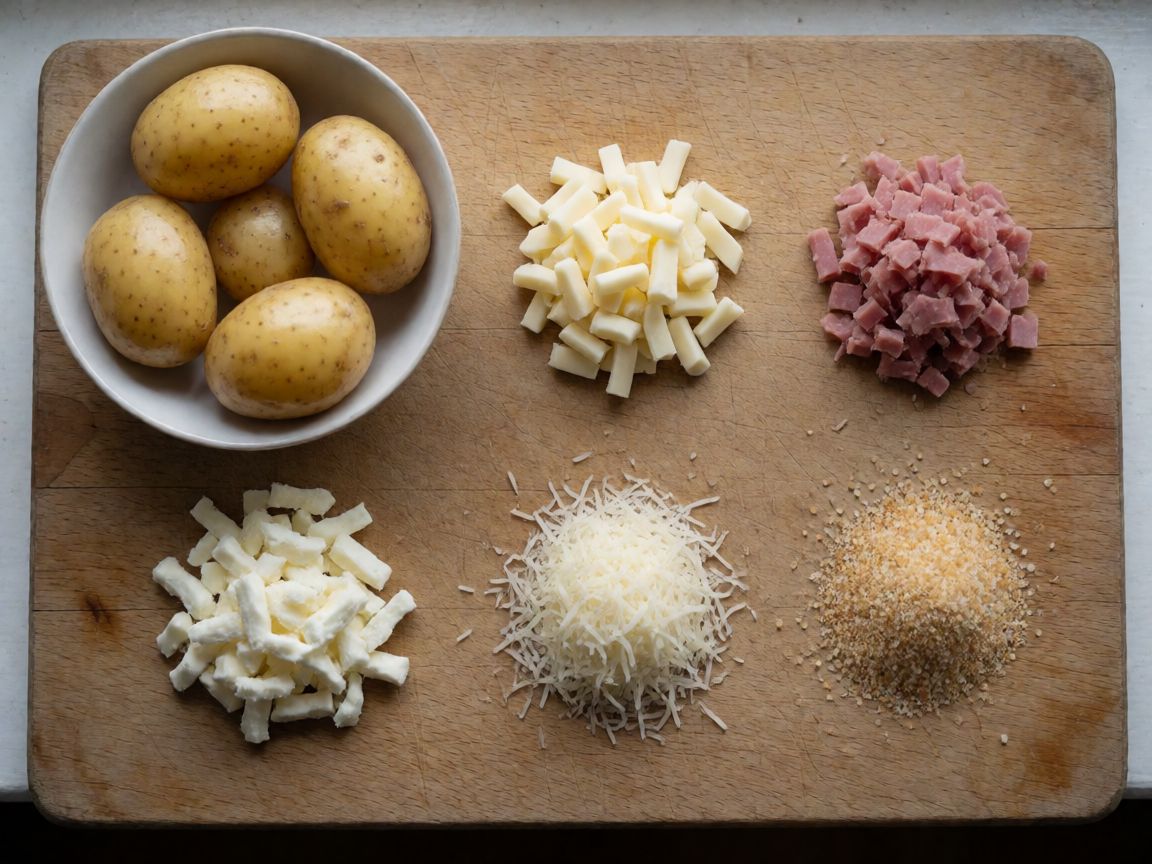
- 1 kg Potatoes
- 150 g Provolone
- 200 g Ham
- 100 g Mozzarella
- 80 g Parmesan
- 2.5 tbsp Olive oil alternative: 50 g butter
- Breadcrumbs as needed
- Salt to taste
- Black pepper to taste







Steps
Peel the potatoes and cut them into thin slices; boil in salted water or steam until soft.
Transfer the soft potatoes to a bowl and mash with a potato masher or fork.
Add the olive oil, parmesan, salt and black pepper, and mix well.
Grease a baking dish with butter and dust with breadcrumbs.
Spread a layer of the potato mash, then top with slices of mozzarella, provolone and ham.
Repeat the layers, alternating mash and filling, until all the ingredients are used.
Sprinkle breadcrumbs on top.
Bake at 220°C for 30 minutes.
30 min
This is a baked potato cake with ham and cheese hidden inside its layers — the Neapolitan gattò, dressed in French vocabulary because Naples once had French chefs in its kitchens and the name stuck even on food that started as a way to use up stale bread, cheese ends and the last slices of ham. No egg in this version, and that's not corner-cutting. The potato already carries its own glue.
What decides whether it holds together or falls apart on the plate comes down to three things: how hot the potato is when you mash it, how much fat goes in and when, and how the cheese is tucked inside rather than left exposed. Get the first one wrong and the starch either never releases enough to bind, or releases too much and turns the whole thing into wallpaper paste. Get the second wrong and you get either gumminess or grease pooling at the bottom of the dish. Get the third wrong and the cheese either doesn't melt properly or runs out the sides before the crumb on top has browned.
Some say you need egg to hold a potato bake together — no, because the starch that comes out of a hot, freshly cooked potato is already doing that job. Add egg and you've made something closer to a savoury custard, which is a different dish with a different texture, wobblier and richer. This one is meant to cut in clean wedges, not slump.
Start with the potato, because everything else is built on how you treat it. You want a floury type — Maris Piper or King Edward will do the job in a British kitchen — not a waxy new potato, which stays firm and watery and won't release enough starch to hold the mash together on its own. Slice thin before cooking, not because the recipe is fussy but because a thick chunk cooks soft on the outside and chalky in the middle, and you end up mashing lumps instead of potato. Boil or steam it until a slice bends rather than resists — a fork should slide through without a push. Steaming is worth choosing over boiling if you can manage it in your pan setup, because a boiled potato drinks water through every cut surface, and a wetter potato means a wetter mash, which means more time in the oven just driving off moisture instead of building a crust.
Mash it while it's still hot. This is the one step that actually explains why the dish needs no egg at all — hot potato starch is loose and willing to bind; let it cool first and it seizes up, turns gluey, and no amount of mixing will undo that. The fat — olive oil or butter, either is fine, choose by what you want from it — goes in at this point to coat the starch and stop it clumping into that paste. Butter brings a little more flavour and helps the top crumb crisp and colour, since it carries milk solids that brown. Olive oil is easier to fold through hot mash without a melting step and leaves a cleaner taste behind it — use one without a strong smell of its own if you want the cheese to speak louder than the oil; a full extra virgin will put its own flavour into every bite, which is no bad thing, just know you're choosing it on purpose.
Parmesan goes into the mash itself, not just on top — it's there for salt and for the dry, savoury backbone a plain mashed potato doesn't have. It won't melt the way the other cheeses do; a hard aged cheese toasts rather than runs, and that's exactly the texture you want holding the inside of the cake together rather than making it slippery. Grana padano is a reasonable stand-in if that's what's in the fridge — cheaper, drier, slightly less sharp, but doing the same job.
The three cheeses inside aren't interchangeable just because they're all called cheese. Mozzarella brings stretch and a lot of moisture — if you're using the dense block sold for pizza rather than the wet ball kept in brine, that's actually the better choice here, because it won't leak extra water into layers that are already damp from the mash. Provolone is firmer and sharper, melting without quite liquefying, giving you something to bite through rather than just pull. If you can't get it, a mild cheddar will stand in reasonably well, though it brings its own sharper edge that provolone doesn't have — know the swap, don't pretend it's the same cheese in disguise.
Ham here is salt and protein in a layer, not the star of the plate — cooked ham, smoked or not, sliced thin enough to lie flat between the mash layers rather than sit as a lump. This is a good dish for the day after a Sunday roast, when there's a bit of leftover ham going spare in the fridge and no great plan for it; the gateau doesn't care whether the ham came from a packet or off the bone, only that it's thin and not swimming in its own juice.
The breadcrumbs do two separate jobs and that's worth knowing, because it stops you skipping either one. On the base and sides of the dish, with the butter under them, they're there so the cake comes out of the dish in one piece instead of welding itself to the metal — without egg to glue the outside to the pan, a bare greased dish isn't enough insurance. On top, the same crumbs are there to brown and crisp in dry heat, because there's no egg wash to help that colour along, and a bake with no contrast of texture on top is a bake that tastes unfinished before you've even cut into it. A hot oven at this stage — 220°C — is doing the work of melting the cheese inside and colouring the crumb outside in the same stretch of time; a cooler oven would dry the potato out long before the crust caught any colour at all. Domestic ovens run unevenly and often hotter than the dial says, so watch the top rather than trust the number — if it's browning fast and the middle still feels loose through the dish, that's your oven running hot, not the recipe lying to you.