
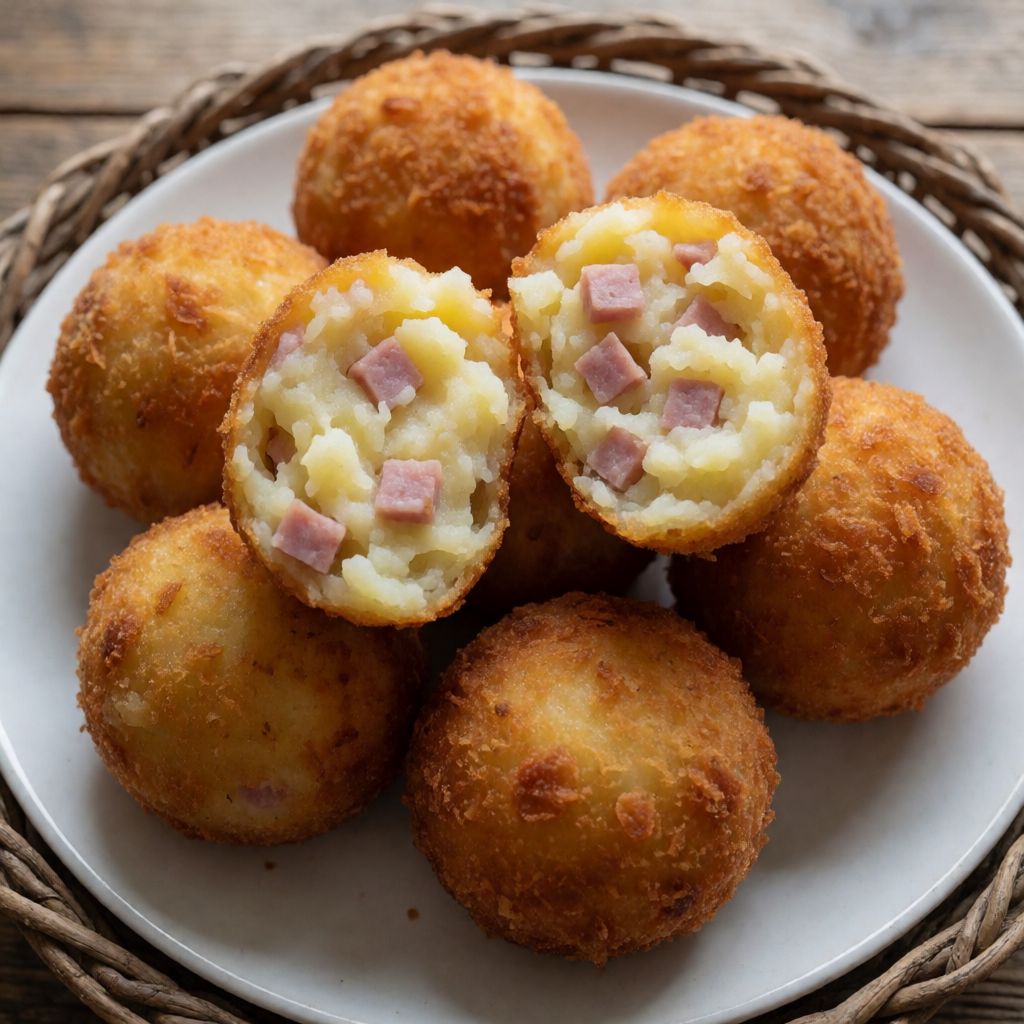
 AI photo
Potato Bombs with Ham and Cheese
A comforting side of mashed-potato dumplings stuffed with ham and melting cheese, then fried until golden.
Labels are worked out automatically from the ingredients and can be wrong. Check the packaging if it matters to you.
Ingredients
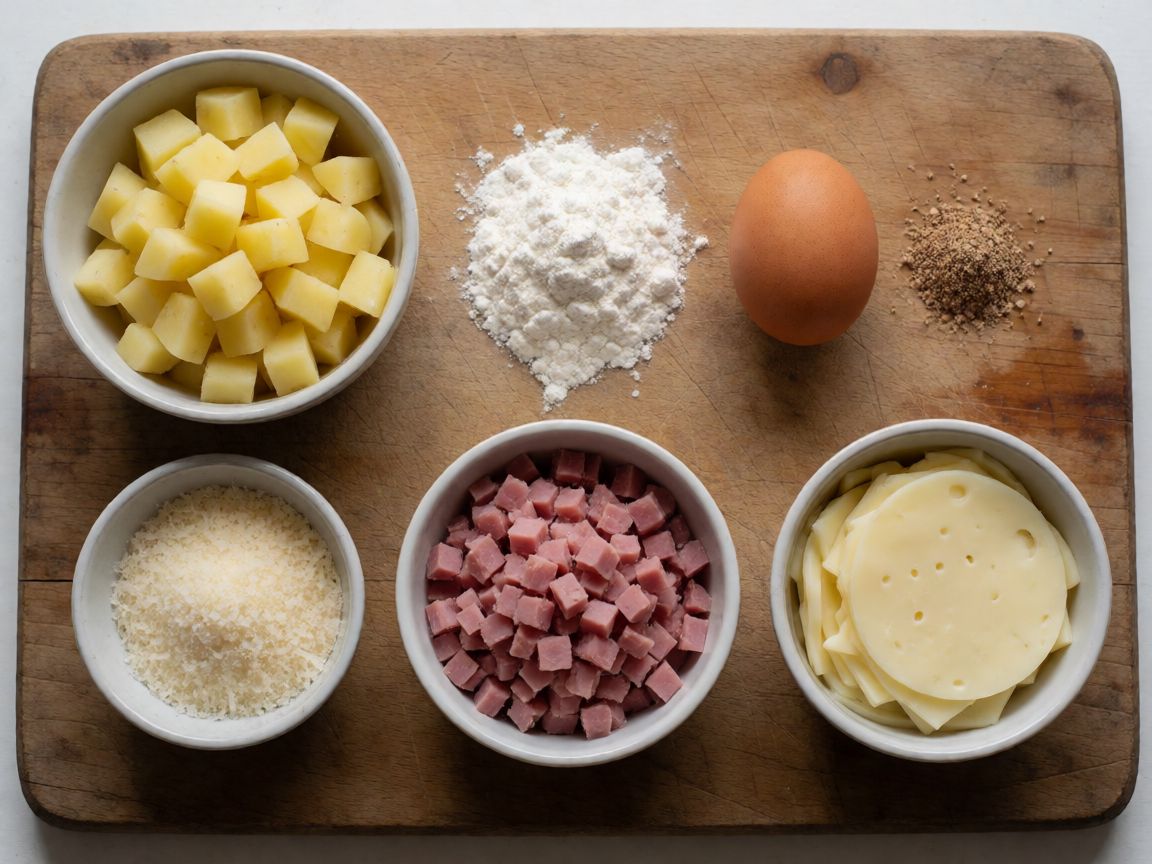
- 600 g Potatoes
- 200 g Plain flour
- 1 pcs Egg
- 100 g Parmesan
- Salt to taste
- Black pepper to taste
- Nutmeg to taste
- 100 g Ham
- 100 g Provolone
- Vegetable oil for frying








Steps
Boil the potatoes in their skins until tender, then cool slightly and peel.
Mash the potatoes (or press through a ricer) into a large bowl.
Add the egg, salt, black pepper and nutmeg, and mix well.
Add the Parmesan and flour, and knead first with a spatula, then by hand, until soft.
Roll out the dough to a thickness of 4-5 mm and cut out circles 7-8 cm in diameter.
On half of the circles, place chopped ham and diced provolone.
Cover the filling with the remaining circles and pinch the edges to form the bombs.
Fry the bombs in hot oil until golden on both sides.
Place on kitchen paper to drain off excess fat.
Alternative: bake in the oven at 180°C for 15-20 minutes.
18 minServe the potato bombs hot.
This is a potato gnocchi dough stretched into a pastry job — you roll it thin, trap ham and cheese inside, and fry it so the outside sets into a crust before the whole thing can fall apart in the oil. Think of it as a croquette that didn't want to be round.
What decides whether it works is water. Potato dough is mostly starch and moisture, and moisture is the enemy of a crust that holds a seal. Boil the potatoes in their skins — not peeled and chopped — because peeled potato sits in water and drinks it, and a watery mash needs more flour to bind, and more flour means a tough, bready bomb instead of a soft one. Skin-on boiling keeps the flesh drier, so you use less flour, and less flour is what keeps the dough tender once it's fried.
Some say you can skip the ricer and just mash hard with a fork — no, because a fork tears the cell walls and lets starch and water escape into gumminess, while a ricer or a fine masher pushes the potato through cleanly, cell by cell, keeping it dry and fluffy. That fluffiness is what makes the dough easy to roll at 4-5 mm without cracking.
The pinch at the edge is not decoration — it's the only thing standing between your filling and the oil. Cheese that leaks turns to a burnt skin on the surface of hot fat, and once that happens the bomb cooks unevenly, dark in patches, pale elsewhere. Pinch it properly, like sealing a dumpling, and the filling stays put until you bite in.
The potato itself wants to be a starchy, floury variety — the kind sold for mash or baking, not a waxy salad potato. Waxy potatoes hold their shape when boiled because they have less starch, which sounds like a virtue but here it works against you: less starch means a wetter, stickier mash that again forces you to add more flour to compensate, and you're back to the same bready problem. If you only have waxy potatoes to hand, dry the mash out a little longer over low heat after mashing, stirring so the moisture steams off before you add anything else.
The egg does two jobs: it binds the dough so it doesn't crumble when you roll it, and it adds a little structure that helps the bomb hold its round shape under heat rather than slump. Parmesan goes in for salt and savoury depth as much as flavour — it's doing seasoning work, not just taste work, so if you swap it for a milder hard cheese, taste the dough before you commit to the amount of added salt.
Flour here is a binder, not a bulk ingredient — use just enough to bring the dough together into something you can roll without it sticking to everything. Any plain flour with no strong character of its own will do; you don't want a flour that fights the potato for flavour.
Ham and provolone are the filling logic: one salty and dry, one that melts and runs. Provolone is chosen because it softens into a stretch rather than turning to oil, which matters inside a sealed dough — a cheese that weeps fat (a very young, wet mozzarella, say) will push moisture against the seal from the inside and undo your pinching. If you haven't got provolone, reach for any semi-hard melting cheese that doesn't leak when warm — a mild cheddar works, though it melts looser, so go easy on the amount.
Nutmeg is a background note, not a flavour you should taste directly — it's there the way it is in a béchamel, lifting the dairy and potato without announcing itself. Leave it out if you don't have it; nothing structural depends on it.
Frying versus the oven split is really a question of what you're optimising for. Oil at a proper frying heat — the kind where a dropped breadcrumb sizzles and rises straight away, not sinks — sets the outside fast, before the inside has time to swell with steam and crack the seal. The oven, at 180°C for the full 18-20 minutes, is gentler and more forgiving if you're nervous about hot oil in a domestic kitchen, but you lose the crisp shell and get something closer to a baked dumpling — still good, just a different dish wearing the same name. Either way, the kitchen paper afterwards isn't fussiness: it's pulling surface oil off before it has time to seep back into the crust and turn crisp into soggy as the bomb cools.
On patience: don't rush the rolling and cutting stage. A dough that's been allowed to rest for a few minutes after kneading rolls out without springing back and tearing, and a scrap pile of offcuts can be re-rolled once, maybe twice, before the gluten gets tired and the texture turns tough. Work steadily, not fast, and the shapes will hold their seal far better than if you're racing the dough.