
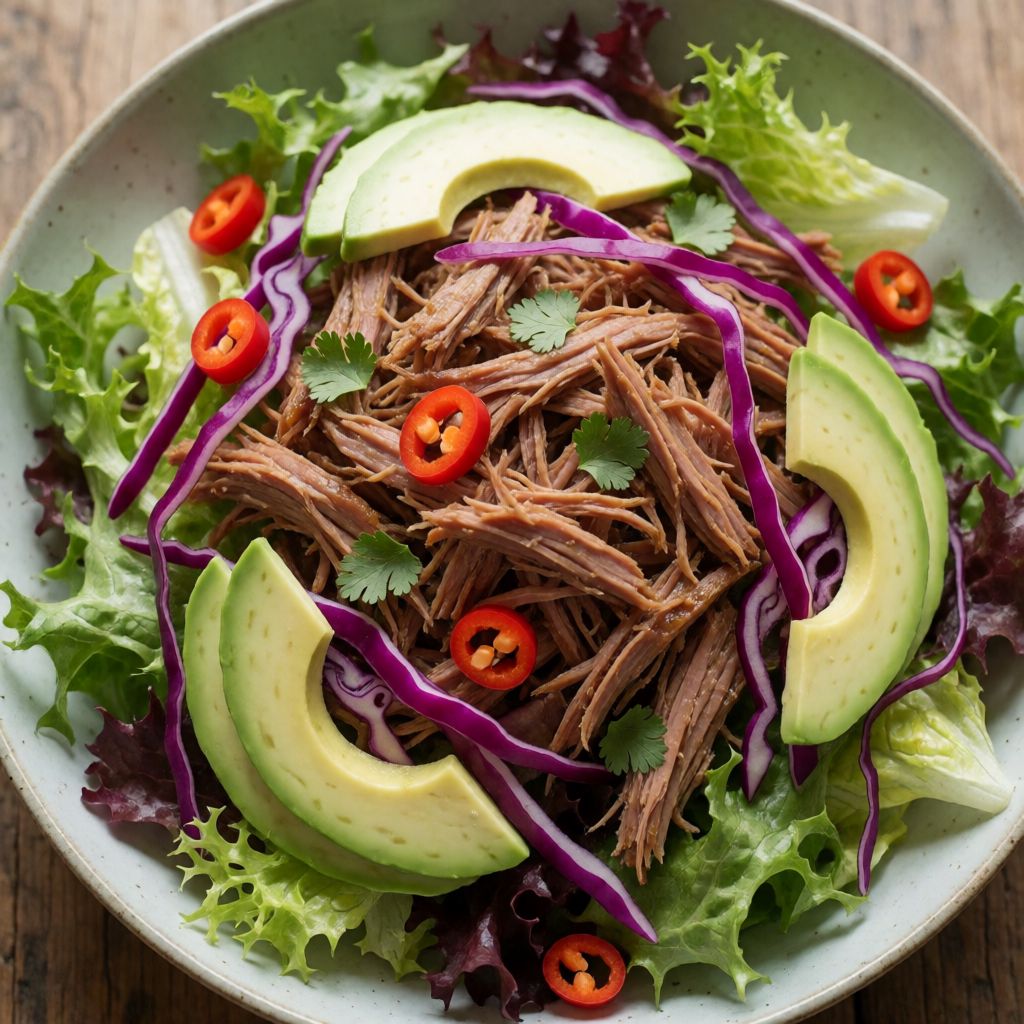
 AI photo
Pulled Pork Salad
A fresh salad with warm pulled pork, pickled red onion, avocado and a chilli dressing.
Labels are worked out automatically from the ingredients and can be wrong. Check the packaging if it matters to you.
Ingredients
- 400 g ready-made pulled pork pre-cooked
- 125 g salad mix
- 300 g red pointed cabbage finely shredded
- 2 pcs avocado sliced
- 1 bunch coriander or flat-leaf parsley leaves
- 1 pcs red chilli sliced
- 1 pcs lime cut into wedges






Pickled Red Onion
- 100 ml apple cider vinegar
- 100 ml water
- 30 g sugar
- 2 pcs red onion sliced into rings




Chilli Dressing
- 100 ml crème fraîche 18%
- 2 tbsp sriracha sauce
- 2 tbsp mayonnaise
- salt to taste
- black pepper freshly ground, to taste





Steps
Warm the pulled pork in a pan with a little oil, or in the oven at 250°C for about 5 minutes
5 minIn a saucepan, combine the apple cider vinegar, water and sugar, and bring to the boil until the sugar dissolves
5 minAdd the red onion, turn off the heat and let stand for 5 minutes
5 minMix the crème fraîche with the sriracha and mayonnaise, season with salt and pepper to taste
2 minArrange the salad mix and shredded cabbage on plates, top with the warm pulled pork, pickled onion, avocado and chilli dressing, and sprinkle with coriander or parsley
3 min
This isn't really a salad, it's a composed plate that borrows a technique from barbecue country and uses the cold, crunchy bits to carry it. The whole thing works or fails on one thing: temperature contrast. Warm, fatty, already-cooked pork meeting cold crème fraîche dressing and raw cabbage is the entire point. If everything arrives at room temperature, you've made a sad coleslaw with meat on top.
So the pork has to be properly hot — not warmed-through, but got-some-colour-back hot. A pan with a little oil, pushed around until the edges catch and crisp slightly, does more for this dish than any dressing will. The oven at a high heat does the same job faster if your hob is a single ring and a prayer, which many UK kitchens are. Either way, the pork is the only thing in this dish that asks for real heat — everything else is assembled, not cooked.
The pickled onion is the quiet hero and the part people skip because "it's just onion." Raw red onion rings are sharp enough to dominate a plate; five minutes in hot vinegar and sugar softens the bite without cooking the crunch out of them — that's the mechanism, not magic. Some say you need to leave pickled onions for hours. No — for a quick-pickle like this, five minutes in still-hot liquid is enough to take the raw edge off; longer gives you something closer to a proper pickle, which is a different ingredient with a different job.
On the pork itself: "ready-made pulled pork, pre-cooked" means someone else has already done the slow, patient part — the long low cook that breaks down collagen into gelatine and makes the meat shred rather than slice. That's the one process you genuinely cannot rush, which is why this recipe doesn't ask you to. Your job is just reheating with enough heat to re-render a bit of fat and get some texture back, not low-and-slow it again. If you only have raw pork shoulder, you've got a different, much longer dish on your hands — this recipe assumes the patience has already been spent by someone else.
Red pointed cabbage (sweetheart cabbage) over standard white cabbage matters more than it sounds like it should: it's sweeter, has thinner leaves, and doesn't need the half-hour of salting a dense white cabbage wants to soften before eating raw. Shred it finely and it stays crisp under the warm pork instead of going limp and watery — that limpness is the real reason pre-dressed, sat-too-long coleslaw gets a bad name, not the cabbage itself.
Avocado: ripe enough to slice without mashing, which means it should give slightly under gentle thumb pressure near the stem end, not at the widest point (that bruises first and lies to you). If avocados are expensive or unripe — a real UK supermarket problem outside of a narrow window — a few spoonfuls of thick plain yoghurt stirred through at the end gives you something of the same creamy contrast, though obviously not the flavour.
Apple cider vinegar for the pickle because it's got enough acidity to do the job but a rounder, less aggressive edge than white vinegar or malt vinegar — malt vinegar especially will drag the whole thing toward chip-shop territory, which isn't the flavour you're after here. White wine vinegar is the nearest swap if that's what's in the cupboard.
Sriracha, mayonnaise, crème fraîche: any chilli sauce with vinegar and sugar in it already (not a dry chilli paste) will stand in for sriracha, you'll just need to adjust sugar and salt around it since you're replacing a balanced sauce, not just heat. Crème fraîche at 18% is there for tang without the sauce going thin and runny the way single cream would — if you've only got soured cream, it's close enough and nobody at the table will complain.
Lime wedges and coriander go on at the very end, after plating, for a reason worth saying plainly: acid and fresh herb lose their lift the moment they sit in a warm, dressed dish — citrus starts tasting flat, herbs wilt. This is assembly cookery wearing a salad's clothes, and the whole dish rewards getting it to the table within minutes of combining hot and cold, not minutes before.