
 AI photo
Pumpkin Bread
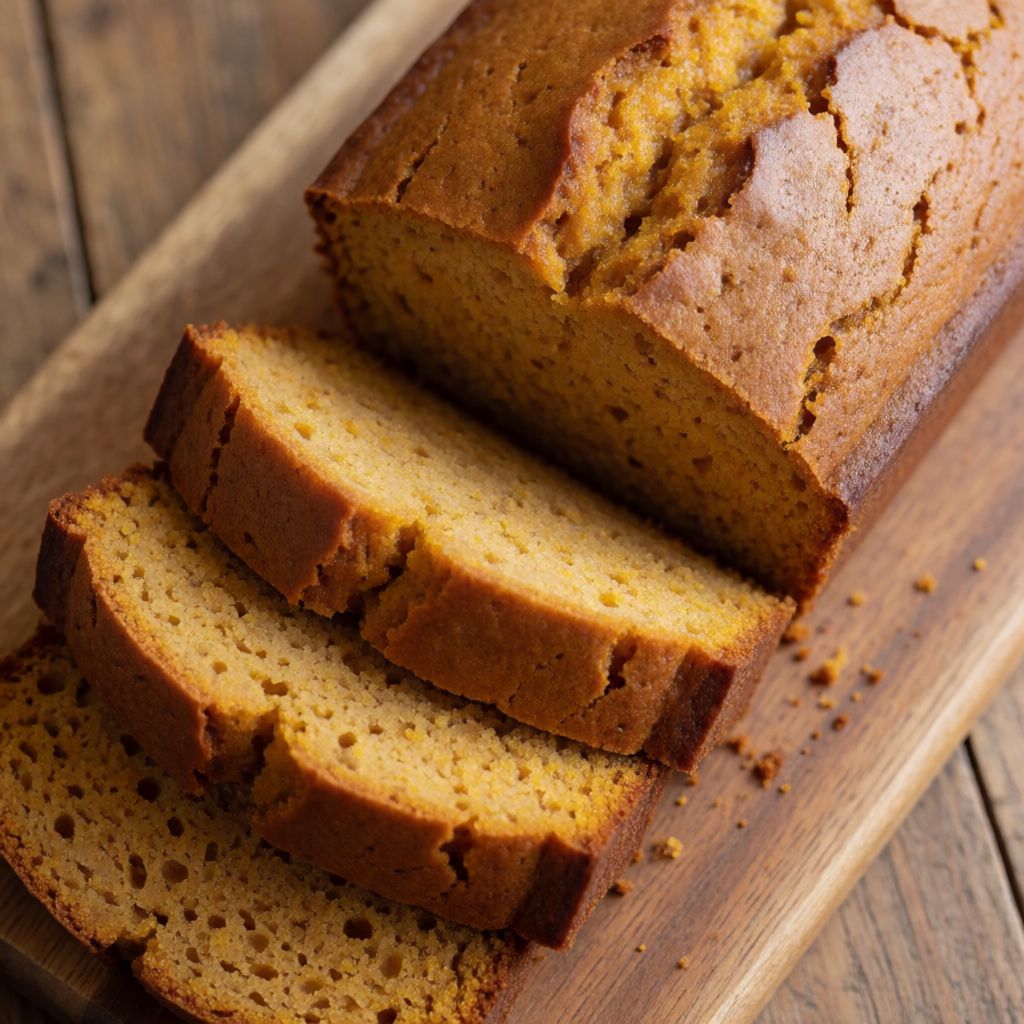
A spiced pumpkin bread topped with a butter, cream cheese and maple syrup icing.
Labels are worked out automatically from the ingredients and can be wrong. Check the packaging if it matters to you.
Ingredients
- 300 g Pumpkin
- 125 g Butter
- 225 g Sugar
- 2 pcs Eggs
- 250 g Pumpkin purée
- 225 g Flour
- ½ tsp Salt
- 1 tsp Baking powder
- 2 tsp Cinnamon
- 2 tsp Ginger
- ½ tsp Cloves
- ½ tsp Nutmeg
- 50 g Butter soft, at room temperature
- 50 g Icing sugar
- 200 g Cream cheese plain, full-fat
- 3 tbsp Maple syrup














Steps
Peel the pumpkin, cut the flesh into 2×2 cm cubes, put it in a pot, cover with water and bring to the boil.
Boil the pumpkin for about 20 minutes, until soft.
20 minDrain the water and let it cool to room temperature.
Blend the pumpkin with a hand blender until creamy.
Beat the butter with the sugar until pale and fluffy.
Add the eggs one at a time, continuing to beat.
Fold the pumpkin purée into the mixture.
Mix the flour, salt, baking powder and spices, then sift into the batter.
Mix the batter and pour it into a greased, parchment-lined 10×25 cm tin.
Bake in a preheated oven at 175°C (fan) for about 45 minutes.
45 minLet it cool slightly on a wire rack.
Beat the butter with the icing sugar, then add the cream cheese and maple syrup to taste.
Spread the icing over the bread.
This is not really bread. It's a cake wearing a loaf tin, a thing that happened because American home bakers in the early 20th century needed a use for the glut of pumpkin at harvest and didn't want to light the stove for a whole cake tin's worth of fuss. The "bread" is a quick bread — risen by baking powder, not yeast, no kneading, no proving, no patience needed except the kind that stops you cutting into it too soon. That's its whole appeal: cake results, loaf-tin effort.
What decides whether it works is moisture control, twice over. First, you boil and purée your own pumpkin rather than trusting a tin of purée straight out — fresh pumpkin varies wildly in water content depending on variety and season, so if you don't drain and reduce it a bit after blending, your batter goes slack and the middle stays gluey under a cooked-looking crust. That's the real cause of the "sunken, wet pumpkin bread" people complain about — not bad luck, just too much free water with nowhere to go.
Second is the sugar-butter creaming right at the start. Beating butter and sugar together isn't decoration — it's where you trap the air that will carry the rise, since there's no yeast doing that job and only a modest teaspoon of baking powder helping it along. Pale and fluffy means the sugar crystals have cut thousands of tiny air pockets into the fat; skip this and your loaf will be dense no matter how long you bake it.
Start with the pumpkin itself. You want a dense, dry-fleshed variety — the kind sold for eating, not the big ribbed ones grown for carving, which are mostly water and stringy fibre and give you a thin, sad purée. If you can't get a decent eating pumpkin, butternut squash is the honest substitute: similar sugar content, similar texture once boiled, and nobody at the table will know unless you tell them. Boiling it, rather than roasting, is the quick domestic route — roasting concentrates flavour better and loses less water into the pot, but it needs an hour of oven time you may not have on a Tuesday. If you do roast, skip the boiling step and go straight to the blender; your purée will need less reducing because less water went in.
The butter should be a plain, unsalted block — "any fat with no distinct flavour of its own" is the real criterion, because its job here is to carry air and richness, not taste of itself. Salted butter works if you simply drop the added salt in the dry mix. For the icing, the butter must be properly soft — pressable with a finger, not melting — because cold butter won't take in the icing sugar smoothly and you'll be left creaming lumps against a bowl, which is where people give up and just stir it instead, getting a gritty, streaky result instead of a silky one.
Eggs added one at a time, beating between each, stops the butter-sugar mixture from splitting — eggs are mostly water, and if you dump both in at once the fat can't absorb that water fast enough and curdles into a grainy slush that never fully recovers, even once the flour goes in. If it does split slightly, a spoonful of the flour added early will bring it back; that's a kitchen fix, not a failure.
Flour, salt, baking powder and spices get mixed and sifted together rather than added separately, because baking powder works unevenly if it's not distributed through the flour before it meets any liquid — clumped baking powder gives you a loaf that rises in patches, domed on one side, flat on the other. Plain flour is right here; you're not after chew or structure the way bread needs, just enough gluten to hold the crumb together, so don't reach for strong flour thinking it'll help.
The 10×25 cm tin and 175°C fan oven matter because this bake lives or dies on even heat reaching the centre before the edges burn — a narrower, deeper tin than that insulates the middle too much, a wider one dries the edges out waiting for the centre to set. Forty-five minutes is where to start checking, not where to stop: a skewer in the centre should come out with a few moist crumbs, not wet batter, not bone dry. Some say the bread's done when it smells like the kitchen is "full of cinnamon" — no, because by then the spices have been filling the room for twenty minutes and tell you nothing about the crumb underneath. Trust the skewer, not your nose.
Let it cool properly before icing — not out of ceremony, but because warm cake melts butter-based icing straight into a puddle, and you'll have wasted the only patience this recipe actually demands. The icing itself — butter, icing sugar, plain full-fat cream cheese, maple syrup — is a looser cousin of classic cream cheese frosting; low-fat cream cheese will weep water into it and turn it thin and sour-tasting, so don't substitute there if you can help it. Maple syrup "to taste" means exactly that — start with less than three tablespoons if your syrup is a strong grade, since the real sugar in the loaf is already doing plenty of work. One loaf this size, iced and sliced, comfortably feeds six to eight with tea — this was always built to be cut thick, not portioned like delicate cake.