
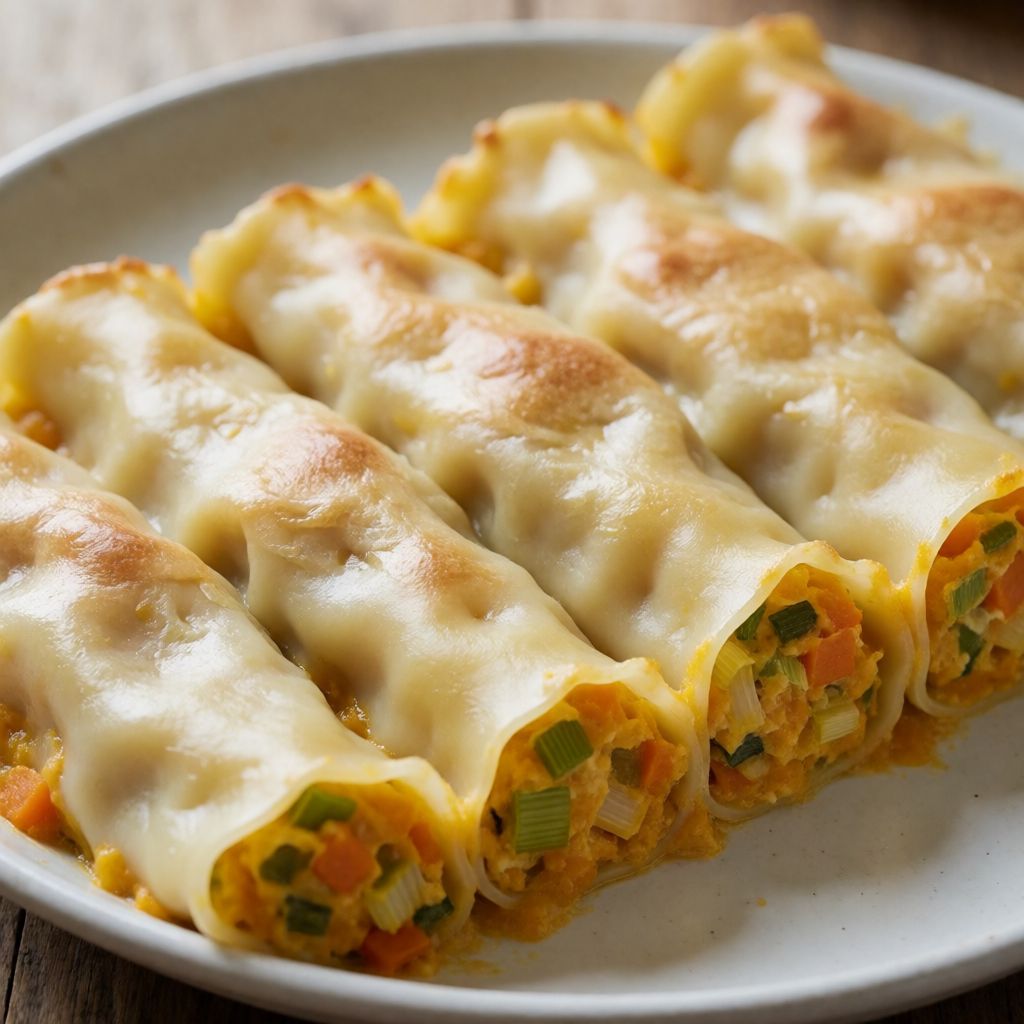
 AI photo
Pumpkin Cannelloni
A creamy baked pumpkin and ricotta cannelloni, finished with amaretti biscuits and nutmeg.
Labels are worked out automatically from the ingredients and can be wrong. Check the packaging if it matters to you.
Ingredients
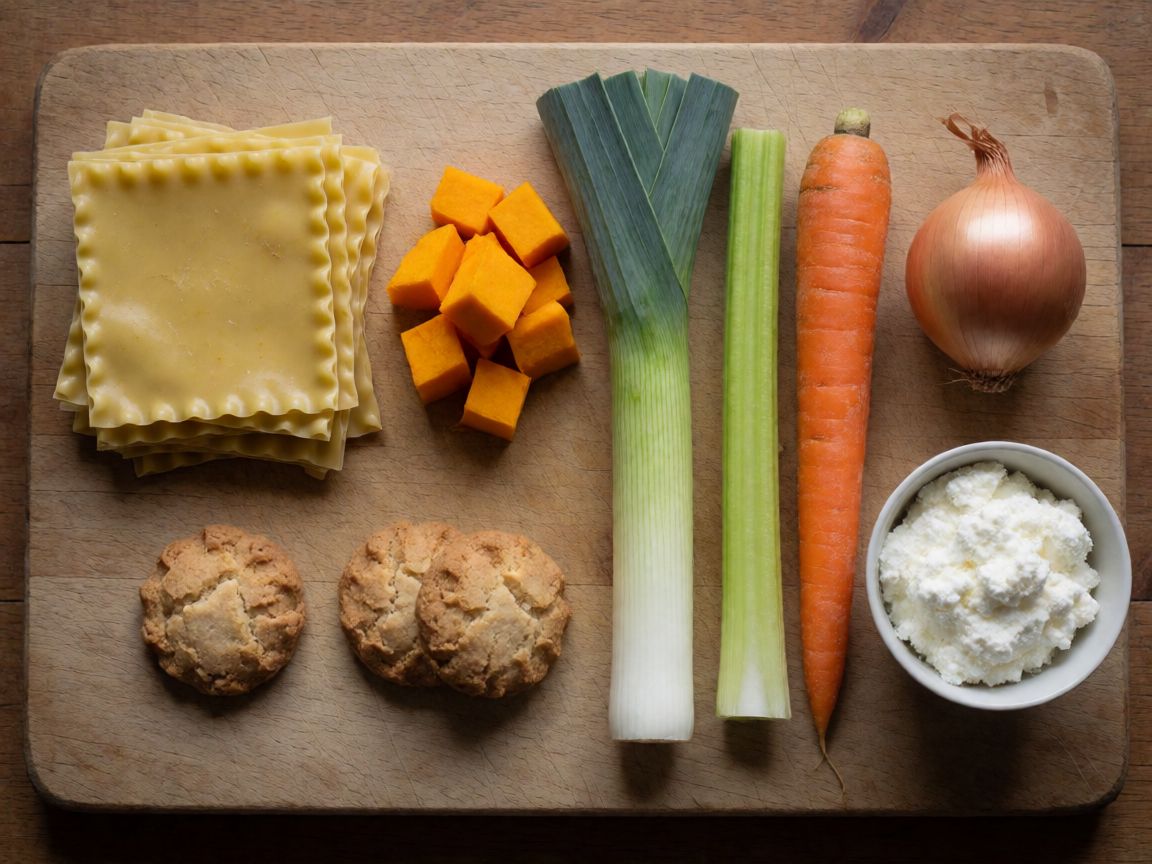
- 200 g fresh egg pasta sheets fresh
- 200 g pumpkin
- 1 pcs leek
- 1 pcs celery stalk
- 1 pcs carrot
- 1 pcs onion
- 2 pcs amaretti biscuits
- 400 g ricotta
- 60 g butter
- 100 g Parmesan
- nutmeg to taste
- salt to taste
- black pepper to taste
- olive oil to taste














Steps
Dice the pumpkin, celery, carrot and leek, then sweat them in a pan with olive oil, salt and pepper over a low heat.
Once the vegetables are soft, blend 3/4 of them with the amaretti biscuits until creamy, and season with nutmeg.
Soften the ricotta and transfer it to a piping bag.
Blanch the sheets of fresh egg pasta and pat them dry with a towel.
Spread the pumpkin cream and ricotta over each sheet, then roll up into cannelloni.
Arrange the cannelloni in a baking dish greased with oil or butter.
Spread the remaining cream and vegetables on top, sprinkle with Parmesan and dot with butter.
Bake in a preheated oven at 200°C for 15–20 minutes.
18 minServe the pumpkin cannelloni hot.
Cannelloni is a geometry problem dressed as a dish: how do you get a wet filling to sit inside a wet sheet of pasta and still hold its shape in the oven. The pumpkin filling here is sweetened and deepened by amaretti biscuits — not for an almond flavour you'll consciously taste, but because the biscuit's sugar and starch pull moisture out of the vegetables and bind the purée so it doesn't run the moment you roll it. Skip that and the filling stays loose, soaks the pasta sheet from inside, and you get mush with a tube-shaped memory.
What decides whether this works is moisture management at three separate points: the vegetables sweated dry before blending, the pasta blanched and then properly patted dry, and the ricotta firmed up rather than used straight from the tub. Each is a small defence against the same enemy — water pooling in the baking dish and turning your cannelloni into soup with a Parmesan crust. Get all three right and the bake is just there to fuse the top and warm the middle through, nothing more dramatic.
Some say cannelloni has to be stuffed with a spoon through the tube, fiddly and frustrating. No — because you're not working with dry rigatoni-style tubes here, you're rolling fresh flat sheets around the filling, which is a different craft entirely, closer to folding a sleeve than loading a cartridge. That's why the piping bag matters: it lets you lay a clean, even line of ricotta down the sheet in one pass, rather than dolloping and spreading, which tears a sheet that's already soft from blanching.
Pumpkin: 200g is roughly a quarter of a small pumpkin, or — far more practically in a British kitchen — a wedge of butternut squash, which behaves the same way and is sold pre-cut for exactly this reason. What you're after isn't a specific variety, it's flesh that breaks down to a dry, fibrous softness rather than a watery one, which is why you dice it small and sweat it low and slow rather than boiling or steaming it. Boiling adds water you then have to cook back out; sweating in oil never introduces it in the first place.
The leek, celery, carrot and onion aren't a flavour base you taste individually — they're there to give the pumpkin backbone and a savoury undertow, the same logic as a soffritto, just diced finer so it disappears into the purée. If you're short one of them, the dish survives; what it can't survive is skipping the sweating step and going straight to raw vegetables in the blender, because then you're blending water, not flavour.
Amaretti biscuits are the detail people query, because almond and squash sounds like an odd pairing until you remember this is a northern Italian habit — Mantua's pumpkin tortelli uses the same trick — born from using what the pantry had: stale biscuits, a cheap way to thicken and sweeten a filling without adding more eggs or flour. If you have none, a dry digestive or amaretti's biscoff-adjacent cousin will do the starch-and-sweetness job, though you lose the bitter almond note that's doing quiet work against the pumpkin's sweetness. Don't reach for almond essence instead — that's flavour with none of the texture-fixing starch, and texture is the actual job here.
Ricotta needs "softening" because tub ricotta varies — some batches are wet enough to need draining in a sieve for ten minutes before piping, otherwise it weeps into the pasta sheet and undermines the same dry-filling logic as the pumpkin. If ricotta isn't to hand, a well-drained cottage cheese blitzed smooth gets you close, though it's sharper and needs a touch more nutmeg to balance.
Fresh pasta sheets are the one place where "fresh" earns its word rather than just being a label: dried pasta won't roll without cracking, and you'd need to pre-cook it far longer, taking on more water in the process — exactly what you've spent the rest of the recipe avoiding. Blanch briefly, just to flexible, then pat dry properly rather than lifting straight from water to filling; that water left clinging is the same enemy as the raw vegetable water, just arriving later in the process.
Parmesan and butter on top aren't decoration, they're the only route to a browned, slightly crisp surface on a filling that's otherwise all soft textures underneath — in an oven at 200°C, which for a domestic fan oven you can trust roughly as marked, the butter melts into the Parmesan and the cheese catches at the edges before the middle's even properly hot, which is your real cue to pull it rather than the clock. Fifteen minutes is the floor, not the target — look for colour at the rim of the dish, not a timer going off.