
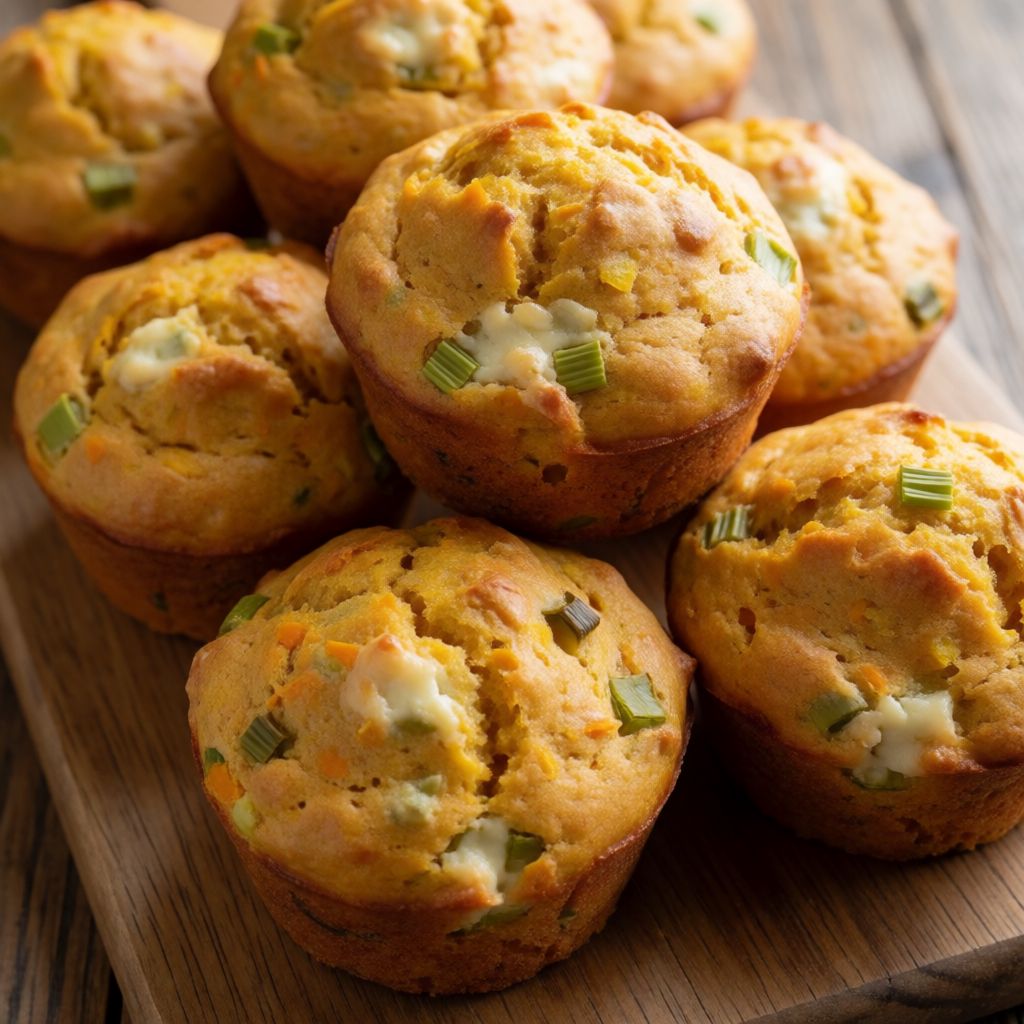
 AI photo
Pumpkin and Gorgonzola Muffins
Savoury muffins with pumpkin, leek, parmesan and a melting core of gorgonzola dolce.
Labels are worked out automatically from the ingredients and can be wrong. Check the packaging if it matters to you.
Ingredients
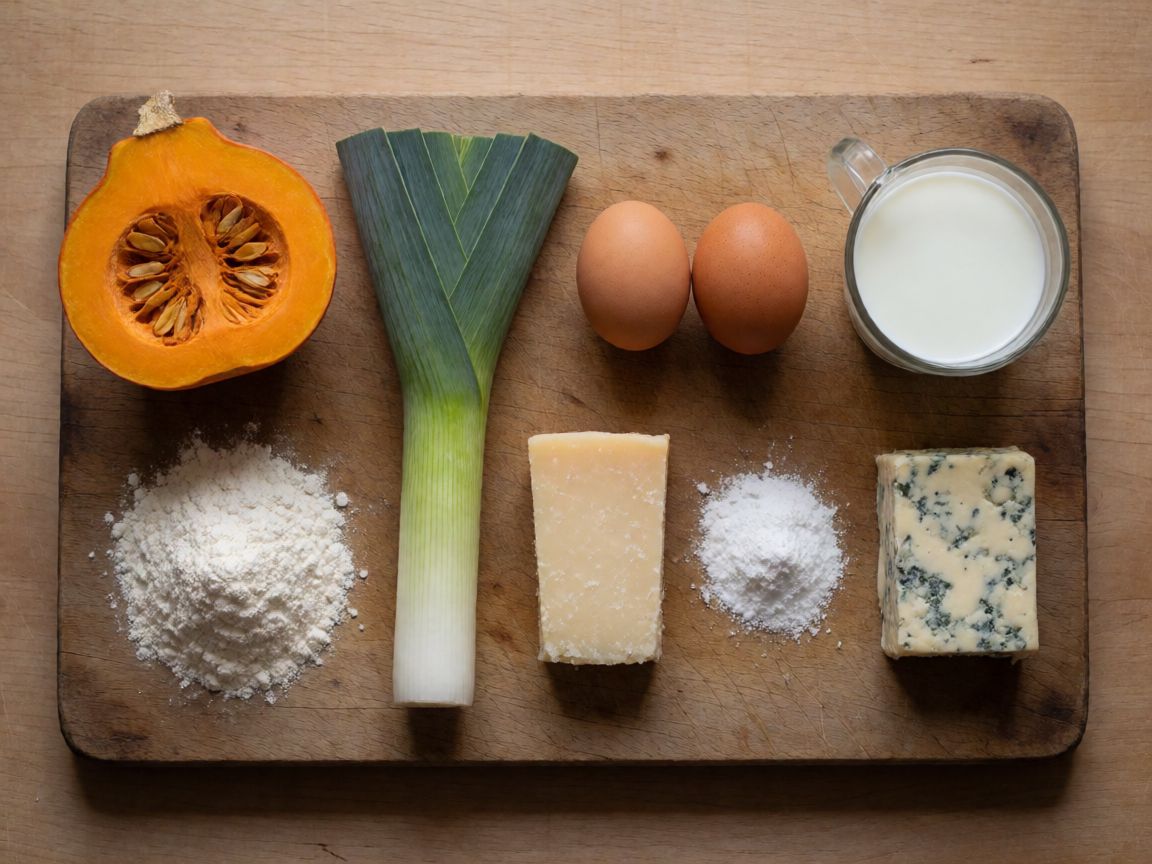
- 200 g Pumpkin
- 100 g Leek
- 240 g Plain flour sifted
- 2 pcs Eggs
- 75 ml Vegetable oil
- 75 ml Milk
- 40 g Parmesan
- 8 g Baking powder
- 150 g Gorgonzola dolce
- pinch Salt to taste
- tbsp Olive oil to taste
- tsp Sesame seeds to taste











Steps
Heat olive oil in a pan, add the finely chopped leek and diced pumpkin. Season with salt and add a splash of water. Cook until the pumpkin can be mashed with a fork.
20 minLet the vegetables cool, then transfer to a blender and blitz until smooth. Tip into a bowl.
Add the eggs, vegetable oil, milk and parmesan. Mix well.
Gradually fold in the sifted plain flour, then add the baking powder. Mix until smooth.
Divide the batter among paper muffin cases, filling each about one third full.
Place a piece of gorgonzola dolce in the centre of each case and cover with the remaining batter. Sprinkle with sesame seeds if liked.
Bake in a fan oven preheated to 170°C until done.
23 min
This is a savoury muffin pretending to be a cake, and the pretence matters: everything in it is built to hide a wet vegetable mash inside a structure that's supposed to rise and hold. Pumpkin is mostly water once it's cooked soft, and water is the enemy of a muffin's crumb — so the whole first half of the recipe is really about driving moisture out and flavour in before the batter ever sees flour.
What decides whether this works is the pumpkin-leek cook. You're not steaming it, you're sweating and then reducing it, with just a splash of water so it doesn't catch, until a fork mashes it without resistance — "the carrot bends instead of snapping" applies here too: a pumpkin chunk that still has bite in it will leave a watery pocket in the baked muffin, and no amount of oven time fixes that afterwards. Blitzing it smooth isn't a texture choice, it's damage control — any stray lump of leek or pumpkin becomes a cold, undercooked bite once it's buried in batter.
The gorgonzola in the middle is the other half of the engineering. Dolce gorgonzola is the soft, young, almost spreadable version — mild and buttery compared to its aged, crumbly cousin (piccante). You want it to slump and half-melt into a pocket of sharp cream, not fight the pumpkin for attention or turn the whole muffin blue-veined and fierce. Burying it under a second layer of batter, rather than stirring it through, is the only way to get a melting core instead of streaks of cheese scattered randomly through the crumb.
Pumpkin: pick a wedge that feels heavy for its size and firm — soft spots mean it's already breaking down and will give you more water, not more flavour. No pumpkin, butternut squash works the same way and arguably cooks down even sweeter. The diced size matters less than you'd think, because it's all going into the blender — don't waste time on neat cubes.
Leek: it's there for the oniony backbone without the harshness of raw onion, and because leek sweats down softer and sweeter at a gentler heat than onion does, which suits the slow, watch-the-fork cooking stage. If you've only got onion, use less of it and cook it a touch longer until it's gone translucent and lost its sting — don't let it catch colour, or you'll taste burnt sugar in a savoury muffin, which is its own kind of wrong.
Parmesan: this is doing a salt-and-umami job, not a stretch-and-melt job, so don't swap in mozzarella here — you want a hard, aged cheese that dissolves into the batter rather than gluing it. Grana Padano is the honest substitute if parmesan's not in the fridge; pre-grated "parmesan" dust from a tub is thinner on flavour and worth avoiding if you can.
Gorgonzola dolce specifically, not the firm, crumbly "piccante" kind — dolce is younger, creamier, milder, and it's what gives you a melting pocket rather than a strong, salty crumble fighting the pumpkin. Some say any blue cheese will do here — no, because the firmer ones won't soften properly in 23 minutes at this heat, they'll just sit there, and the sharpness will dominate instead of rounding the dish out. If you genuinely can't get gorgonzola dolce, a soft, mild blue like a young Cambozola is closer than reaching for Stilton.
Two fats, vegetable oil and olive oil, doing two different jobs — the vegetable oil goes into the batter itself because you want something with "no smell of its own" so it doesn't compete with pumpkin and cheese; any neutral oil (sunflower, rapeseed) does the same. The olive oil is for sweating the vegetables at the start, where a little grassy flavour is welcome, since it's cooking alongside the pumpkin rather than sitting raw in the crumb.
Baking powder and flour: sifting the flour isn't fussiness, it's about avoiding lumps that won't dissolve into a batter this thick and wet — a dense base hides pockets of dry flour more easily than a thin one would. Fold the flour in gradually rather than dumping it, because this batter is heavy with puree and overworking it once the flour's in builds gluten you don't want — the result is a tough muffin instead of a tender one. Patience here isn't optional, it's an ingredient: rushing the vegetable cook or the folding both show up later as faults you can't bake out.
On a British hob, "fan oven at 170°C" is honest and specific — trust it over guessing by eye, and treat 23 minutes as the lower bound: check with a skewer in the batter part, not through the cheese pocket, since molten gorgonzola will always look underdone. This feeds four generously as a light lunch with salad, or stretches further as a starter before a Sunday roast — it's rich enough that nobody's expecting a second one.