
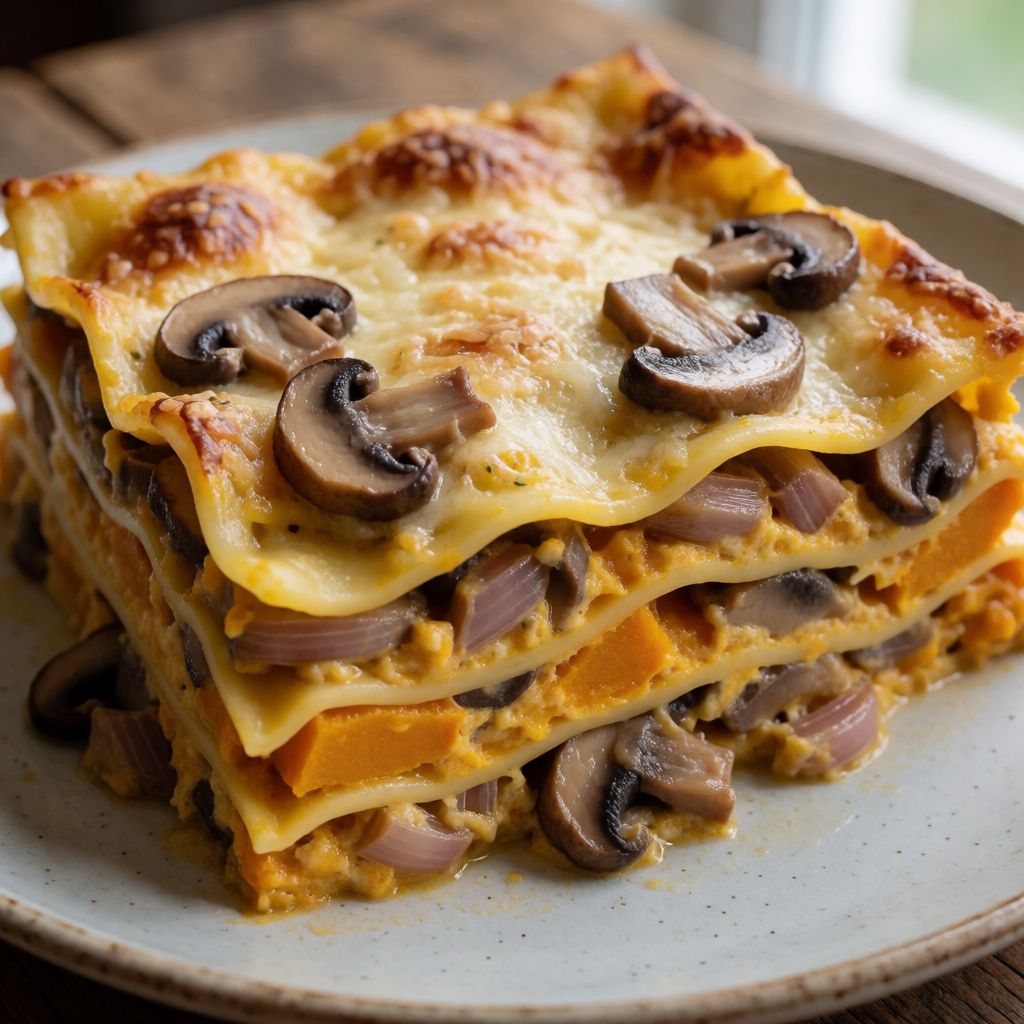
 AI photo
Lasagne with Pumpkin and Mushrooms
A comforting autumn lasagne layering roasted pumpkin, sautéed mushrooms and a nutmeg-scented béchamel between sheets of pasta.
Labels are worked out automatically from the ingredients and can be wrong. Check the packaging if it matters to you.
Ingredients
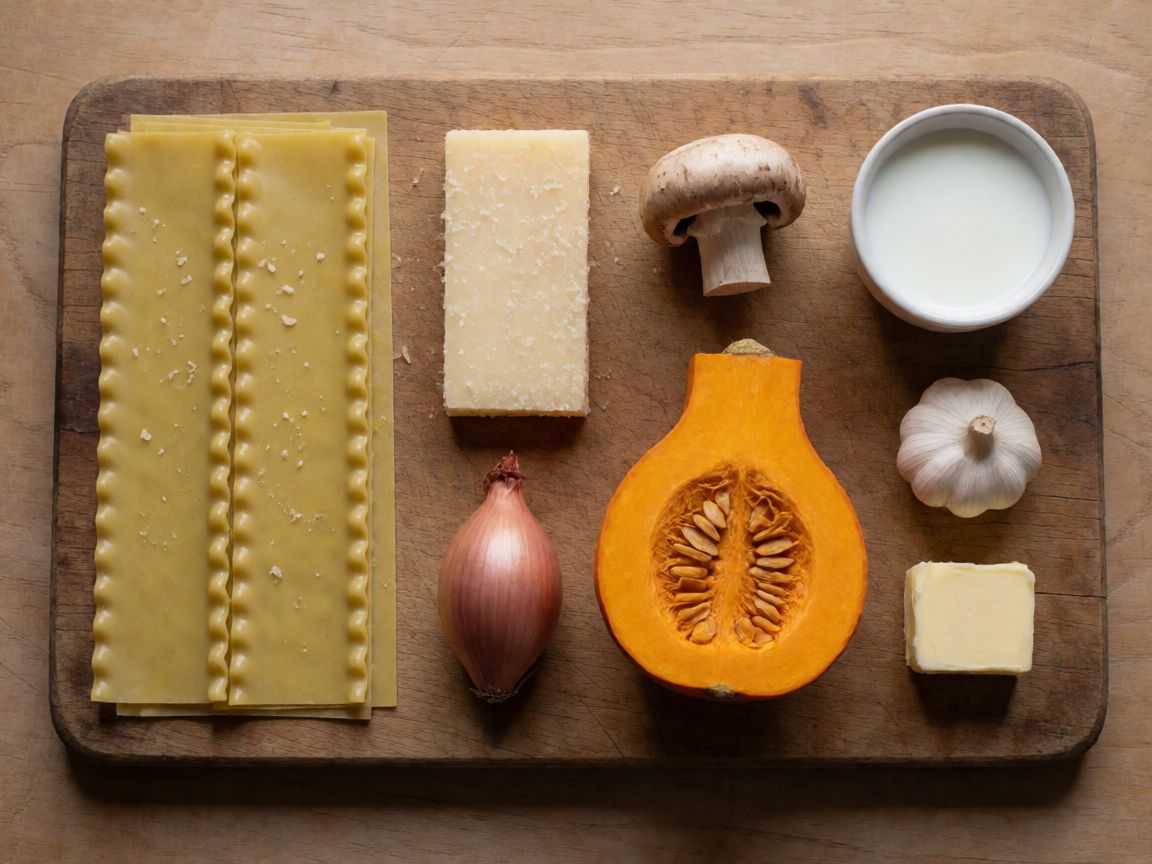
- 250 g Lasagne sheets
- Parmesan
- Olive oil
- 500 g Mushrooms
- 1/2 pcs Shallot
- 1 clove Garlic
- Salt
- 600 g Pumpkin
- 1 l Milk
- 100 g Butter
- 100 g Plain flour
- Nutmeg










Steps
Peel the pumpkin, cut into slices and roast in an oven preheated to 170°C.
30 minIn a pan with olive oil, sauté the shallot and the garlic clove.
Add the cleaned and chopped mushrooms, season with salt and cook until soft, then remove the garlic.
Transfer the pumpkin to a blender and blitz until smooth.
In a saucepan, bring the milk to the boil.
Melt the butter and stir in the flour, cooking for a few minutes until thickened.
Pour the butter-flour mixture into the hot milk, add the nutmeg and stir well.
Pour in the blended pumpkin and mix until smooth.
Grease a baking dish with olive oil and spread a thin layer of the pumpkin béchamel.
Lay the lasagne sheets, cover with béchamel and spread over the mushrooms.
Sprinkle with Parmesan and repeat the layers until the ingredients are used up.
Finish with a layer of béchamel, Parmesan and olive oil.
Bake in an oven preheated to 200°C with fan assistance.
20 min
This isn't the lasagne with the red sauce and the long simmer. There's no ragù here, no three hours of a tomato tasting of itself. The whole dish stands on one idea: pumpkin blitzed straight into béchamel, so the "white sauce" is actually orange, carries its own sweetness, and does the job tomato usually does — moisture, body, something for the pasta to drink.
What decides whether it works is the béchamel, and specifically whether you let the flour cook in the butter before the milk goes anywhere near it. Some say you can just whisk flour into hot milk and save a pan — no, because raw flour thickens into a paste that tastes of raw flour, slightly chalky, slightly bitter at the back of the throat. Cooking butter and flour together first — a roux — coats the starch granules in fat so they swell into the milk smoothly instead of clumping. A few minutes over heat that lets it bubble gently, not colour, is the whole trick. Go too hot and you get brown specks of scorched flour sitting in a white sauce, which nobody wants to explain to their dinner guests.
The second thing that decides it is the pumpkin. Roasting it dry, in slices, before it ever meets liquid, drives off water that would otherwise turn your béchamel thin and your lasagne watery at the edges — the exact fault people usually blame on "too much sauce" when the real cause is pumpkin that went in wet. Roast it until a knife goes in with no resistance, not until a timer says so; ovens vary, pumpkins vary, and 30 minutes is where you start checking, not where you stop looking.
Pumpkin: 600g, peeled and sliced for roasting, not grated or cubed small — slices roast evenly and blend smoothly, whereas small cubes catch at the edges and burn before the centre softens. If pumpkin's out of season or you can't be bothered fighting its skin, butternut squash does the same job; it's drier, so it needs slightly less time to lose its water in the oven.
Mushrooms: 500g, chestnut or button, whatever's in the Sunday-roast veg drawer. Chop them, don't slice them thin — thin slices disappear into the béchamel and you lose the texture that's meant to contrast with the smooth sauce. Cook them until they stop releasing liquid into the pan; that moment is the actual doneness marker, not a clock.
Shallot and garlic: half a shallot for sweetness without the sharp bite of a full onion, one clove of garlic for background, not punch — pulled out once it's done its work so it doesn't sit there turning acrid under heat for the next twenty minutes.
Milk: a litre, full-fat if you want the béchamel to hold its body once the pumpkin's folded in; skimmed will work but gives you a thinner sauce, which matters more here than in a plain béchamel because you're already adding pumpkin purée as extra liquid.
Butter and flour: 100g each, equal weights, because that ratio is what makes a stable roux — more flour than butter and it won't absorb the fat smoothly; more butter and it won't thicken properly. Any neutral fat with no flavour of its own can stand in for the butter in a pinch, but you lose the slight richness that holds the nutmeg's sharpness in check.
Nutmeg: a pinch, grated fresh if you can — it's there to lift the pumpkin's sweetness, not to announce itself. Ground nutmeg from a jar works but fades fast once opened, so use more than you think and taste as you go.
Parmesan: for the layers and the top, where dry heat turns it from a cheese into a crust — that's the fan oven's job at the end, not the béchamel's. Any hard, aged cheese that melts without turning oily can substitute — a mature Cheddar will give you a sharper, less nutty crust, which isn't wrong, just different.
On the lasagne sheets themselves: dried sheets need the béchamel wetter than you'd think, because they pull moisture from the sauce as they cook, rather than giving any back the way a meat ragù's juices might. That's why the pumpkin's water has to go in the oven, not in the dish — you've only got one source of moisture doing double duty, so it can't afford to be diluted twice.
On the oven stages: 170°C for the pumpkin is slow enough to roast rather than char, letting the sugars concentrate without burning the edges black. 200°C with the fan on at the end is about colour and crust on the top layer, not about cooking the pasta through — the sheets are already softening in the layered sauce by then, so that final blast is for appearance and texture on top, patience spent earlier paying off here in a shorter finish.