
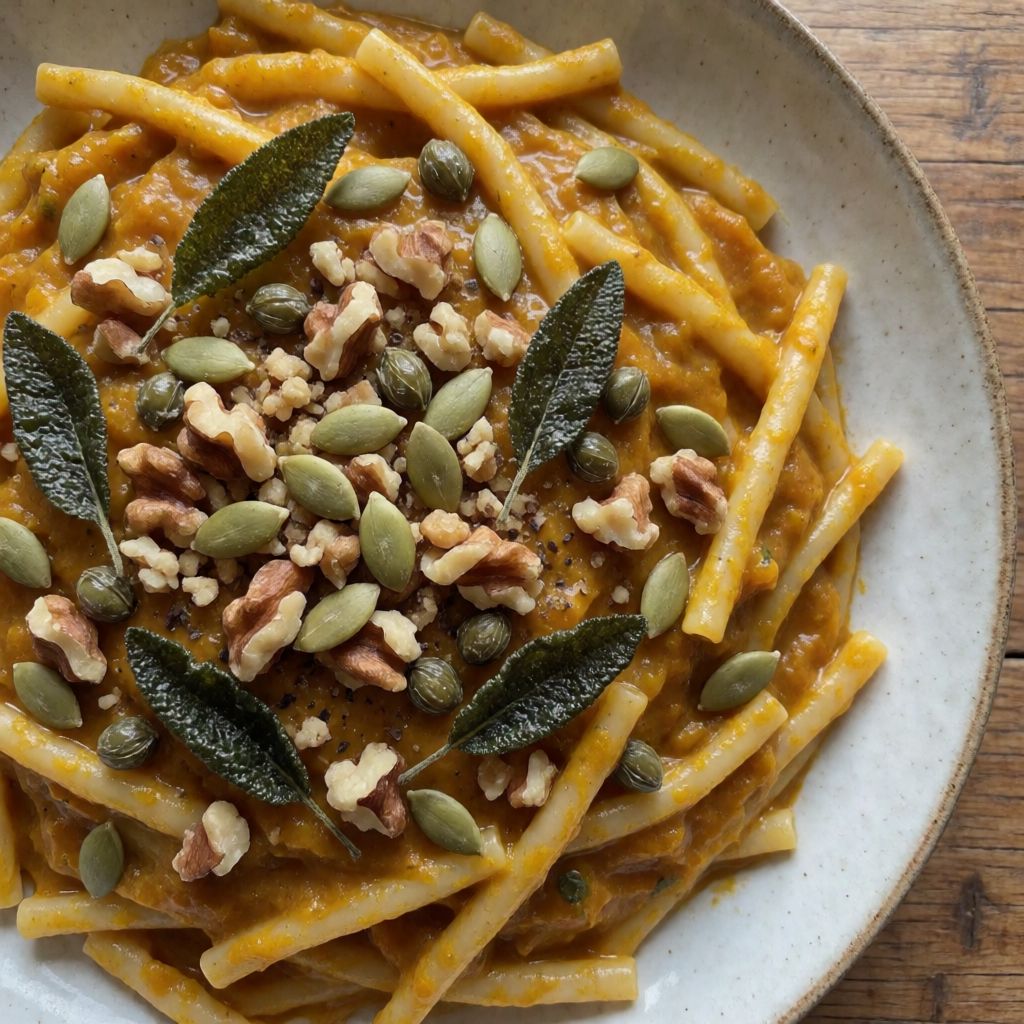
 AI photo
Pasta with Pumpkin
A comforting autumn pasta with roasted pumpkin, toasted walnuts and pumpkin seeds, capers and lemon.
Labels are worked out automatically from the ingredients and can be wrong. Check the packaging if it matters to you.
Ingredients
- 500 g Pumpkin
- 50 g Walnut roughly chopped
- 25 g Pumpkin seeds
- 3 pcs Sage fresh sprigs
- 25 g Capers finely chopped
- 4 clove Garlic crushed
- 50 g Parmesan freshly grated
- ½ pcs Lemon juice and finely grated zest
- 400 g Pasta
- 25 g Butter for frying
- 1 tbsp Olive oil for frying
- Salt
- Black pepper freshly ground
- 50 g Parmesan freshly grated







Steps
Toss the pumpkin cubes with the oil, salt and pepper, and spread on a baking tray lined with parchment paper.
Roast in a preheated oven at 180°C (fan/convection) for 20 minutes, until the pumpkin is soft and lightly browned.
20 minToast the walnuts and pumpkin seeds in a dry pan until the first pumpkin seeds start to pop.
Add the butter and sage and keep over medium-low heat.
Cook the pasta al dente in lightly salted water.
Drain the pasta, keeping 100 ml of the cooking water for the sauce.
Pour 100 ml of the pasta water into the pan with the pumpkin seeds and walnuts, add the capers, garlic, Parmesan, salt and pepper for the sauce.
Season with a little lemon juice and grated lemon zest.
Thoroughly mix the pasta and roasted pumpkin cubes with the sauce.
Plate up and serve with Parmesan, freshly ground pepper and a little salt.
This is a dish built on two separate browning jobs that only meet at the very end. The pumpkin roasts dry in the oven, losing water and gaining colour; the walnuts, seeds and butter brown in a pan, picking up the smell of toasted sage. Neither of these is "the sauce" on its own — the sauce is what happens when you crash pasta water into that nutty butter and let starch and fat make an emulsion. Get that emulsion right and it clings to every strand; skip it and you've got oily crumbs sitting on wet pasta.
What decides whether it works is restraint with heat in two places. The pumpkin needs real roasting heat, not a gentle warm-through — enough for the edges to catch colour and the inside to go soft enough that a cube collapses slightly under a fork, not just "cooked through." And the walnuts and seeds need a dry pan hot enough that the first pumpkin seed pops like a tiny kernel of corn — that pop is your timer, not a clock. Once butter and sage go in, the heat drops: butter burns and turns bitter fast, and sage fried too hard turns to bitter dust instead of giving its scent.
Some say you can skip toasting the nuts and seeds and just throw them in raw with everything else — no, because raw walnut is flat and a bit chalky, and raw pumpkin seed is rubbery. The whole point of that dry pan is to wake up the oils inside them before the butter arrives. You're not cooking the seeds, you're toasting them, the same way you'd toast an old spice before using it.
Start with the pumpkin itself, since 500 g sounds vague until you picture it: that's roughly half a small pumpkin or butternut squash, peeled and cut into cubes about the size of a thumbnail — big enough to hold shape in the oven, small enough to cook through in twenty minutes without turning to mush on the outside before the centre softens. If your pumpkin is watery and stringy, cut the cubes a touch smaller; wetter flesh needs more surface area touching the tray to lose that water and actually brown rather than steam in its own juice on parchment.
The walnuts and pumpkin seeds are there for crunch and a slightly bitter edge that cuts the sweetness of roasted pumpkin — don't swap in something soft like pine nuts unless you also rethink the texture of the whole dish. If you've no pumpkin seeds, sunflower seeds toast the same way and pop in a similar manner; just watch them, they can brown faster.
Sage is the one ingredient here doing a genuinely specific job — fried briefly in butter it releases an almost resinous, slightly peppery oil that pumpkin on its own doesn't have. Rosemary is the usual substitute people reach for, but it's sharper and more needle-like in flavour, so use less of it than you would sage. Dried sage crumbled in works in a pinch, though you lose the crisp little fried leaves people fish out and eat separately — which, incidentally, is not a mistake, that's meant to happen.
Capers bring salt and a vinegar-sharp pop that's doing the same job as the lemon: stopping the dish from being pumpkin-and-nuts-and-cheese all the way down. Chop them finely so they distribute through the sauce instead of surprising someone in one bite. If capers aren't to hand, chopped green olives get you closer than nothing, though the flavour shifts from sharp to more savoury-brined.
The pasta water held back before draining is the actual engineering of the sauce — it's starchy, salty water, and that starch is what lets butter and cheese bind into something that coats the pasta instead of pooling at the bottom of the bowl as separate fat and liquid. Some people drain everything and then wonder why the sauce looks greasy and split — that's the missing starch, not a cooking mistake elsewhere. Keep more than the 100 ml stated if your pan looks like it's drying out before the Parmesan has melted in; you can always use less, you can't conjure more once it's down the sink.
Parmesan at two points — once stirred into the sauce, once at the table — isn't a typo, it's two different jobs. Melted into the warm sauce it thickens and salts; grated on top at serving it stays a separate texture and a fresh hit of flavour on the tongue. A hard pecorino works if that's what's in the fridge, though it's saltier, so go easier with the extra salt in the sauce itself.
Finish with the pasta shape as the quiet variable nobody mentions: anything with ridges or a hollow — penne, fusilli, orecchiette — will hold the sauce and the little bits of caper and nut far better than a smooth long strand, which just lets everything slide off onto the plate.