
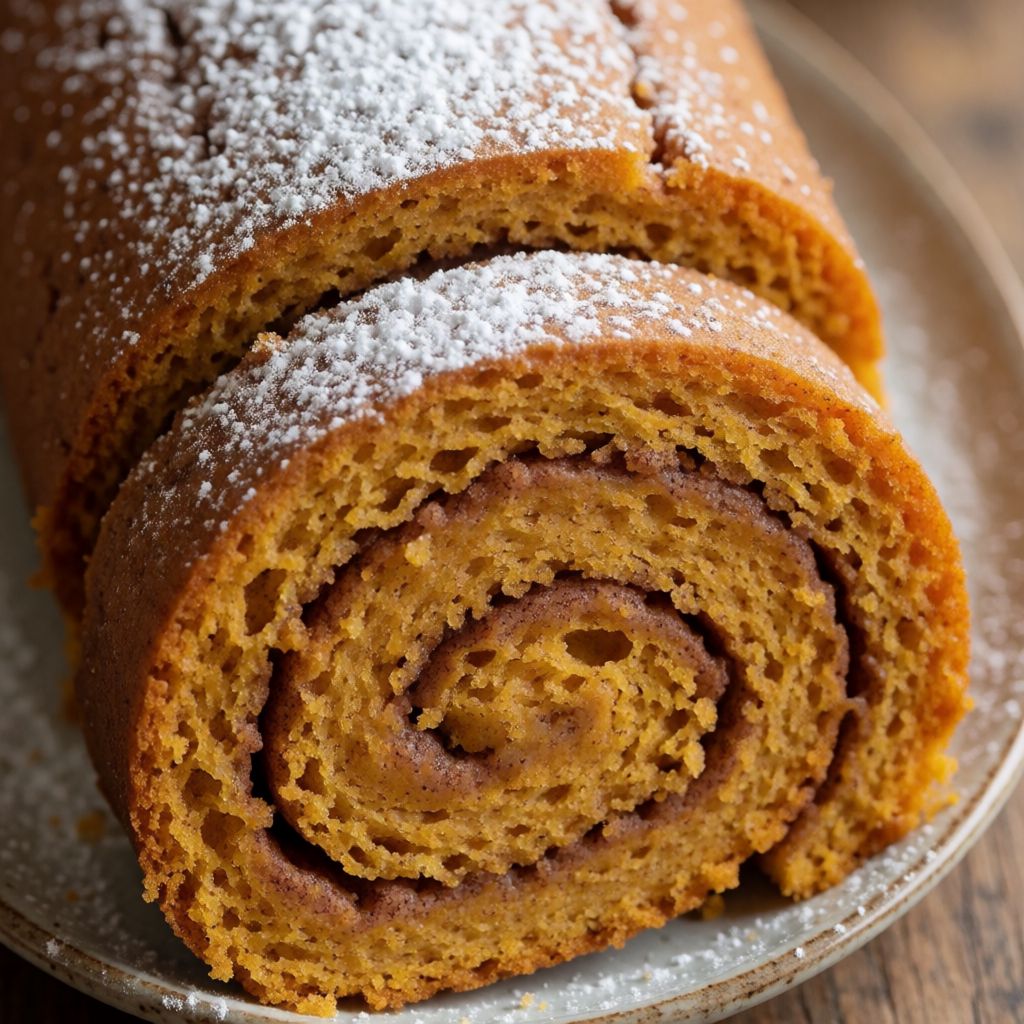
 AI photo
Pumpkin Roulade
A soft spiced pumpkin sponge rolled up with a mascarpone cream filling.
Labels are worked out automatically from the ingredients and can be wrong. Check the packaging if it matters to you.
Ingredients
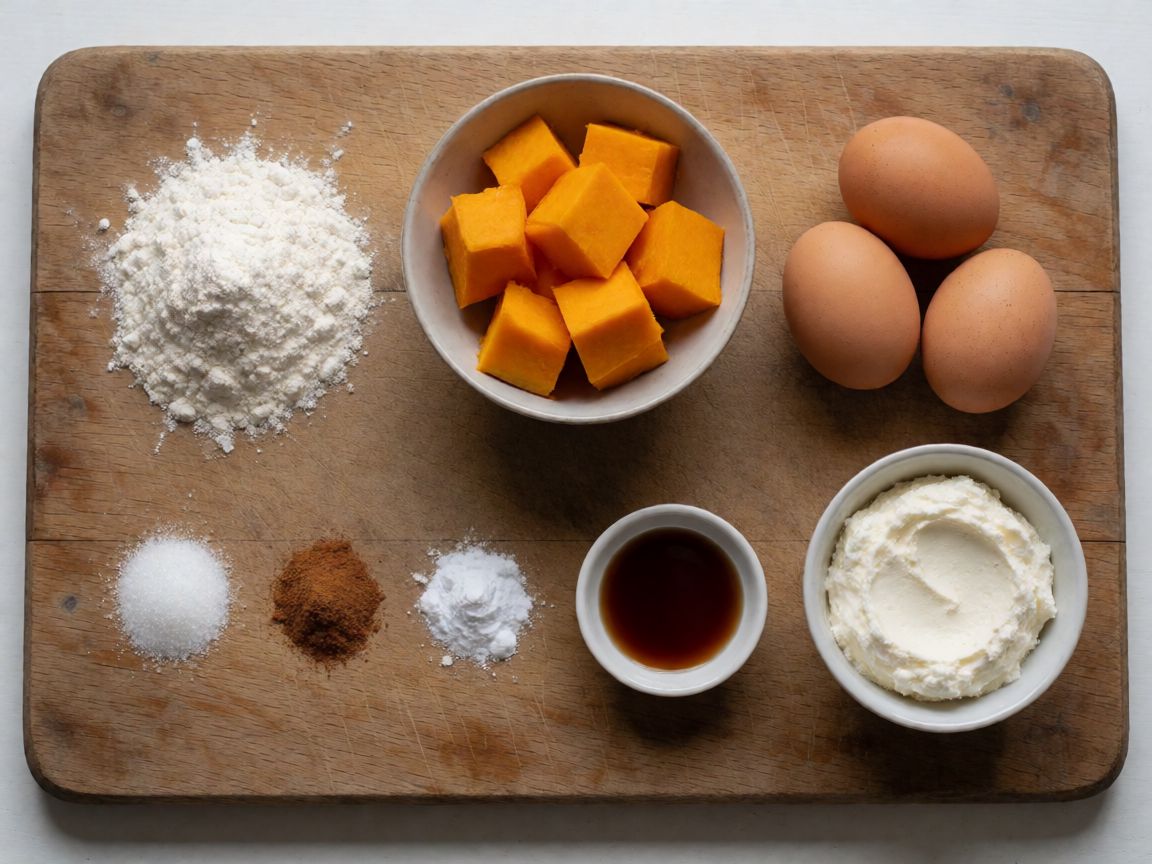
- 100 g Plain flour
- 150 g Pumpkin
- 3 pcs Eggs
- 180 g Caster sugar
- 1 tsp Baking powder
- 2 tsp Cinnamon
- 1 tsp Vanilla extract
- 250 g Mascarpone
- 100 ml Double cream
- 100 g Icing sugar
- 100 g White chocolate chips
- Water to taste
- Sugar to taste
- Chopped hazelnuts to taste












Steps
Bake the pumpkin in the oven or steam it, then blend to a purée with a blender or food processor and leave to cool.
Whisk the eggs with the sugar until light and fluffy.
Add the pumpkin purée, then gradually fold in the flour and baking powder.
Add the vanilla extract and cinnamon and mix well.
Pour the batter onto a baking tray lined with baking paper and spread evenly.
Bake at 180°C for about 15 minutes.
15 minTurn the sponge out onto cling film, cover with a tea towel and leave to cool.
Peel off the baking paper.
Whip the cream with the icing sugar and combine with the softened mascarpone.
Spread the cream over the sponge, leaving a border at the edges, and roll up the roulade.
Chill the roulade in the fridge for at least 2 hours.
Before serving, brush with sugar water and decorate with chopped hazelnuts.
A roulade is just a sponge that's been persuaded to be flexible instead of crumbly, so it can be rolled without snapping. That flexibility comes from eggs whipped properly and from baking the sponge thin, in a tray, not deep in a tin. Thin means it stays moist and bendable; deep means it dries out before the inside sets, and then it cracks the moment you try to roll it.
Pumpkin here isn't flavour theatre, it's moisture and body. A roasted or steamed purée is drier and more concentrated than a boiled one — boiling pumpkin fills it with water it then dumps into your batter, making the sponge heavy and prone to sogginess. Roasting or steaming drives water off and keeps the flavour tight. Cooling the purée before it meets the whisked eggs matters too: warm purée will deflate the air you've just worked so hard to beat in.
The eggs-and-sugar whisking stage is the actual engineering of this cake. You're not "mixing", you're trapping air in a web of egg protein and sugar syrup — that's what gives the sponge lift without much flour and what lets it flex instead of tear. Some say you need a stand mixer for a proper roulade sponge; no, you need patience and a hand whisk will get there, it just takes longer and your arm will know about it.
Rolling it in a tea towel while it's warm is the trick that actually prevents the crack, and it's worth understanding why. A sponge straight from the oven is still soft and its structure hasn't fully fixed. Roll it now, around itself, and it learns that curved shape as it cools — like setting a hem. Let it cool flat first and the egg-and-flour structure sets rigid in that flat shape; ask it to curl afterwards and it fights you, and loses by splitting. The tea towel isn't decoration — it absorbs steam so the sponge doesn't turn clammy and stick to itself while it's rolled and cooling.
On the pumpkin: any dense, low-water squash will behave the same way — butternut is the easy British supermarket substitute, and it roasts the same, cool, dry side up on a tray rather than wrapped, so steam escapes instead of collecting. If you're using tinned pumpkin purée, taste it for added sugar or spice first and adjust the caster sugar and cinnamon in the recipe, because tins vary more than people expect.
The flour and baking powder are there for structure and lift, not flavour — this is why you fold them in gently rather than beat them. Beating develops gluten, gluten means chew, and chew in a sponge is the texture you don't want; a roulade should give with no resistance, almost wobble. Folding keeps the air you whisked into the eggs intact. Plain flour plus a teaspoon of baking powder does the job cheaply; self-raising flour would work too, just drop the separate baking powder or you'll get an uneven, domed rise that cracks along the ridge when rolled.
Mascarpone and whipped cream together make a filling that's rich but still holds its shape when sliced cold — mascarpone alone can be heavy and a bit flat, cream alone won't hold structure once at room temperature. Icing sugar rather than caster dissolves instantly into the fat without any grit, which matters in a cold, unbaked filling where there's no heat to melt sugar crystals for you. If you're short on mascarpone, full-fat cream cheese whipped with a touch more double cream gets you close, though it loses a bit of mascarpone's sweetness, so taste before you add all the icing sugar.
Leave a bare border of cream at the edges before rolling — not caution for its own sake, but because the filling spreads outward slightly as you roll under its own weight, and a filled-to-the-edge roulade squeezes cream out the ends and leaves you cleaning the worktop instead of the cake looking neat.
The fridge rest — at least two hours — is doing real work, not just "chilling for tradition's sake". Cold is what sets the whipped cream and mascarpone back into a firm structure after the warmth of rolling softened it; slice too soon and the roulade collapses rather than holds its spiral. The sugar-water brush at the end keeps the surface from drying out in the fridge air and gives the hazelnuts something to stick to — a thin syrup, not a glaze, just warm water with sugar stirred through until it stops feeling gritty between your fingers. White chocolate chips and chopped hazelnuts are textural contrast more than essential flavour, so swap hazelnuts for whatever nut you have toasted in a dry pan until it smells nutty rather than raw — that smell change is the doneness cue, not a clock. This feeds six comfortably as the sweet stop after a Sunday roast, sliced thin, with tea rather than coffee — it's rich enough that nobody's asking for seconds the size of the first slice.