
 AI photo
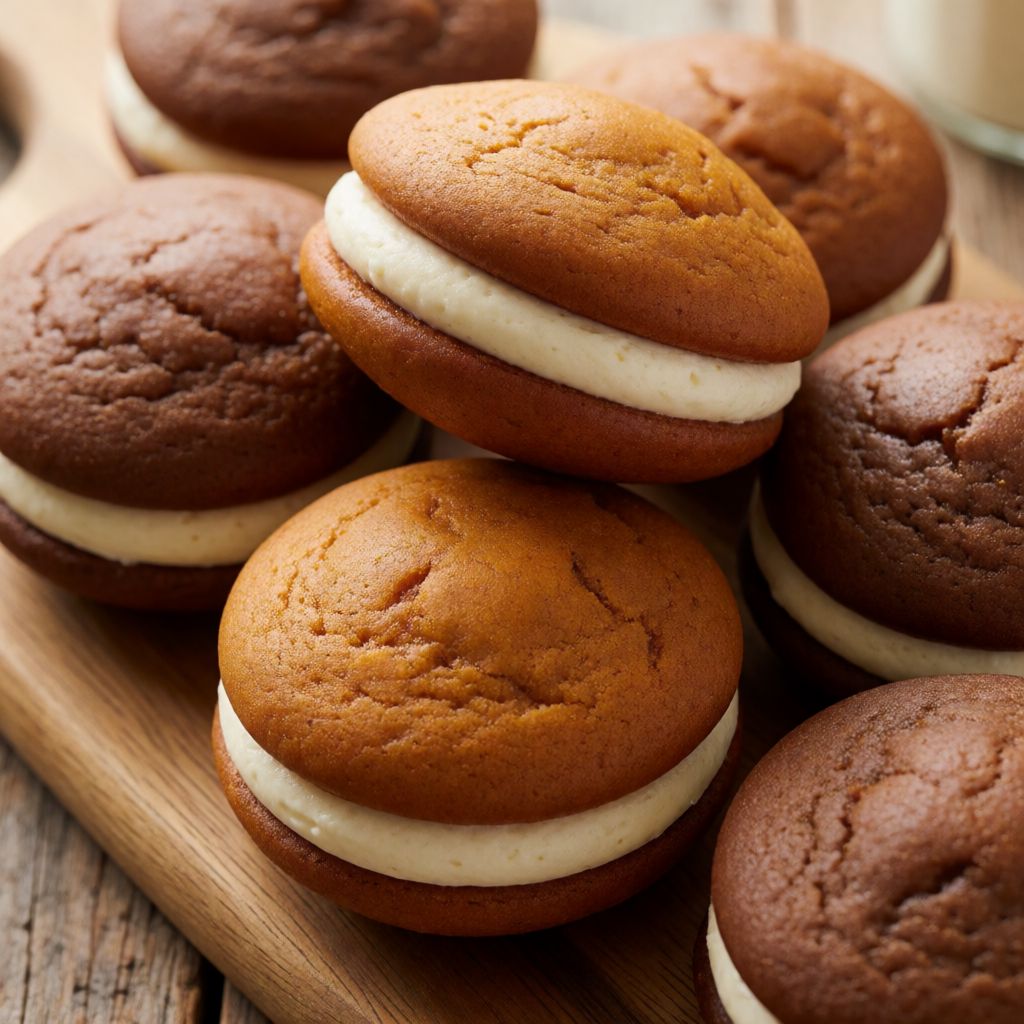
Pumpkin "Whoopie Pies"
Soft pumpkin spice sandwich cakes filled with a cream cheese frosting, baked as small cakes and joined in pairs.
Labels are worked out automatically from the ingredients and can be wrong. Check the packaging if it matters to you.
Ingredients
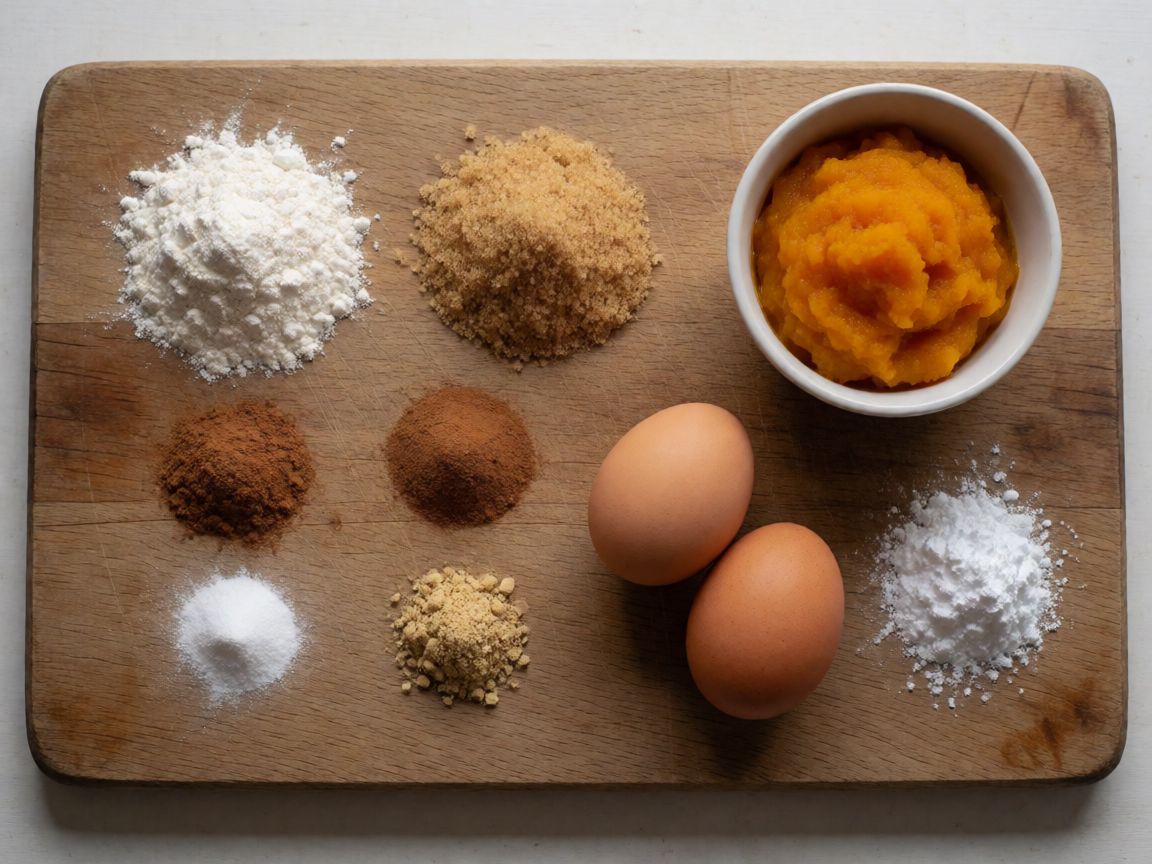
- 384 g Plain flour
- 256 g Brown sugar
- 1 tsp Salt
- 1 tsp Cinnamon
- 1 tsp Baking powder
- 1 tsp Ginger
- 128 g Vegetable oil
- 2 pcs Eggs
- 540 g Pumpkin purée
- 128 g Icing sugar
- 113 g Butter
- 227 g Cream cheese












Steps
In one bowl, mix the dry ingredients: baking powder, cinnamon, ginger, flour and salt.
In another bowl, combine the brown sugar and vegetable oil and mix well, then add the pumpkin purée, followed by the eggs.
Add the dry ingredients and mix until smooth, to get a creamy, even batter.
Preheat the oven to 180°C, and spoon small portions of the batter onto a baking tray lined with baking paper, shaping small discs spaced apart.
Bake for at least 15 minutes and check if done inside with a wooden skewer.
15 minRemove from the oven and leave to cool.
Soften the butter in a bowl.
Add the cream cheese and gradually the icing sugar, mixing until light and creamy.
Put the filling in the fridge.
Once the cakes have cooled, transfer the filling to a piping bag and fill one cake, topping it with another.
A whoopie pie is a cake pretending to be a biscuit — two soft pumpkin domes with cream cheese icing sandwiched between. It's American in origin: a lunchbox treat from New England, built from cheap pantry staples (flour, oil, sugar) rather than the butter-heavy European biscuit tradition. That history matters here, because it tells you what this batter actually is — not a cookie dough, a cake batter, loose and wet, that happens to be baked in small rounds instead of a tin.
What decides whether it works is restraint at the spoon stage. You're not shaping dough, you're dolloping batter — it should hold a rough mound and spread a little on its own, not need coaxing into a disc with your fingers. If it's stiff enough to roll, you've gone too far with the flour or not far enough with the pumpkin, and you'll get something closer to a scone than the soft, slightly damp crumb a whoopie pie needs.
The other thing that decides it is the oven, and this is where a home kitchen punishes carelessness. 180°C is the point at which the baking powder's gas expands fast enough to lift the cake before the outside sets hard — too cool and the discs spread flat and pale before they rise; too hot and you get a shell with a gummy centre, because the outside sets before the inside has caught up. A skewer coming out clean is the only honest test; "15 minutes" is just where to start checking, not where to stop.
Pumpkin purée is doing two jobs, not one: moisture and structure. It's wet enough to replace a good chunk of the fat and sugar's usual liquid-binding role, which is why the batter looks more like a cake mix than a cookie dough — don't fight that by adding flour to stiffen it. Tinned purée is fine and consistent; if you're stewing your own pumpkin, cook it down hard and let it drain in a sieve first, because watery purée will give you flat, soggy discs no amount of extra baking time fixes.
Vegetable oil, not butter, is the fat of choice, and that's not a shortcut — it's correct for this cake. Oil stays liquid at room temperature, so the crumb stays soft and moist even cold from the fridge; butter solidifies as it cools and would leave these a little dry and crumbly the next day, which matters for something meant to be made ahead. Use any oil with no smell of its own — sunflower, rapeseed, a light vegetable oil — anything that doesn't compete with cinnamon and ginger. Olive oil has too much personality here.
Brown sugar earns its place for the molasses note, not just sweetness — it's part of why these taste like autumn and not like a plain vanilla cake. White sugar at a pinch, but you lose some depth and a touch of the moisture brown sugar's molasses brings.
Baking powder, not bicarbonate of soda, because pumpkin purée isn't acidic enough to properly activate soda on its own — baking powder carries its own acid and does the lifting reliably regardless of what's in the bowl. If you're ever substituting, match like for like; don't swap one for the other and expect the same rise.
For the filling, cream cheese wants to be properly cold going in but the butter soft — that contrast is what gives you "light and creamy" rather than a stiff paste or a loose puddle. Full-fat cream cheese holds its structure when piped; the low-fat tubs sold as "light" are wetter and will slump. Icing sugar goes in gradually because cream cheese can only absorb so much sugar before it turns grainy instead of smooth — dump it all in at once and you're stirring sand, not icing.
On a domestic hob and a single oven, the real limit is tray space and heat evenness. Do these in batches rather than cramming two trays in at once — a fan oven copes better with that than a standard one, but either way, space the discs so they're not fusing into one giant pancake, because batter this wet does spread. Patience is the real ingredient twice over here: once waiting for the cakes to cool fully before filling (warm cake plus soft filling means a collapsing sandwich), and once letting the filling chill properly before it goes anywhere near a piping bag.