
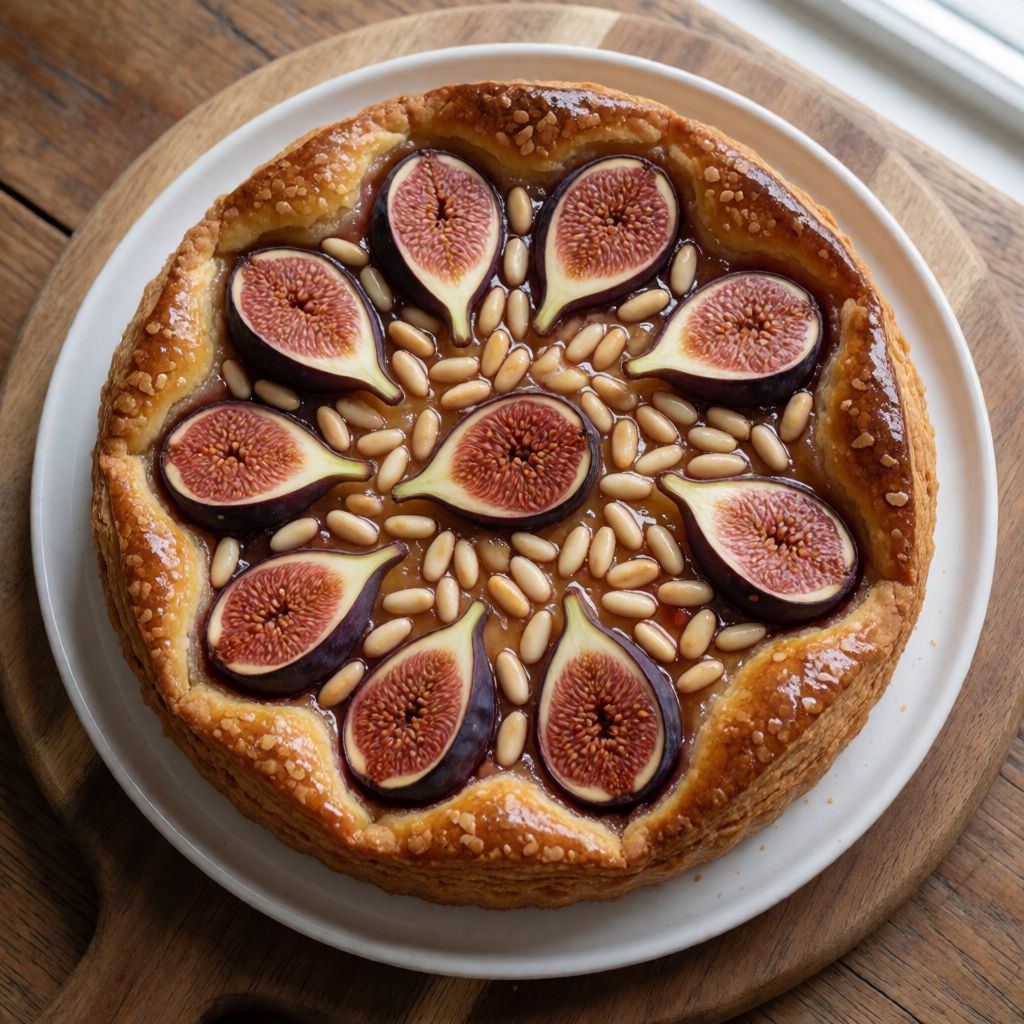
 AI photo
Fig and Pine Nut Tart
A crumbly pastry tart filled with figs and fig jam, topped with a crunchy grated pine-nut pastry crust.
Labels are worked out automatically from the ingredients and can be wrong. Check the packaging if it matters to you.
Ingredients
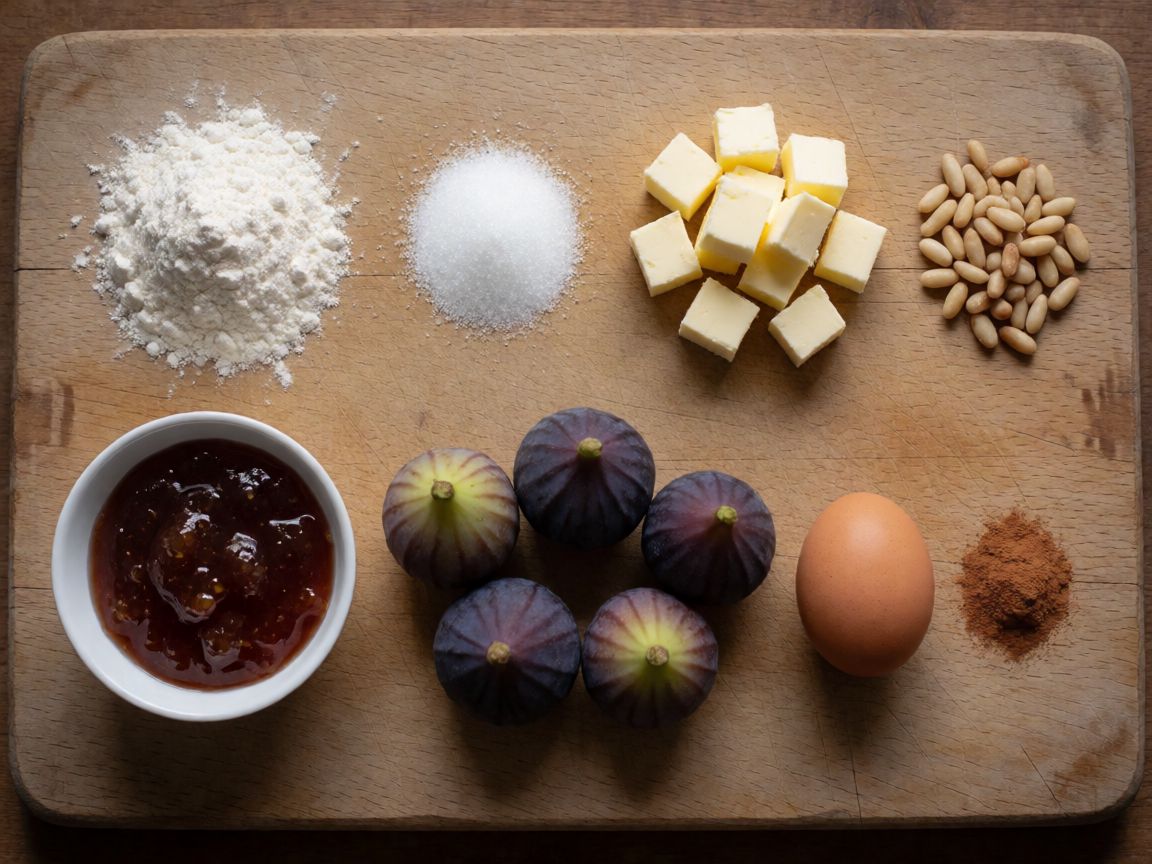
- 250 g Plain flour
- 100 g Caster sugar
- 120 g Butter cold, cubed
- 100 g Pine nuts
- 500 g Figs
- 100 g Fig jam
- 1 pcs Egg
- 1 tsp Cinnamon
- 1 pinch Salt
- Icing sugar to taste








Steps
Put the flour in a food processor and add the rest of the dry ingredients: sugar, cinnamon and a pinch of salt. Mix for a few seconds.
Add the cold, cubed butter and process until the mixture becomes crumbly and even.
Tip the dough onto a work surface, shape it into a mound with a well in the centre and crack the egg into it. Quickly knead by hand into a soft, smooth ball.
Wrap the dough in cling film and chill in the fridge.
30 minDivide the dough into two equal parts. Roll one out thinly with a rolling pin and line a rectangular tin with it.
Clean the figs, dice them and mix with the fig jam.
Spread this filling evenly over the pastry in the tin.
Mix the second portion of dough with the pine nuts, shape into a compact ball and coarsely grate it.
Scatter the grated dough evenly over the whole tart, fully covering the fig filling.
Bake the tart in an oven preheated to 160°C for about 30 minutes, until the pastry is golden and crisp.
30 minRemove the tart from the oven and let it cool slightly.
Before serving, dust the top of the tart with icing sugar.
This is a sablé tart dressed up as a crumble — same dough, two jobs. Half of it becomes the base, rolled thin and docile; the other half gets grated frozen-hard over the top, so it bakes into something closer to streusel than pastry. The trick that makes the whole thing work is temperature management of a single dough, not two separate recipes, and that's worth understanding before you touch the flour.
What decides success here isn't the figs — fresh figs in October are sweet enough to forgive almost anything — it's whether the butter stays cold long enough to do its job twice. Cold butter cut into flour doesn't melt into the dough; it stays as tiny solid sheets that steam-separate the layers in the oven, which is what gives you "crisp" rather than "biscuit". Warm the butter, even by handling it too long, and you get a dense, sandy crust that bakes flat and sad. The egg at the end isn't for richness — it's the only liquid in the dough, there purely to bind the crumbs into something rollable.
Some say you can skip chilling the dough if you're short on time — no, because the gluten you've just worked into existence by kneading needs to relax, or your rolled base will shrink back on itself in the oven like it's trying to escape the tin. Thirty minutes in the fridge isn't decoration, it's the dough forgetting it was ever stretched.
Flour is just structure here — plain flour, nothing fancier, because you want gluten development to stay low. Self-raising would puff this into something cakey, which fights the sablé texture you're after.
Butter: cold and cubed is non-negotiable, but "cold" in a UK kitchen means straight from the fridge, cubed just before you use it — not left on the counter while you measure everything else. If your kitchen runs warm (post-Sunday-roast oven heat lingering, say), cube it and put it back in the fridge for ten minutes before it goes in the processor. No substitute here does the same job — margarine has too much water, oil won't hold a crumb structure at all.
Pine nuts toward the crust, not the filling, is deliberate — they get folded into the second half of dough and grated, so their fat and crunch are distributed through the topping rather than sitting wet against the figs. If pine nuts are pricey or you can't find them (they often vanish from supermarket shelves, being one of the more fiddly nuts to harvest — hand-picked from pine cones, which is why they cost what they cost), any nut with a mild, unassertive flavour and similar oil content works: flaked almonds, chopped hazelnuts. Walnuts will work but bring a bitterness the figs don't need.
Figs: fresh, ripe, slightly soft to the touch — if yours are firm and pale you're better off waiting a few days than using them underripe, because under-ripe figs bring acid without the sweetness that balances the pastry. British supermarkets sell figs mostly imported and often picked early for transport, so don't expect the collapsing-ripe fig you'd get further south; dicing compensates a little by exposing more surface to the jam's sweetness.
Fig jam is doing a job, not just flavour-doubling: it binds the diced figs into something that won't run liquid under the grated topping. If you're out of fig jam, any thick fruit preserve with a flavour that won't clash — apricot, or a plain quince paste thinned slightly — covers the same mechanical need: enough pectin to hold the fruit together without going watery in the oven.
160°C is a gentle oven, chosen because you have two layers of dough (base and topping) and a wet fruit filling all needing to finish at once — hotter and the grated topping scorches before the base pastry has set through. "Golden and crisp" is the only clock that matters; thirty minutes is where to start checking, not where to stop. Icing sugar at the end is purely visual and a touch of last-minute sweetness — dust it after it's cooled a little, because on a hot surface it just melts into a wet sheen instead of sitting as a dusting.