
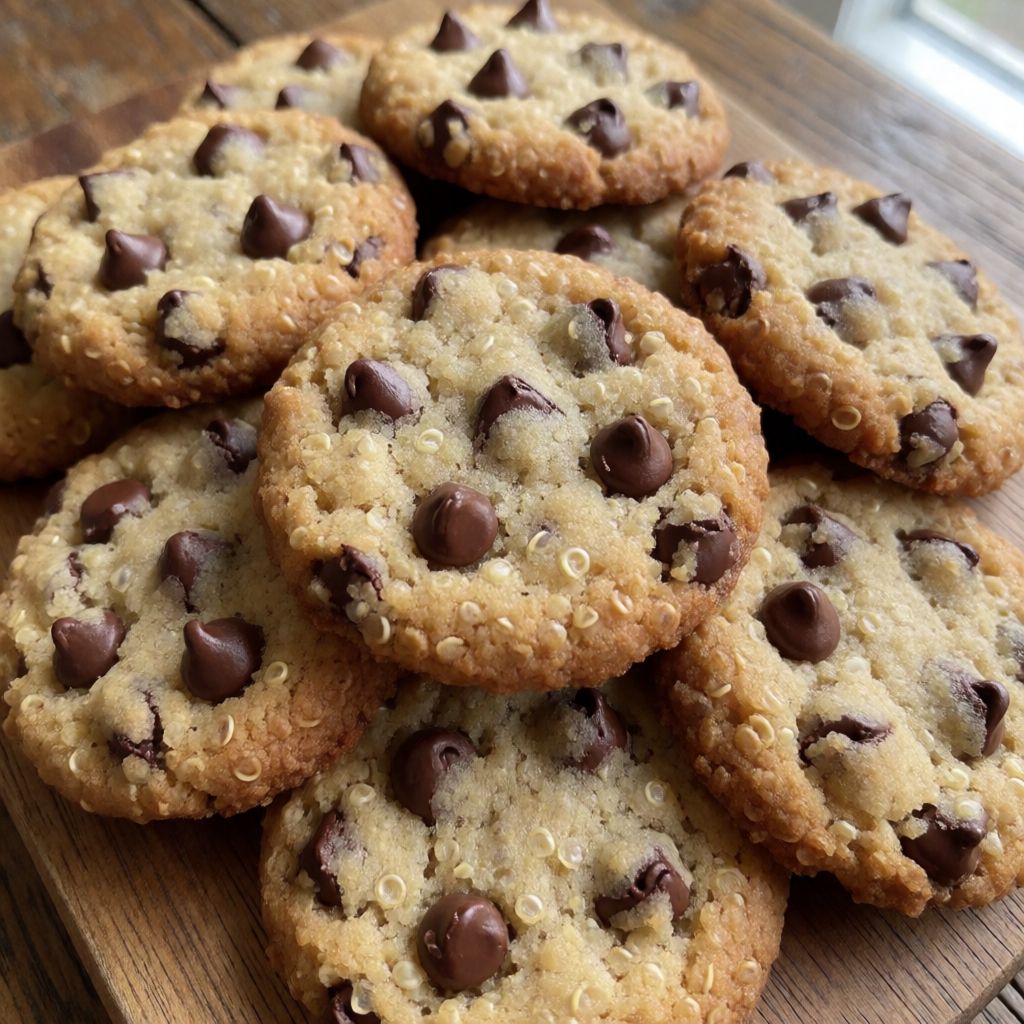
 AI photo
Quinoa and Chocolate Chip Cookies
Soft quinoa cookies studded with chocolate chips, a wholesome twist on a classic biscuit.
Labels are worked out automatically from the ingredients and can be wrong. Check the packaging if it matters to you.
Ingredients
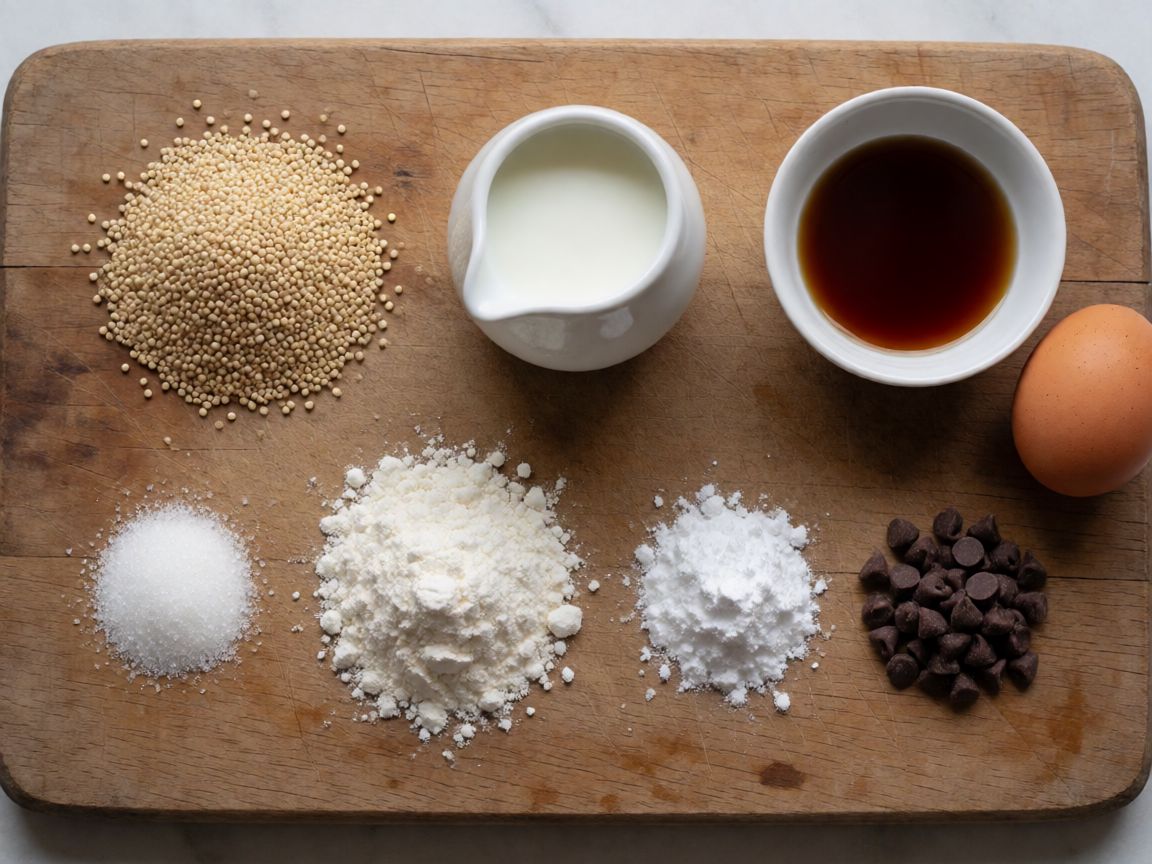
- 80 g Quinoa
- 150 ml Milk
- 1 tsp Vanilla extract
- 1 pcs Egg
- 100 g Sugar
- 30 ml Vegetable oil
- 100 g Plain flour sifted
- 80 g Potato starch
- 50 g Chocolate chips







Steps
Rinse the quinoa thoroughly under running water to remove the saponins.
Put the rinsed quinoa into a small pan, add the milk, 15 g of the sugar and the vanilla extract. Bring to the boil and cook.
Transfer the cooled quinoa to a large bowl and spread it over the base with a spoon.
Add the egg, vegetable oil and the remaining sugar. Mix until smooth.
Gradually stir in the sifted flour and potato starch with a spoon.
Add the chocolate chips and mix once more.
Shape the dough into small balls about 2 cm in diameter.
Place the cookies on a baking tray lined with baking parchment.
Bake at 180°C for 20 minutes.
20 minRemove the cookies from the oven and let them cool before serving.
This is a cookie built on a lie we tell ourselves about quinoa — that it's a "virtuous" base that sneaks healthy grains into a treat. Forget the virtue. What quinoa actually does here is textural: cooked soft in sweet vanilla milk, it turns into a slightly chewy, faintly nutty binder, closer to a cooked porridge than a flour. That's the whole engineering of the recipe — a cookie dough built half on starch, half on cooked grain, with no butter anywhere in sight.
What decides whether this works is step two, the bit that looks like an afterthought: cooking the rinsed quinoa in milk with sugar and vanilla until it's properly soft, not just hydrated. Undercook it and you get hard little beads sitting in your cookie like grit — unpleasant, not rustic. You're not steaming it dry like a pilaf; you're simmering it the way you'd simmer rice pudding, until the grain gives and the milk is mostly absorbed. Let it cool before it goes in the bowl — stir hot grain into egg and you scramble the egg, and a scrambled egg in cookie dough is a different, worse dessert.
The rinsing at the start isn't fussiness, it's damage control. Quinoa's outer coat carries saponins — the same soap-like compounds that make quinoa water look faintly foamy — and if you skip the rinse you taste a dry, bitter edge that no amount of sugar hides. Some people shrug and say "it cooks off" — no, it doesn't reliably, not in the small amount of milk here. Thirty seconds under the tap removes what the oven won't.
Quinoa, 80g, rinsed and simmered: this is both your grain and, oddly, part of your flour system. Any pan will do — you don't need a saucepan dedicated to grains, a small one you'd use for porridge is exactly right. If you've only got quinoa that's already "pre-rinsed" according to the packet, rinse it again anyway; packaging claims and your tap water don't always agree, and the cost of being wrong is a bitter aftertaste, the cost of rinsing twice is nothing.
Milk, 150ml, is doing double duty: it's the cooking liquid that softens the quinoa and the carrier for vanilla and the first hit of sugar, so that sweetness and flavour get absorbed into the grain itself rather than sitting only in the surrounding dough. Whole milk gives a rounder result; skimmed works, it's just thinner insurance. If you're out of milk, a plant milk with no strong flavour of its own — oat, for preference, almond will add its own note — does the job, since what matters is liquid and a bit of fat, not the word "milk".
The egg and vegetable oil together are standing in for the butter this cookie doesn't have. Oil disperses fat evenly through a loose, grain-heavy dough faster than cold butter ever could — you're not aiming for lamination or flakiness here, so butter's usual advantage disappears. "Vegetable oil" means any oil with no smell of its own: sunflower, rapeseed, light groundnut. Olive oil will fight the vanilla and chocolate, so leave it for the roast.
Plain flour, sifted, and potato starch split the structural job between them. Flour brings the gluten that holds a cookie together when it's warm out of the oven; potato starch dilutes that gluten so the finished bite is short rather than tough, since this dough has no fat-coated flour particles (as butter-based shortbread does) to do that softening on its own. If you're caught without potato starch, cornflour behaves close enough — it's the same principle, a flavourless starch breaking up gluten strands — but expect a slightly different, slightly more tender crumb.
Sugar, split between the quinoa-cooking stage and the dough itself, isn't just sweetness divided in two for no reason: sugar cooked into the milk flavours the grain from the inside, sugar added later sweetens the surrounding dough and helps it hold together and brown slightly at 180°C. Don't dump it all in at once and expect the same result — a plain-cooked grain tastes like a plain-cooked grain, however much sugar surrounds it afterwards.
Chocolate chips at the end are the only ingredient here that asks nothing of you except restraint — stir them in last so they don't melt into the warm dough and streak it. Dark chips hold shape in the oven better than milk chocolate, which is softer and more inclined to spread; if dark isn't to hand, chop a bar roughly rather than buying chips, since the jagged edges catch and hold in the dough better than smooth shop-bought discs do.
On patience: the cooling of the cooked quinoa before it meets the egg isn't a formality to skip because you're hungry. It's the difference between a smooth dough and a bowl of sweet scrambled egg with grain in it. Fifteen minutes of waiting costs you nothing; getting it wrong costs you the whole batch. And once they're out of the oven, let them sit on the tray — a British kitchen rarely has a proper wire rack to hand, a plate works, just give them air underneath so they don't steam and go soft on the base.