
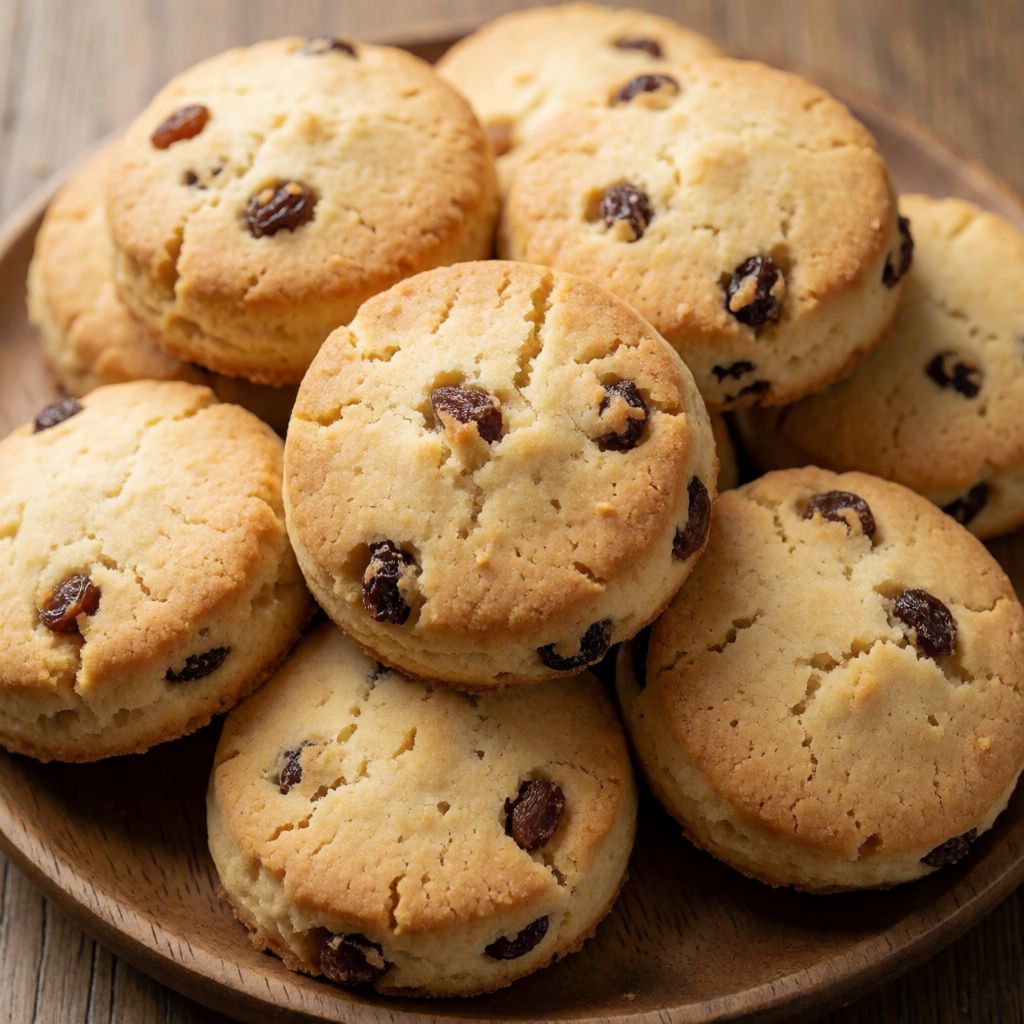
 AI photo
Raisin Biscuits
Soft raisin biscuits with a shortbread-like texture, ready in no time.
Labels are worked out automatically from the ingredients and can be wrong. Check the packaging if it matters to you.
Ingredients
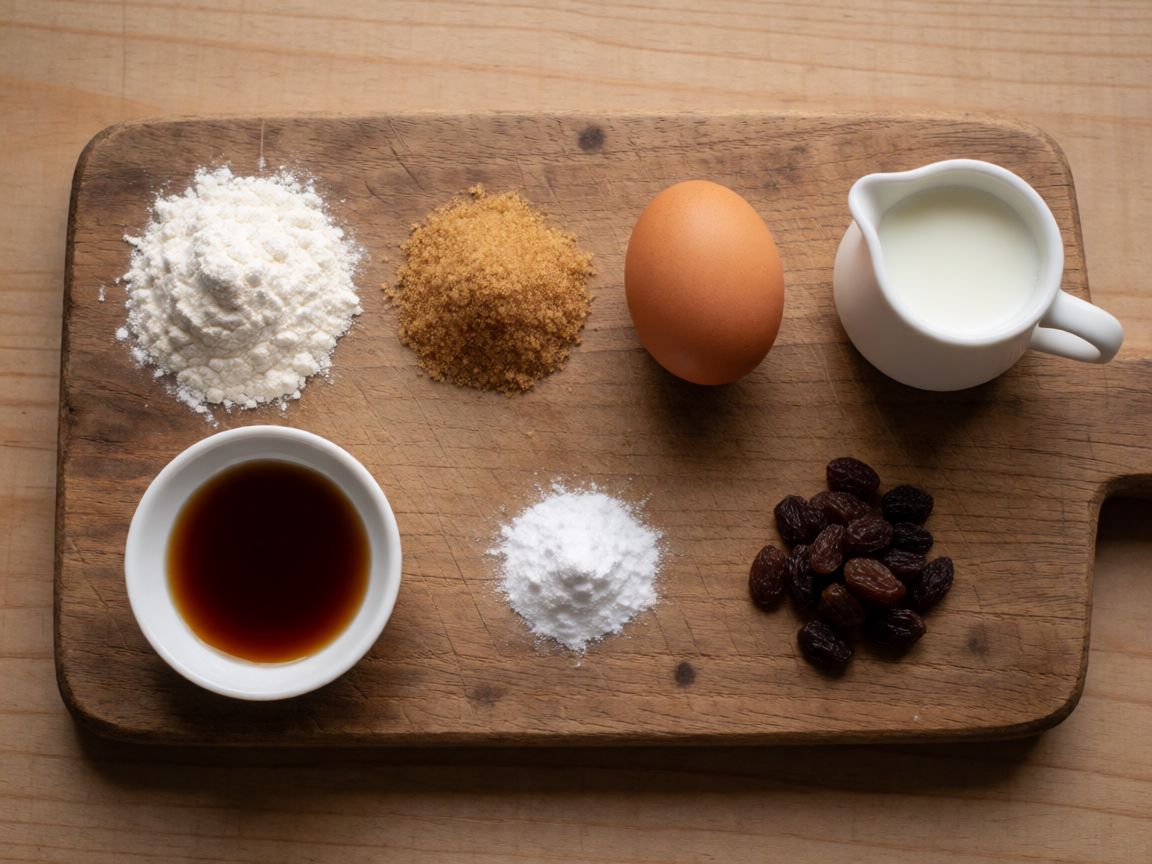
- 300 g Plain flour
- 50 ml Vegetable oil
- 120 g Brown sugar
- 1 pcs Egg
- 50 ml Milk
- 1 tbsp Vanilla extract
- 5 g Baking powder
- 50 g Raisins







Steps
Whisk the egg with the sugar and oil.
Add the milk and vanilla extract, continuing to mix.
Gradually add the sifted flour together with the baking powder.
Mix the ingredients until you get a dough similar to shortbread.
Add the raisins and work them in well by hand.
Shape into balls the size of a walnut and place them on a baking tray lined with baking paper.
Flatten the balls slightly and bake at 180°C for about 10 minutes.
10 minAfter baking, remove the tray from the oven and let the biscuits cool before tasting.
This is a drop biscuit dressed up as shortbread — same crumbly look, completely different chemistry. Real shortbread lives and dies by cold butter melting slowly in the oven, which is what gives you that shatter when you bite. Here the fat is oil, already liquid before it ever sees heat, so there's no melt-and-spread moment to wait for. That's why you flatten the balls with your palm before baking: nothing else is going to flatten them for you.
What decides whether these come out right is restraint in two places. First, how you bring in the flour — gradually, not in one dump. Flour added all at once hydrates unevenly: you get dry pockets that never bind and wet pockets that turn tough, because the water finds the path of least resistance instead of soaking through. Second, how hard you work the dough once the flour's in. You want it to just come together, shortbread-like, meaning you stop the moment there are no streaks left — keep going and you build gluten strands you don't want, and the biscuit goes from tender to chewy-tough.
Some say you must chill biscuit dough before baking. No — that rule belongs to butter doughs, where cold butter is the whole point: it needs to stay solid going into the oven so it melts on schedule, not on the counter. Oil has no such schedule. It's already mixed in, already soft, at any temperature your kitchen offers. Chilling this dough does nothing for it except waste your evening.
Flour: plain, not strong or bread flour, and that's deliberate — low protein keeps the gluten network thin, so the biscuit stays short rather than chewy. If all you have is self-raising, drop the baking powder, or you'll get a biscuit that domes too fast on the outside before the middle has a chance to cook through.
Oil: the criterion is "no smell of its own" — sunflower, rapeseed, anything neutral. This swap of oil for butter isn't a modern health trick, it's an old economy: oil keeps at room temperature without going rancid as fast, needs no fridge space, and in a flat with one small oven and less kitchen real estate than a house with a larder, that matters. The trade is texture — you lose the laminated, flaky shatter butter gives you, and gain a softer, more cake-like crumb. Don't go reaching for olive oil to be virtuous about it; its own flavour will fight the vanilla and raisins instead of staying out of the way.
Brown sugar: not just sweetness. It carries molasses, which means moisture and a faint caramel note that white sugar can't give you. Swap in white sugar and the biscuit will be a shade paler and a shade drier — fine, just a different biscuit. Demerara works too, closer in character to the brown sugar than white is.
Egg: this is your structure. It's protein, and protein is what sets and holds the biscuit together once heat hits it — without it you'd have a sandy crumble that falls apart in your tea, which, given this is a British kitchen with tea-with-milk on the table, is exactly where these end up dunked.
Milk: adjusts how wet the dough is before the flour goes in — not dairy-essential, any milk with similar water content does the same job, oat or whatever's in the fridge.
Vanilla and raisins are both about contrast, not chemistry — one adds a background warmth, the other a pocket of sweetness and chew against the short crumb. Work the raisins in by hand rather than letting a mixer do it, because a mixer doesn't know the difference between folding and shredding, and shredded raisins bleed sugar into the dough and darken it unevenly. Four people, one tray, and an ordinary domestic oven with its usual uneven spots — if yours runs hot at the back, turn the tray halfway through rather than trusting the dial.